



Guinness Debuts Nitro IPA
 Story by:
Jonathan Ingram
Story by:
Jonathan Ingram
Leave it to Guinness to come up with a distinctive approach to IPA. Not only does Guinness Nitro IPA have the nitrogenation introduced by the Irish brewer in the late 1950s. It also has some roasted barley to add distinction when it comes to color and taste. And, the company’s widget invention gets involved when it comes to six-packs in cans.
It may be the current fashion for all brewers to have an IPA in their repertoire since the style is driving the American beer market, but give Guinness credit. While large-scale brewers in the U.S. are establishing strategies like buying smaller, independent breweries or making modest steps to create alternate styles under new brand names, Guinness is bringing its name, its longstanding calling card of nitrogenation and new large-scale brewing techniques to create an IPA.
The Nitro IPA came to life at St. James’s Gate in Dublin as a result of The Brewers Project. Launched in September of 2014, The Brewers Project operates a pilot brewery within St. James’s Gate and provides the sort of nimble inventiveness often associated with American craft brewers.
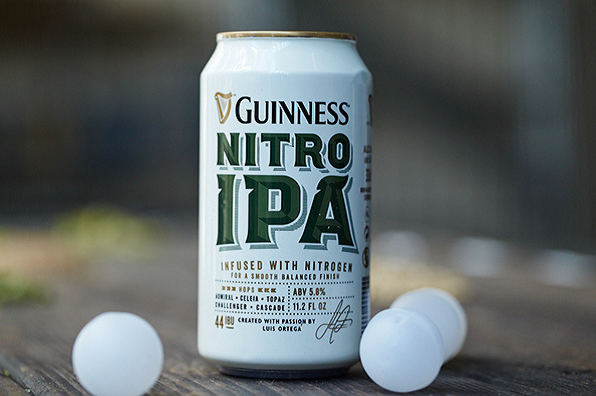
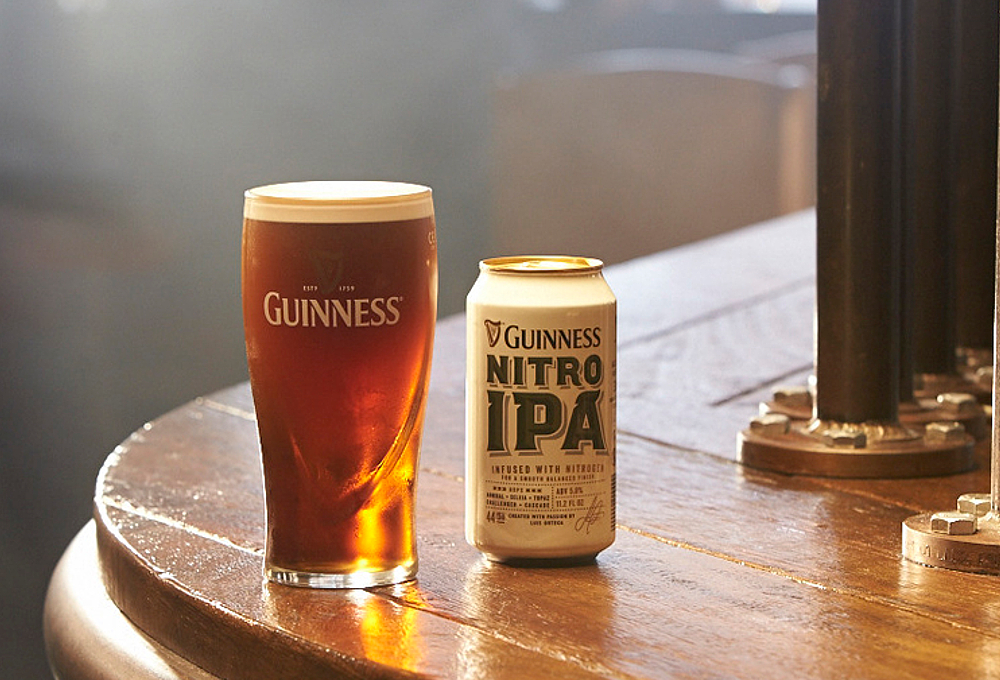
The new cans are beige, with black lettering for the Guinness logo, a signal change for the brand known for its iconic stout.
A tawny gold in the glass due to the use of some roasted malt, Nitro IPA is the second recent release from the Irish brewer to mark a departure in both color and style from black-on-black Guinness Stout with its creamy bishop’s collar or variations such as the carbonated Foreign Extra Stout.
Last year, Guinness introduced its first color makeover with Guinness Blonde American Lager. A recipe created by The Brewers Project, including American brewer Joe Gruss, that beer is brewed in Latrobe, Pennsylvania. The Brewers Project has also launched new beers sold in Europe — Dublin Porter and West Indies Porter – brewed at St. James’s Gate.
Given the explosion of interest in IPAs in the American market, Nitro IPA is a significant departure for the pilot brewers.
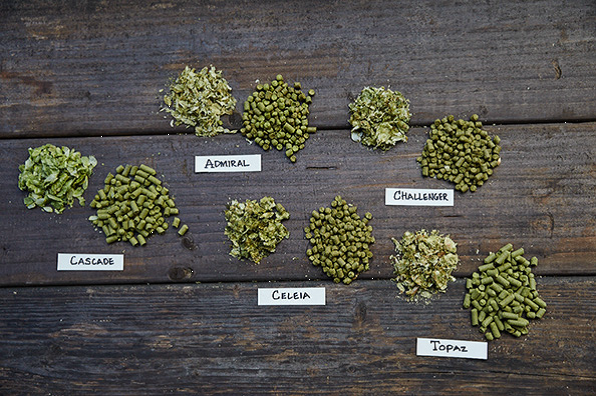
There is no doubting the Guinness character of this IPA. The aromatics from the Topaz, Celeia, Challenger and Cascade hops emerge from the surge and settle of the nitrogenation and announce an India Pale Ale. But it is more restrained than some American hop-forward IPAs and the hop bombs. The roasted barley makes the malt a little less chewy or sweet and the nitrogen helps smooth out the bitter taste starting with the Admiral hops used in the boil. There is enough bitterness to leave a light aftertaste on the tongue, but the IBU rating is a relatively modest 44.
There is no doubting the Guinness character of this IPA. The aromatics from the Topaz, Celeia, Challenger and Cascade hops emerge from the surge and settle of the nitrogenation and announce an India Pale Ale.
The beer is complex, but more balanced and approachable due to the choice of an English IPA style versus American and due to the familiar Guinness touches, including the same yeast as used in Guinness Stout. One can imagine this beer being a welcome addition to the taps at pubs and beer bars where Guinness is served, and in that sense it encourages people to engage a new style without leaving the Guinness brand. But ultimately the market will determine if a well rounded IPA finds a broader reception in pubs due to drinkability and on shelves in the form of canned six-packs.
The key to brewing this IPA was getting the engaging aromas by whirlpooling with hops and then adding a hefty amount of dry hopping. The end game is to reduce the bitter impact on the palate by the use of nitrogenation to keep the taste buds more engaged.
“IPAs are complex and hoppy, but for some beer drinkers the bitterness can be too much,” said Luis Ortega, the brewer who created the recipe. “We aimed to make a balanced, smooth beer. Guinness perfected nitrogenated beer more than 60 years ago, so we believed we could really add something new to the style. There’s plenty of hoppy flavor, with citrus aroma to the fore, but the nitrogen rounds it all out. The mouthfeel is fantastic, and the use of Guinness yeast gives it an echo of the character of our famous stouts.”
The Nitro IPA also brings a new approach into an American market segment where craft brewers are now regularly experimenting with nitrogen-infused brews. It’s as if the long-playing maestro wants to demonstrate who’s got the licks when it comes to nitrogen pours. This includes the revolutionary widget Guinness introduced in the 1980s that brings nitro to the cans holding this new IPA. Those cans, by the way, are white with green and gold lettering, another signal change.
“There’s plenty of hoppy flavor, with citrus aroma to the fore, but the nitrogen rounds it all out,” said brewer Luis Ortega.
One of the appeals of Guinness Stout has been its relatively low ABV of 4.2 percent on tap. It lends itself to the classic pub session and extended stays at the bar or table among friends. While not in the session strata, the Nitro IPA is designed to stay close to this tradition. It has a relatively low ABV of 5.8 percent, considerably less alcohol than many American IPAs and is only a distant relative of Double IPAs.
To help launch the beer in the U.S., Guinness brought to the East Coast one of its ambassadors at St. James’s Gate, Domhnall Marnell. Speaking in a husky Irish brogue that belies a rather slender physique, Marnell’s first name is pronounced “dough-nal” as in the Irish version of Donald. He provided a fluid – as in Irish gift of gab – and well informed background to the story of Nitro IPA during a tour stop in Atlanta.
The key question is one of timing. Is Guinness just jumping on the IPA bandwagon? Are sales of stouts declining? Marnell replied that timing is important and the change in the marketplace is part of the decision to introduce an IPA. But the sales of Guinness are as strong as ever, he said, and the marketplace is only now ready for an IPA made the Guinness way.
“The IBUs are not a rating system for beers,” he said. “It’s not the more hops the better the beer. So we think 44 IBUs is all that you need. We think the timing is perfect.”
Although it technically doesn’t fall into the Session IPA category’s lower ABV, there is a drinkability thanks to the nitrogen and IBUs. “This is not a hop bomb that you’re going to drink one and then go, ‘That’s enough for me. I’m going to switch to something lighter,’” said Marnell. “This is a very sessionable beer, whether you’re an IPA fan or not. It’s something that anybody can come pick up and play. We’re proud of the balance that’s in the beer and that’s something Guinness has always lent itself to and focused on.”
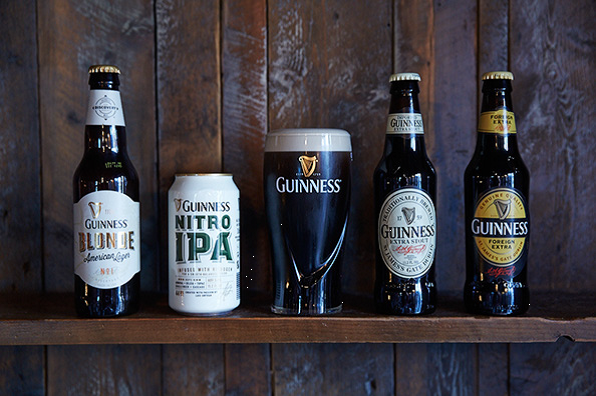
“Right now there is a great demand for choice,” said Marnell. “We want to make sure that no matter what the occasion is, no matter what kind of beer you like, there’s a Guinness style for you.”
Marnell drew an analogy to the use of oak barrels by California vintners during the rise of Napa Valley chardonnays. “It became this fight to see who would have the most oak in their chardonnay,” he said. “What eventually ended up happening, people said, ‘You know what? I don’t want something that’s over-oaked. I want to go back to something that’s just enjoyable and enjoy it for what it is.’”
The hop choices for aroma are interesting because they reflect worldwide origins. The fruity Topaz hops originated in Australia. Celeia is a variant of the Styrian Golding bittering hops from Slovenia. The English-born Challenger brings a spicy, floral note and Cascade adds the American floral and citrusy approach.
The English Admiral hops used in the boil, which are familiar to many a classic IPA, are earthy and high in alpha acids. Topaz and Celeia are added in the whirlpool and the Challenger, Cascade and Topaz are used in dry-hopping to elevate the floral, citrus aromas.
Peter Simpson, the lead brewer at The Brewers Project, said in one of the company’s YouTube videos that the dry hopping is done in such quantity that a vessel had to be built to circulate beer through an ultra-hopping phase and then reintroduce it to a larger quantity of beer during conditioning. Otherwise, he said, each batch would require 375 kilos of dry hops to be transferred to each bright beer tank.
Nine different hop varieties were tried until the final combination was chosen. The brewers also went through ten different recipes.
In the big picture, The Brewers Project is about changing the perception of Guinness, said Marnell. The company wants to be known as a brewer, not just the maker of one popular stout. “When I say Guinness, you think Guinness Draught immediately,” he said. “That beer didn’t exist until 1959. If I had said Guinness to you in 1958, you would have thought of a very dry carbonated Irish Stout. Back in the 1700s, if I had said Guinness to you, you’d have pictured red ale. So Guinness has always been about evolving and changing with the beer times. Guinness is about bringing classic brewing techniques and marrying them with the most modern technology possible.”
The strategy that began in the U.S. with Guinness Blonde American Lager is part of a worldwide effort. “At the moment in different regions of the world we’re trying to focus on what that market is looking for,” said Marnell. “Currently in Ireland we have Hop House 13 Lager, which is really providing a good alternative to Guinness drinkers in the summer. We’ve also got two bottled beers, Dublin Porter and West Indies Porter. They were originally supposed to be for Ireland and the U.K. but it looks like they’ll be coming (to the U.S.) in several months.”
The company, long known for creative promotion such as the use of the Toucan bird image and Guinness World Records, which began as a book in 1955, is introducing its latest beers through creative traditional TV ads and digital advertising to reach millennials that includes a focus on both past accomplishments and innovation.
“Right now there is a great demand for choice,” said Marnell. “Beer drinkers are the least loyal people in the world. They go out and drink four different beers, flights are becoming huge. We want to make sure that no matter what the occasion is, no matter what kind of beer you like, there’s a Guinness style for you. Not everybody loves hoppy beers. Great, have an Irish Stout. Not everybody likes that coffee flavor. Now you have an IPA that still has that same rich texture that’s in the Draught beer as well. So it’s all about choice, if the world wants to drink a lot of different styles as possible, great! We’ll make as many as possible and bring them out. So it’s all about getting good beer in people’s hands.”
The changing of the beer line-up doesn’t depend on Nitro IPA, although it’s evident from the roll-out Guinness has some strong expectations for this new beer in terms of how the brewery presents itself to beer drinkers.
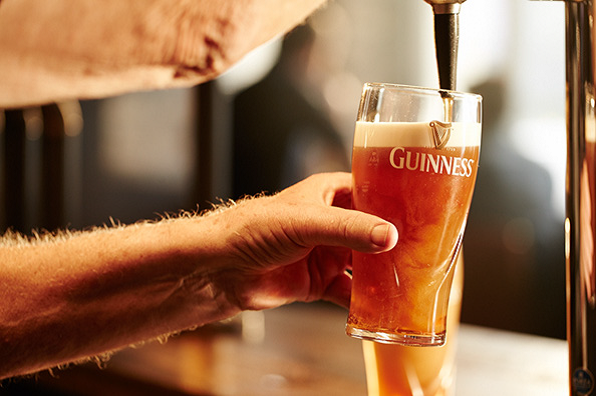 “We’ve almost become a victim of our own success,” said Marnell. “People don’t see Guinness as a brewery but as a company that makes this one beer. But there’s a range of beer already out there. What we’re trying to show is that our brewers do a lot of things well and they’ve got a lot of things up their sleeve. The current beer market is so open to change and so open to choice, the brewers want to make sure they have as many beers out there as possible. But we won’t sacrifice on quality and we’re never going to release a beer just for the sake of bringing something to the market.”


Comments 0
No Readers' Pick yet.