


A Canny Response to Craft Beer’s Downturn Turned Upside Down
 Story by:
Jonathan Ingram
Story by:
Jonathan Ingram
In a year’s time, the question of “Cannabis in a can?” may be defunct thanks to an overnight change in the Farm Bill law regulating consumable hemp products. Poised to take effect no later than 2027, the new law may put the THC drinks category out of business just when it was literally hitting new highs.
Touted as anxiety-reducing without a hangover, the drinks made with extracts from hemp are considered a socially acceptable way to consume pot. But the federal loophole that allowed THC drinks and their makers to prosper was closed overnight when the Congress passed the legislation to reopen the federal government after an unprecedented 43-day shutdown.
Made by craft brewers and independent beverage start-ups, drinks featuring tetrahydrocannabinol, the psychoactive ingredient in cannabis, and their endless varieties of flavors have become the new heady toppers. Their focus on health and wellness and the eternal interest in marijuana, or weed, created a new pathway. Made with soda or seltzer, these drinks with names like Cheech & Chong’s, RYTHM, and Happy Flower have nothing but zeros when it comes to calories, caffeine or alcohol.
The current uppercase darlings in the drinks business are RTD cocktails and non-alcoholic, or N/A beer. THC drinks threatened to become the latest candidate to join those two market juggernauts—until lobbyists on Capitol Hill persuaded lawmakers that THC derived from hemp flouted the federal regulation of cannabis.
The boom in THC drinks relied on the 2018 Farm Bill that gave 0.3 percent of Delta-9 THC in hemp legal status on the federal level. Sponsored by Sen. Mitch McConnell, whose home state of Kentucky grows tons of hemp, this loophole was big enough to allow an industry to drive through it. Specialty companies began extracting concentrations of Delta-9 from flowering hemp that enabled beverage and edible makers to meet the legal limit on a volume or weight basis.
But just prior to when spending bills were voted on by Congress to end the shutdown, Sen. McConnell expressed regret about the hemp loophole and led the move to change the exemption in the 2026 Farm Bill. At the eleventh hour, legislation that allowed no acceptable legal level of Delta-9 derived from hemp was attached as a rider.
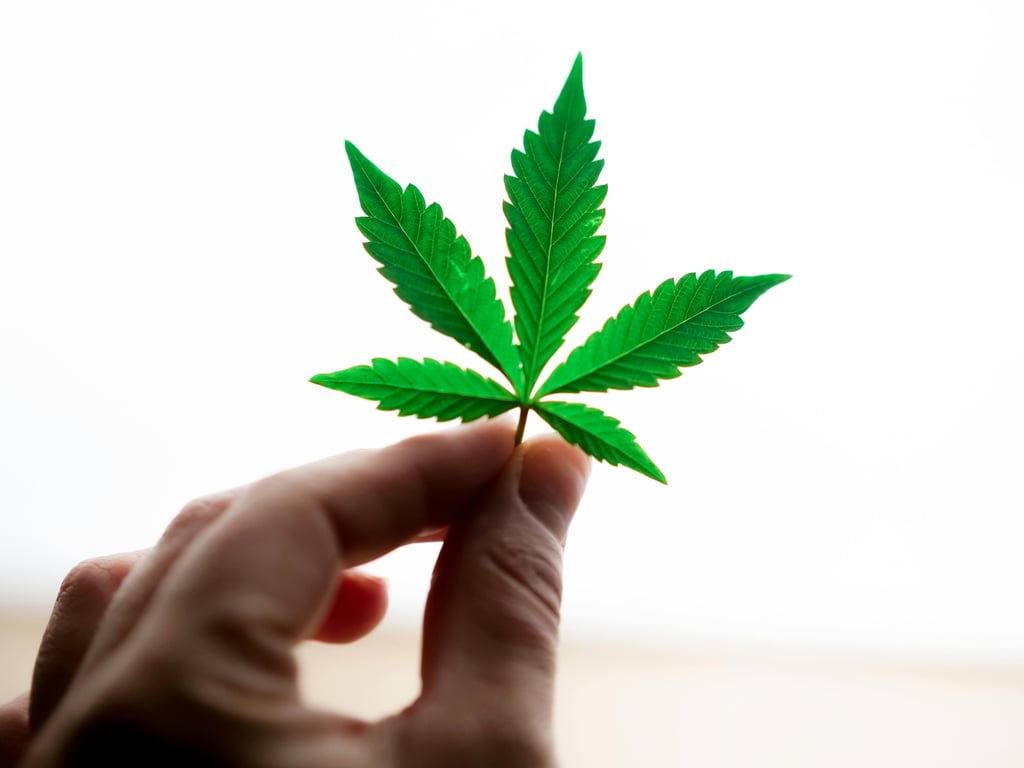
Presently, 24 states have legalized recreational use of marijuana and seven have decriminalized it. Will states do the same with Delta-9 THC? In the short term, there is massive uncertainty and possible price increases due to flowery hemp (which has far higher THC content than hemp used to make rope and other products) becoming unavailable.
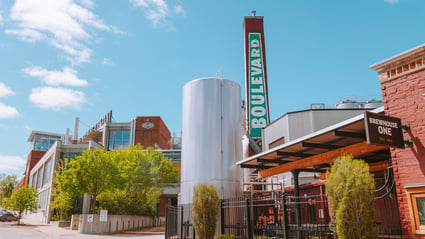
In a circumstance reminiscent of the rise of independent breweries, major craft brewers such as Boulevard, Revolution, Rhinegeist, Scofflaw and Surly have expanded their offerings with THC drinks in no small part due to the shrinkage of the beer market that began with the COVID pandemic.
Boulevard is exploring the “waters” in Kansas City with Berry Jane Quirk, a seltzer. Chicago’s Revolution branded its infused waters as Reverb Splash. Minneapolis-based Surly committed to a line known as Take Five consisting of tonics, teas, mocktails and lemonade. Atlanta’s Scofflaw stuck with its original branding for a line-up of flavored drinks such as Passionfruit and Strawberry-Lemonade. Shortly before the new Farm Bill was passed in November, Rhinegeist announced its new Fuzzy Bones line, led by Blood Orange Tangerine.
The opportunity to expand into other states comprised a key calling card for craft brewers looking at non-alcoholic infused beverages. “Craft beer appeals to people that already drink,” said Scofflaw founder Matt Shirah in comments shared with The Beer Connoisseur prior to the new legislation. “THC beverages attract those same consumers, but throw in cannabis users, the health and wellness crowd, the calorie conscious, and people who do not consume alcohol.”
Scofflaw has used THC drinks to rebound from the slowdown in craft beer sales. But that could all change. “We haven’t seen the final wording yet (of the new law), but we have over 100 employees and it could shut us down,” said Shirah the day after the new Farm Bill passed. “The state could lose nine figures of economic impact and $150 million of taxable revenue.”
“These factors could lead to further normalization of these products,” continued Shirah. “Beverages have a very wide appeal, and I see every single day the broad appeal of these beverages. Consumers range from early twenties to people in their eighties. I bring both beer and THC beverages to every social event I attend, and THC always steals the show. For years no one asked me for a tour of our facility, but that has changed over the last six months. People just aren’t coming for the malt beverages anymore.”
Given their acceptance of weed smoking and marijuana-laced brownies, Boomers, Gen Xers, Millennials and Gen Zs form a comprehensive cross section of THC drinks consumers. A capstone has been the acknowledgement by state and federal governments of the medical benefits of cannabis, including CBD, also served in THC drinks.
Shirah suggested that lobbyists for the marijuana business helped persuade federal legislators to vote in favor of the change in the law—as well as the alcohol industry.
“Medical and recreational cannabis are playing a defensive game here,” he said. “And you’ve got the alcohol industry. They’re having so much trouble selling their products. They think hurting other peoples’ business will come back to them. That’s not the way it works. People have moved on from alcohol and they’re looking for something new that works.”
Similar with the arrival of seltzer, there has been pushback from craft brewers about yet another competing category, one that is decidedly different from brewing beer.
Where craft brewers had to battle larger competitors on the marketing and distribution side, THC drink makers have had to negotiate the legislative mine field. On the plus side, the three-tier law was not in play, allowing smaller manufacturers to make sales direct to retailers according to each state’s laws.
“These products became the top selling item in all of our tasting rooms,” said Shirah, who has two breweries in Atlanta and one in Columbus, Ga. in addition to a rapidly growing contract business.
The contract business for THC drinks, however, is going to be subject to interstate commerce laws. Even if a state makes THC drinks legal in the same manner as decriminalizing marijuana for personal use, distribution to other states will be subject to the federal laws.
High’s and Lows: The Murky Legal Status of THC Beverages
Here’s a legislative sampler that includes both coasts and states in between. It’s a crazy quilt, underscoring the challenge ahead if states want to continue to claim taxes from sales of THC drinks just as they have in legalizing cannabis for medical and recreational use.
Minnesota – This state’s response to the new federal law could become a bellwether for the THC drinks industry. In 2022, Minnesota made hemp-derived THC-infused beverages legal up to 5 milligrams per serving, the first regulatory approach to their sudden arrival. Although drink makers who had banked on 10 milligram servings were nonplused, the legislation was innovative in distinguishing the use of hemp-derived products from state laws covering federally prohibited marijuana. In this light, the law allowed for the sale of THC drinks in general retail and its universal availability helped create an industry that has reached $180 million in annual revenue. Will Minnesota take the next step and decriminalize hemp-derived THC legal for personal use?
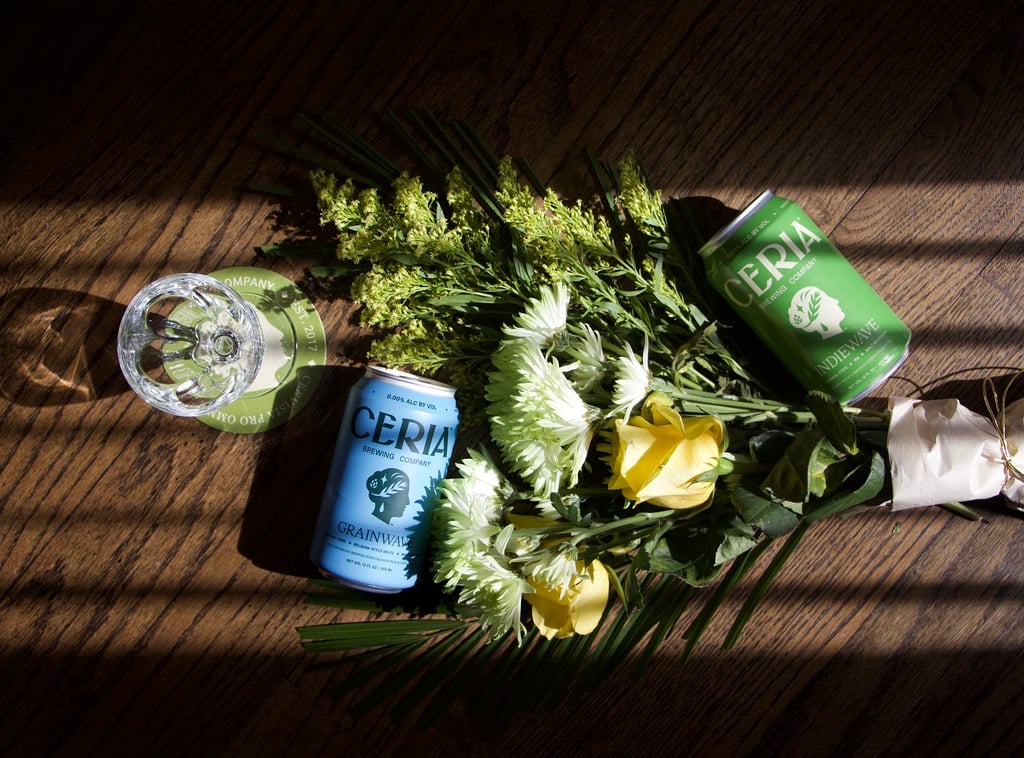
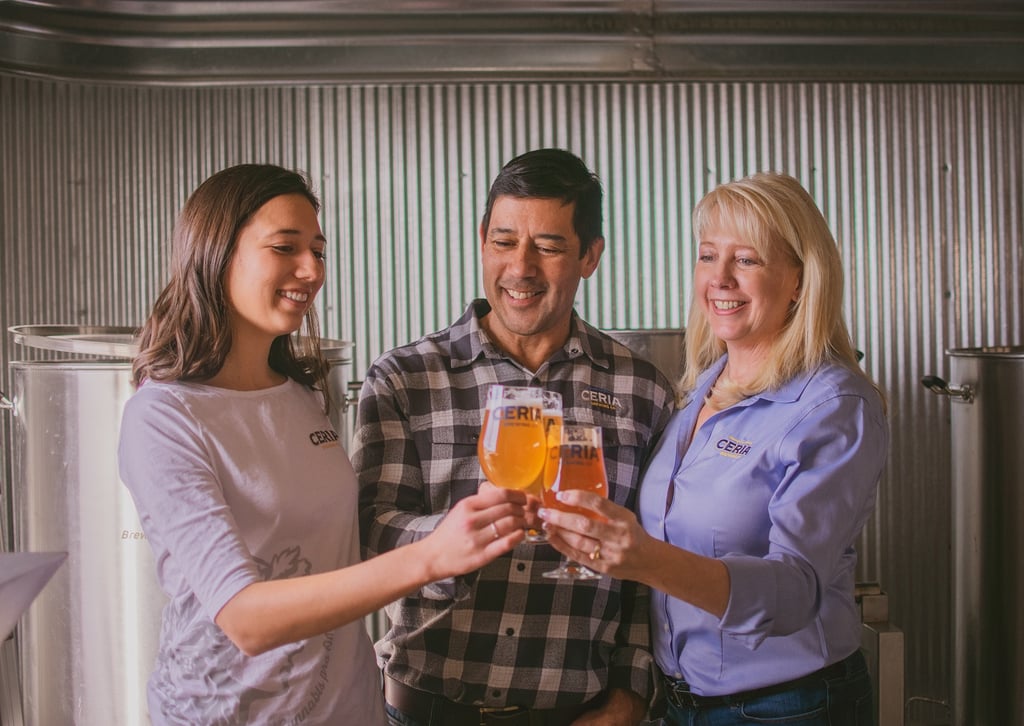
Colorado –A boom-state for craft beer and recreational marijuana not surprisingly became ground zero for THC drinks thanks to Keef Brands, a beverage startup founded in 2010 in Boulder. Segueing from soft drinks to caffeinated and vitamin-driven energy drinks, the company founded by Erik Knutsen added cannabis-infused drinks when recreational marijuana arrived in 2014. Keef began distributing drinks to states where recreational use is legal before growing to a 17-state footprint with THC drinks thanks to the federal loophole. Keith Villa, the inventor of Blue Moon for Coors, has recently jumped into the THC drinks industry as a consultant to Keef. His established knowledge of infusing beer with cannabis derived from flowering plants under his Ceria brand may help Keef and the THC drinks weather the storm in Colorado.
California – After declaring them illegal in 2024, Governor Gavin Newsome signed new legislation in October of 2025 to regulate THC drinks by requiring their sale through licensed dispensaries to consumers at least 21 years old. The stated goal of Assembly Bill 8 was to eliminate “bad actors” and the sale of intoxicating products to children while funding more law enforcement tools. The bill also circumscribed synthetic THC and inhalable versions by outlawing them. The governor’s reversal indicated a groundswell of consumer demand. Will that be enough to prompt new legislation under California’s next governor? In a proposition-prone state, there’s always a chance citizens may call for a vote on the decriminalization of THC drinks.
Ohio –Recreational cannabis laws were recently adopted after a citizen initiative in Ohio, a state that exemplifies the regulatory complications for THC beverages. In October of 2025, Governor Mike DeWine issued an executive order to ban the sale of intoxicating hemp products in gas stations and convenience stores. The order was overturned in an appeals court. In the same month, the Ohio House passed legislation to allow THC drinks sales from dispensaries, bars, and stores with volume limits on Delta-9 falling within the usual 5 and 10 milligram levels. The bill met resistance due to limiting the number of dispensary outlets to 400. In future votes, limiting THC drinks to dispensaries could become a critical and persuasive issue.
Georgia – Shortly after Governor Brian Kemp signed an order that legalized hemp products under federal guidelines, in early 2025 representatives in the state’s General Assembly tried to outlaw drinks derived from hemp. But absent evidence, the hysteria over teenagers driving under the influence calmed down and the proposed bill was tabled. The 2026 legislature that once threatened to kill THC drinks may now come under pressure to decriminalize them despite the federal ban due to established demand by consumers and ongoing tax revenues. But any new legislation in favor of THC drinks will be a big challenge in a state where the Bible Belt influence meant Georgia was the last to allow over-the-counter sale of beer at breweries.
By the end of 2025, enough states made it possible for manufacturers and drinkers to do their thing, establishing THC beverages as a major stand-alone drinks category. Time will tell if states and beverage makers find a way sustain this movement in the face of the 2026 Farm Bill’s new reality.
Comments 0
No Readers' Pick yet.