






Raise a Glass (Darkly) to Daniel Wheeler
 Story by:
Martyn Cornell
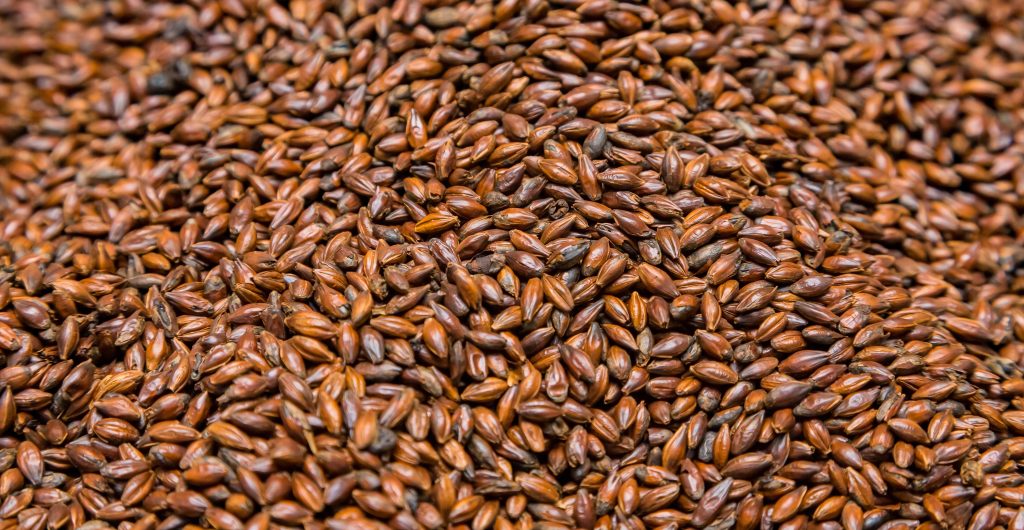
Just over 190 years ago, one of the most important inventions in the history of brewing was unveiled in Britain by a man named Daniel Wheeler: black malt, known as “patent malt” for the patent Wheeler was granted on his invention. For the first time brewers could make the sort of dark beers popular with the public, using almost all pale malt, which was vastly more economical – and profitable – than the mixture of pale and brown malts they had been using to make beers such as porter and stout.
The problem for the brewers that Wheeler solved had been evident since the arrival of the saccharometer in British breweries from about 1770 onwards. For the first time brewers could accurately gauge the amount of fermentable sugar they wrested from different types of malt, and they could see what poor value the brown, high-dried malts they used for making porter offered as compared to pale malts. If a good pale malt produced an extract of 82 pounds per quarter, Ware brown malt from Hertfordshire, the sort used by London porter brewers, might give only 56 pounds of extract per quarter, 32 percent less. Brown malt gave porter its color and flavor, but it was poor value compared to pale malt for producing alcohol.
Retail beer prices remained remarkably stable in the 18th century while taxes and other costs increased, meaning the real price of a pot of porter fell by a third compared to the rising cost of other goods in the four decades up to 1800. The big porter brewers thus had a strong cost incentive to mash the malt that gave the highest extract. When they discovered what poor value they were, many stopped using 100 percent high-dried brown malts, and added 60 percent or more of lighter-cured malts to their porter mashes. But using paler malt, in whatever proportion, meant porter lost some of the vital dark color drinkers expected. What the brewers needed was a coloring agent that enabled them to brew with pale malt and still produce a dark beer.
One solution was the use of liquorice, either “straight” or in the form of “Spanish juice,” or “Spanish liquorice,” liquorice boiled in water which was then evaporated. Many porter brewers used burnt sugar, known as “essentia binae.” This was made by boiling muscovado sugar in an iron pot and then briefly setting fire to it. However, essentia binae had been illegal since at least 1713, when it was one of several “unwholesome” ingredients banned from use in beer (the problem being that, unlike malt, the sugar was untaxed, and the authorities wanted only taxed items to go into beer.) Another coloring agent, wort evaporated until it was the color of treacle, and equally viscous, was promoted from 1802 by Matthew Wood, a member of a firm of London hop merchants and wholesale druggists. But it was caught in a popular drive against “adulteration” of beer, despite being made from malt, and the Excise authorities made several prosecutions of brewers who used Wood’s coloring.
In 1817 Daniel Wheeler, who had previously made sugar-coloring, came to the porter brewers’ aid, with a method of roasting malt at more than 400 degrees Fahrenheit or more for up to two hours in an apparatus very similar to a coffee roaster. The Excise authorities could not object, since the colouring was made from malt upon which tax had been paid, though they did insist on the roasting house being at least a mile from the malthouse, and malt roasters had to have a special licence.
Wheeler’s invention was immediately hailed as the great breakthrough it was. Dr Thompson’s Annals of Philosophy for December 1817 declared: “There are few patents that promise to be of such great national importance as one lately obtained by D. Wheeler and Co for a new and improved method of preparing brown malt.
“The essential difference between ale and porter is that the latter liquor is of much deeper colour than the former, and has besides a peculiar empyreumatic [burnt or roasted] flavour, not easily defined, though universally known. This colour and this flavour were originally obtained by mixing with the pale malt commonly used for brewing a certain proportion of malt dried at a somewhat higher temperature, and, in consequence of being thus slightly scorched, capable of communicating to the water in which it is infused a deep tan-brown colour, and a peculiar flavour.
“In the composition of the best genuine porter two parts of brown malt are required to three parts of pale malt. The price of the former is generally about seven-eighths of the latter; but the proportion of saccharine matter which it contains does not, according to the highest estimate, exceed one-half that afforded by the pale malt, and probably on an average scarcely amounts to one-fifth. Taking, however, the proportion of sugar in brown malt even at one half, it follows that the brewers are paying for the colour and flavour of their liquor one-fifth of the entire cost of their malt. The price of this latter article has of late years increased enormously, and the mutual competition of the manufacturers has become so active, as to offer temptations, not easily resisted, either of supplying the colour and flavour of porter by the use of Spanish liquorice, burned sugar, and other similar ingredients which, however innocent in themselves, are prohibited by the Legislation, or of diminishing the strength of the liquor, thus rendering it more likely to become sour or vapid by keeping, and hence bringing on the necessity of using alkaline substances to correct the first; and deleterious narcotics, such as coculus indicus, to supply the deficiency of alcohol.
“It appears that the patentees have discovered that, by exposing common malt to about 430 deg. Fah. in close vessels, it acquires a dark chocolate-brown colour, and is rendered so soluble in water, either hot or cold, that, when mixed with pale malt in the proportion of one-eightieth, it communicates to the liquor the perfect colour and flavour of porter.
“From this it follows that the brewer, by employing four parts of pale malt, and one twentieth of a part of porter malt, may obtain a stronger liquor than from his usual proportions of three parts of pale and two parts of brown malt. The savings thus occasioned ought to be divided in equity between the patentee, the brewer and the public. The revenue will be benefited by the increased consumption which will necessarily result from an improvement in the quality of the porter; and both the revenue and public morals will derive advantage from the greatly diminished temptation to fraudulent practices.”
There are several significant points to be noted here: Dr Thompson’s description of porter before Wheeler, made from 40 percent brown malt and 60 percent pale, as “deep tan-brown”, and how this color could be reproduced perfectly by a mash that was under 1.25 percent black malt, indicates that late 18th and early 19th century porters were far from the completely black color we associate with the style today. For comparison, in the middle of the 19th century Guinness seems to have been using 3.2 percent black malt in its porter, which would have given a much darker color. Dr Thompson also asserts that this tiny proportion of black malt also gave the “perfect … flavour of porter.” But in 1822, five years after Wheeler’s invention, the brewer John Tuck complained that “the real taste of porter, as originally drank, is completely lost … Our ancestors brewed porter entirely with high dried malt; while in the present day, in many houses, high dried or blown malts are entirely omitted.” However, Tuck conceded that while “to say the truth, there is little of porter left, but the name … the taste of the public is so changed, that very few would be found to fancy its original flavour.”
The big London porter brewers all took up Wheeler’s patent malt: Whitbread in 1817, Barclay Perkins in 1820, Truman by 1826. In Dublin two roasting houses were set up by members of the Plunkett family to supply that city’s porter brewers. An advertisement for Plunkett Brothers in 1873 quoted a letter from Guinness saying the St James’s Gate brewery had used its products for “over fifty years” – in other words, since at least the very early 1820s. However, while the Dublin brewers, or at least Guinness, now used pale malt and black patent malt only, the London porter and stout brewers continued to use brown malt as well as pale and patent, to create the flavors they wanted. How much difference did this make? That’s a subject I’ll return to at a different time.
Cheers!

Conversations (0)
No comments yet.