


The State of Craft 2026
 Story by:
Jonathan Ingram
Story by:
Jonathan Ingram
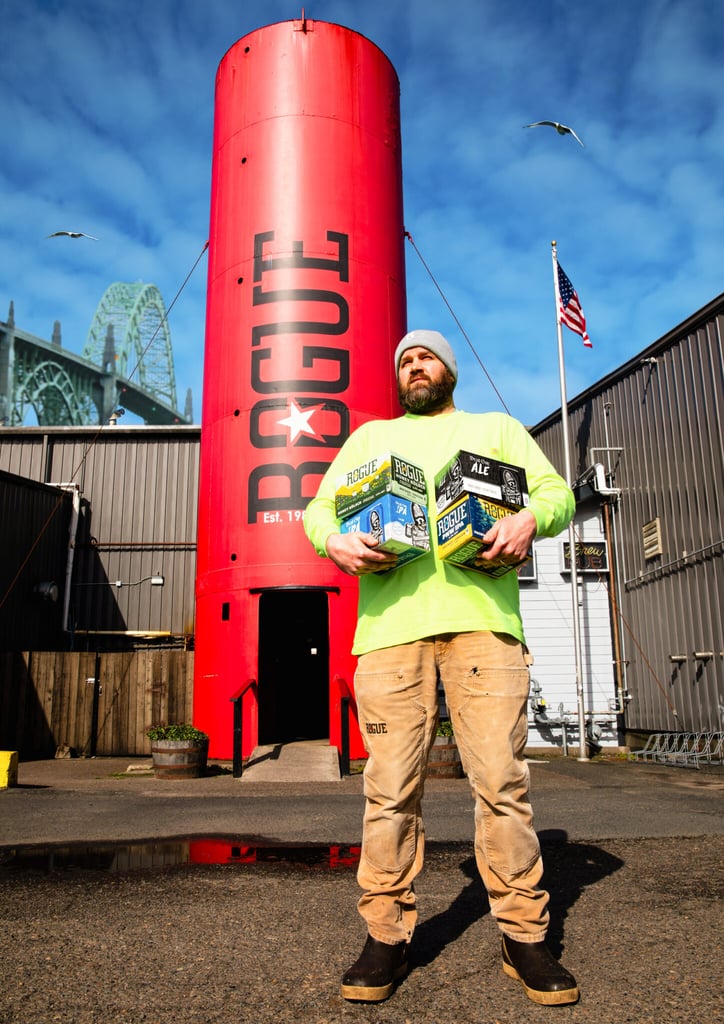
Looking back on 2025, the rather dreary numbers about a steady decline in the consumption of craft beer, as well as beer in general, were concerning enough. But far worse news arrived at the end of the year when Rogue Ales & Spirits closed its doors and filed for liquidation under Chapter 7 bankruptcy.
Craft lost another of its pioneering breweries, one that took on the big brewers with innovative beers, aggressive branding, and an outrageous dedication to the ethos of independent brewing.
During the heady growth of the early 2000s, which was spurred in part by the Brewers Association adopting “craft” as its brand, Rogue was not content to take off alongside other inde-pendent breweries. Rogue Nation was always a different breed.
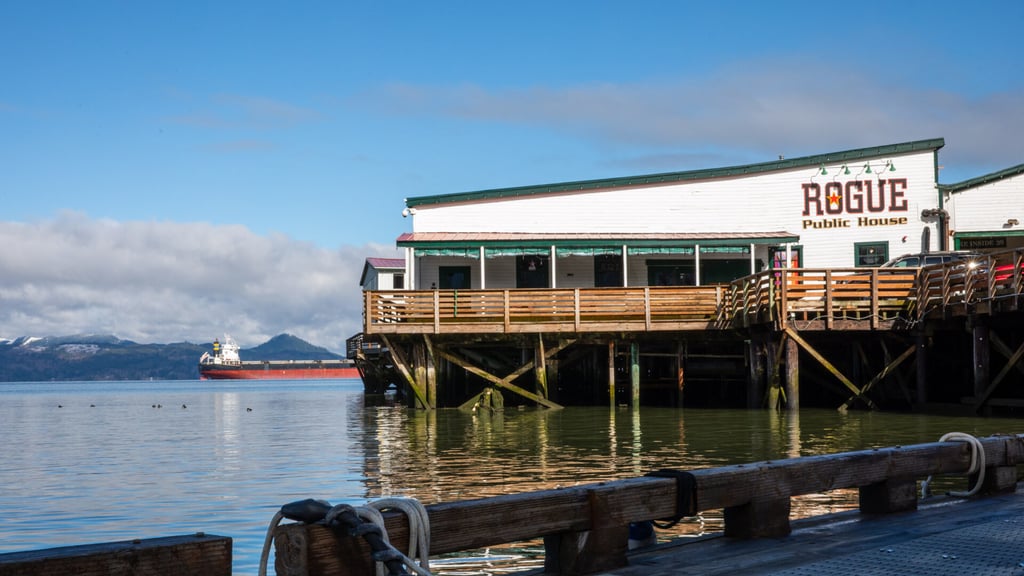
Headquartered on the picturesque Yaquina Bay in Newport, Oregon, Rogue embraced the spirit of brewing on an almost religious level by adding its own hopyard and then a farm to generate barley and other ingredients like hazelnut and Oregon’s local favorite, marionberries. The farm hosted bed and breakfast guests who could witness the mystical fog from the Oregon coast drift over the fields. Who other than Rogue would cooper its own barrels?
Did this grand, oft-decorated experiment—and now an incarnation of Icarus—somehow fail overnight or did we just not notice the decline?
If the shock closure of other legacy breweries in recent years are any indication, Rogue’s response to the change in collective palates fell behind the times, which now favor less heavy IPAs and lagers. Only recently did Rogue introduce a new line based on its flagship Dead Guy Ale. The other option, introducing totally new beers, did not happen soon enough as sales volume sank and debts increased. Batsquatch Hazy IPA, for example, was released in 2021 – a full decade after the hazy, juicy revolution first took off in New England.
Sifting through the spent grains of another unexpected collapse, the situation describes an all-too-familiar failure to innovate or to shift marketing gears to stay close to the preferences of craft beer lovers – long the methodology for breaking into big beer’s stranglehold. Rogue stuck with cult classics like Shakespeare Stout and Hazelnut Brown Nectar in addition to Dead Guy, a brilliant hoppy hybrid of ale and Maibock lager brewed with head brewer John Maier’s proprietary PacMan yeast.
It was never about the big numbers, rather living and breathing the mission. Among its other accomplishments, Rogue and Maier helped define Double IPA as a style along with Russian River Brewing. “Dare. Risk. Dream.” was the stated mantra. “Dare more than others think is wise. Risk more than others think is safe. Dream more than others think is practical.”
There was some humor in the origin story.
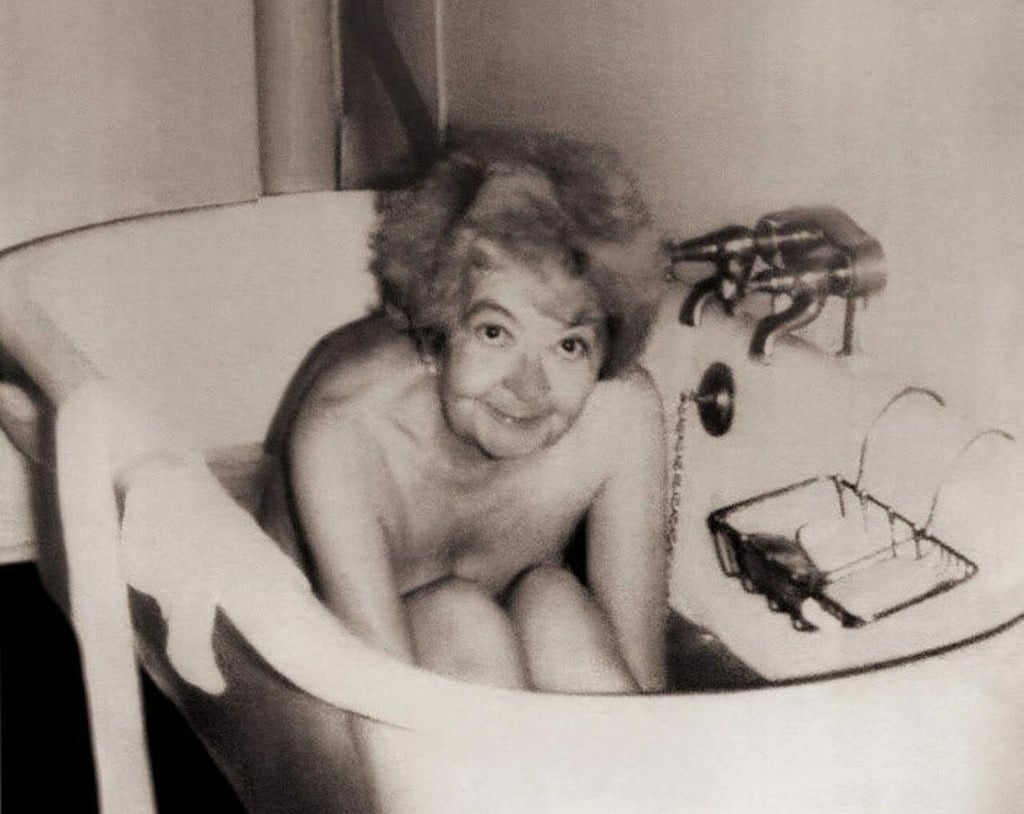
When co-founder and de facto leader Jack Joyce made a deal to establish the brewery’s first location, he rented a vacant garage from restaurateur “Mo” Niemu alongside the Rogue River in Ashland, Oregon. She had terms. Mo insisted the brewery “feed the fisherman” and that Joyce put up a photo in his new brewery of her in the bathtub because she “always wanted to be above a bar.” After the migration to nearby Newport and a full-scale brewery, the fetching but discreet bath-tub photo of a middle-aged Mo again appeared above the bar eventually in all of Rogue’s satellite pubs, which were yet another of the brewery’s pioneering approaches.
Rogue’s ranking by volume on the Brewers’ Association list was 33rd in 2021. But just three years later, it had dropped to 50th. Peak production of 117,000 barrels in 2014 was followed by a slow decline in sales of more than 50 percent. Amid such closely guarded secrets as a failure to pay taxes to the Port of Newport for five years, the brewery’s misfortunes were overlooked until the doors suddenly closed without prior notice in November.
It’s the most egregious sign to date of the end of romance in craft brewing, which prizes inspired individualism, like that of the audacious Joyce and creative Maier, paired with a focus on community. “Feed the fishermen.” But given that employ-ees were dismissed at Rogue’s headquarters in Newport and at the satellite brewpubs without notice, the notion of craft rising above business imperatives seems to be, once again, expecting too much.
It is a tragic footnote that among Rogue’s $16 million in liabilities was a $10 million debt from 2022, when the brewery lost a lawsuit over a fatal DUI, a highly unusual and rare verdict given the dram shop laws.
Maier, who retired in 2019, managed to innovate and seemingly defy gravity by distributing to all 50 states in the early 2000s as well as to Japan, where it was one of the most popular American crafts. A member of the “class of 1988” that included fellow Oregon icon Deschutes Brewery as well as New York’s Brooklyn Brewery, among others, Joyce was the first of that group to achieve national distribution, banking on his branding skills learned as an executive at Nike. It is probably not ironic that a long decline in output began following the 2014 death of Joyce, who remained active as an advisor after turning over the reins of the brewery to his son Brett in 2005.
Melancholy has always been the residue of an unbridled romantic philosophy, and craft now finds itself squarely in the melancholic phase with the almost unthinkable loss of Rogue. In its demise, it joins other great brewers on the West Coast such as San Francisco’s Anchor Brewing and Seattle’s Redhook, originators of the movement in the 1960s.
The bottom line: it’s a tough business. Such phases have happened before; witness craft’s setback in the late 1990s after becoming a stain on Wall Street. Growth took off again in the early 2000s under the newly created Brewers Association, followed by the great leap forward with IPAs and then the reversals of the pandemic.
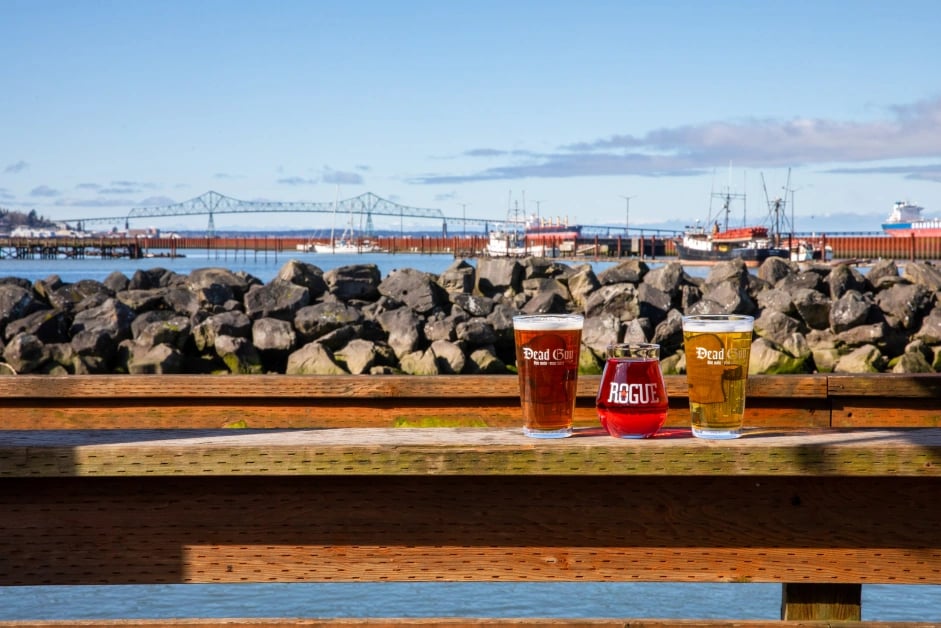
Is this the nadir of the post-pandemic contraction, the bottom of the beer barrel?
There are promising signs despite the BA’s mid-year report for 2025, which tracked data through June. It confirmed the four percent drop in sales by volume in 2024 has yet to abate. On the positive side of the ledger, craft continues to command nearly 25 percent of the overall beer market on a dollar basis.
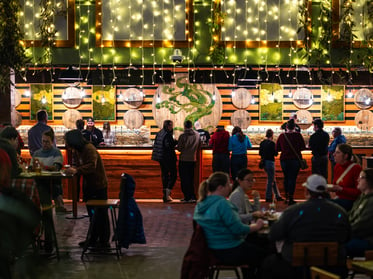
Although closings continue to outnumber open-ings, the total number of independent breweries in the U.S. remains just shy of 10,000, a figure attributable to the success of brewpubs and smaller taprooms, an area of growth compared to midsize and regional breweries.
The wildcard is non-alcoholic beer, increasingly popular in an era of health and wellness. If sales in this category grow as more brewers undertake the difficult process of making tasty beers without alcohol, will that offset the recent declines?
Breweries of all sizes continue to increase the total number of employees, perhaps the biggest cause for optimism. More workers are required to sustain an ongoing focus on community engagements and the resulting on-premise sales, which have a much higher margin over distributed kegs and packaged beer. The over-the-bar experience is perhaps craft’s most valuable tool. Tracking in-house sales is the surest way for brewers to know if they are meeting their followers’ criteria of flavor and changing sensibilities when it comes to style and, above all, innovation.
RIP Rogue.

Comments 0
No Readers' Pick yet.