



Celebrating Munich Oktoberfest: The Beer Enthusiast’s Ultimate Guide
Get ready for the ultimate guide to Munich Oktoberfest – the world's largest beer festival! Learn about its history, traditions and best places to celebrate in Germany and beyond.
 Story by:
Editorial Dept.
Story by:
Editorial Dept.
Oktoberfest is more than just a festival; it’s a global celebration of Bavarian culture, tradition and—most importantly—beer. Originating in Munich in 1810, this iconic event has grown into the world’s largest Volksfest, attracting millions of beer enthusiasts from all corners of the globe. Whether you’re a seasoned beer traveler or a first-time visitor, Oktoberfest offers a unique blend of history, communal spirit and, of course, some of the finest brews you’ll ever taste.
Here, we will cover everything about Oktoberfest including its history and origin, famous traditions, beer tents and recommended options, top beers offered, best time and route to visit, tickets, accommodations and FAQs. Get ready to raise your stein and immerse yourself in the ultimate beer travel adventure!
History And Origins Of The Oktoberfest Festival
Oktoberfest traces its origins to October 12, 1810, when Crown Prince Ludwig of Bavaria (later King Ludwig I) married Princess Therese of Saxony-Hildburghausen. The citizens of Munich were invited to join the festivities, which included horse races, to celebrate the royal wedding. The event was so popular that it became an annual tradition.
The early years of Oktoberfest focused on horse races and agricultural shows, which highlighted Bavarian traditions and culture. Over time, more attractions were added, such as carousels and swings, along with small beer stands that laid the foundation for the beer-centric celebration it would become.
By the late 19th century, the horse races were discontinued, and beer became the focal point of Oktoberfest. The introduction of the iconic beer tents in the early 20th century solidified beer as the star of the festival. Munich’s brewers took this opportunity to showcase their finest brews, particularly Märzen, which evolved into the modern Festbier.
Today, Oktoberfest is the largest beer festival in the world, attracting millions of visitors each year. Held on the Theresienwiese (named after Princess Therese), the festival runs for 16 to 18 days, starting in late September and ending on the first Sunday in October. It has become a global phenomenon, with Oktoberfest celebrations occurring in various cities worldwide, though Munich remains the heart of the tradition.
Famous Traditions of Oktoberfest
Oktoberfest is not only the world’s largest beer festival but also a celebration steeped in history and tradition. Beyond the flowing pints and lively atmosphere, certain rituals have become iconic to define the essence of the festival.
The Oktoberfest Parade (Einzug der Wiesnwirte)
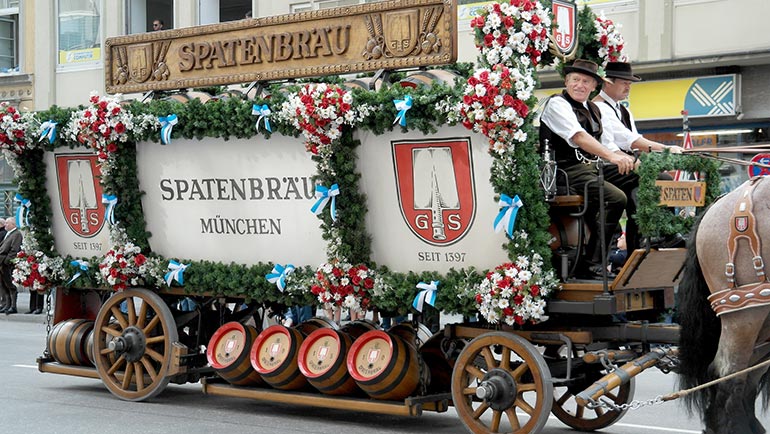
The Oktoberfest Parade, known as Einzug der Wiesnwirte, is a grand procession that marks the official opening of the festival. This tradition dates back to 1887 and involves the ceremonial arrival of the Oktoberfest landlords and breweries.
- The Procession: Led by the Münchner Kindl, the city’s mascot, the parade features horse-drawn beer wagons, decorated floats and marching bands. The participants are dressed in traditional Bavarian attire, including dirndls and lederhosen, adding to the festive atmosphere.
- The Route: The parade begins in the heart of Munich and makes its way to the Theresienwiese, the festival grounds. Thousands of spectators line the streets to watch this vibrant and colorful event, which celebrates Bavarian culture and the start of Oktoberfest.
The Tapping of the First Keg (O’zapft is!)
The most iconic moment of Oktoberfest is the tapping of the first keg by the Mayor of Munich. This tradition, known as O’zapft is!, meaning “It’s tapped!”, officially kicks off the beer festival.
- The Ceremony: Held in the Schottenhamel tent, the Mayor of Munich taps the first keg of Oktoberfest beer at noon on the first day of the festival. With a traditional wooden mallet, the Mayor drives a tap into the keg, and once the beer flows, he declares “O’zapft is!” This proclamation is followed by 12 gunshots which signals that the beer can now be served in all the tents.
- Significance: The number of taps it takes for the Mayor to successfully open the keg has become a point of pride and tradition. The fewer the taps, the better. The ceremony is steeped in history and symbolizes the beginning of the joyous beer-drinking festivities that define Oktoberfest.
The Costume and Riflemen’s Parade (Trachten- und Schützenzug)
Another major parade during Oktoberfest is the Trachten- und Schützenzug, or the Costume and Riflemen’s Parade. This event takes place on the first Sunday of the festival and showcases Bavarian culture and heritage.
- Participants: Thousands of participants from across Bavaria and beyond march in this parade, dressed in traditional costumes, including dirndls, lederhosen and ornate uniforms. Riflemen’s clubs, folk dance groups and musicians also take part to create a lively and colorful spectacle.
- The Route: The parade winds its way through Munich’s streets, ending at the Theresienwiese. Floats, horse-drawn carriages and marching bands add to the festive ambiance, making it a highlight of the Oktoberfest celebrations.
Traditional Bavarian Food
Food plays a significant role in the Oktoberfest experience. Traditional Bavarian dishes are served in the beer tents and at the numerous food stalls throughout the festival grounds.
- Signature Dishes: Visitors can enjoy hearty dishes such as Weißwurst (white sausage), Schweinshaxe (roast pork knuckle), Brathendl (roast chicken), and Brezen (pretzels). These dishes are often paired with the beers brewed specifically for Oktoberfest to create a perfect culinary pairing.
- Gingerbread Hearts (Lebkuchenherzen): These decorative gingerbread hearts are a sweet tradition at Oktoberfest. They are often inscribed with affectionate messages and worn around the neck or given as gifts.
The Ferris Wheel and Rides
While Oktoberfest is known for its beer, it also offers a variety of amusement rides, making it a family-friendly event. The Ferris wheel, first introduced in 1880, has become an iconic symbol of the festival.
- Amusement Rides: The festival grounds feature a mix of traditional and modern rides, including carousels, roller coasters and haunted houses. These attractions add to the festive atmosphere and provide entertainment for visitors of all ages.
- The Ferris Wheel: The Ferris wheel offers panoramic views of the festival grounds and the city of Munich, making it a popular attraction for visitors looking to take in the sights.
Traditional Clothing
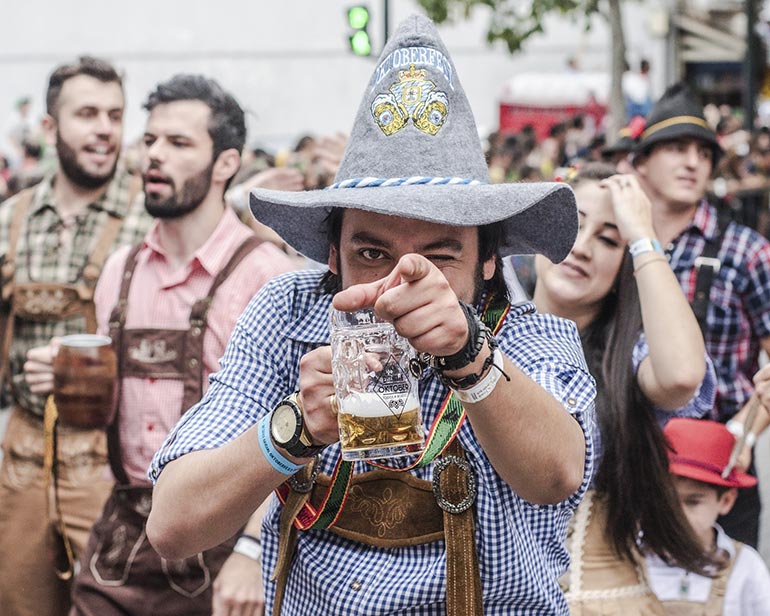
Embracing traditional Bavarian clothing is an essential part of the Oktoberfest experience. Both locals and visitors don traditional outfits, adding to the festival’s authentic and festive atmosphere.
- Dirndls: The Dirndl is the traditional dress worn by women, consisting of a fitted bodice, blouse, full skirt and apron. The design of Dirndls can range from simple and classic to elaborate and modern, with various colors and patterns. The way the apron is tied is said to indicate a woman’s relationship status—on the right means she’s taken, while on the left means she’s single.
- Lederhosen: For men, Lederhosen is the go-to attire. These knee-length leather shorts are typically paired with a checkered or white shirt, and sometimes with suspenders. Lederhosen is often embellished with traditional embroidery to add a personal touch to the outfit.
Traditional Bavarian Music
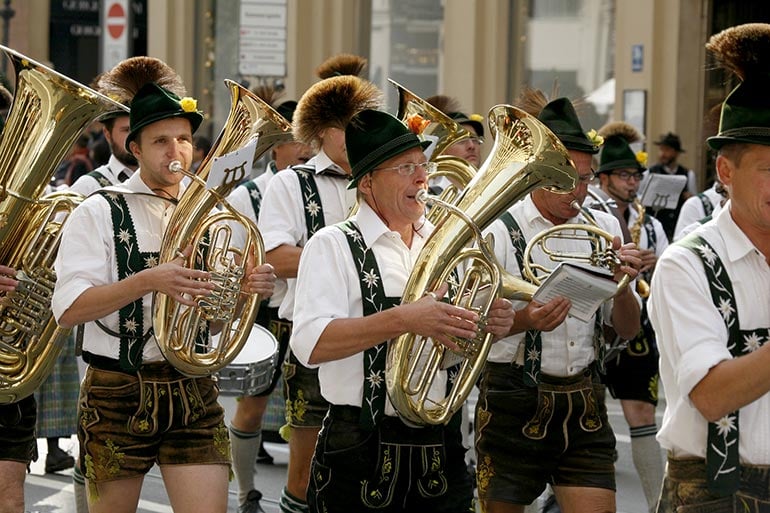
Music is at the heart of Oktoberfest, with each beer tent offering a unique musical experience. Traditional Bavarian music, including brass bands and folk songs, fills the air to create an energetic and joyful atmosphere.
- Sing-Alongs: Popular songs like “Ein Prosit der Gemütlichkeit” (A Toast to Good Cheer) are played frequently, with the crowd joining in for a toast. These sing-alongs bring people together and create a sense of camaraderie among festival-goers.
- Dancing: In some tents, spontaneous dancing breaks out, especially on the long wooden benches. While it’s more common to sway along to the music, some tents have designated dance floors where visitors can show off their best polka moves.
The Traditional Closing Ceremony
Oktoberfest ends with a traditional closing ceremony in the Hacker-Pschorr tent, known for its motto “Bavarian Heaven.”
- The Farewell Song: As the festival draws to a close, the band plays the song “Sierra Madre,” and the lights in the tent are dimmed. The crowd waves sparklers to create a magical and emotional atmosphere that signals the end of this fantastic festival.
- Final Toast: The closing ceremony often includes a final toast, where visitors raise their glasses one last time to celebrate the joyous weeks of Oktoberfest.
These traditions collectively create the unique and vibrant experience that draws millions to Oktoberfest each year which makes it much more than just a beer festival but a celebration of Bavarian culture and heritage.
Beer Tents And Their Unique Atmospheres
The Oktoberfest beer tents offer a diverse range of experiences, from raucous parties to refined dining. It hosts over a dozen large beer tents, each with its own distinctive vibe. Some tents can accommodate up to 10,000 people, making them mini-festivals in themselves.
Whether you’re looking to dance on tables with a stein in hand or enjoy a quiet meal with a glass of wine, there’s a tent that’s perfect for you.
Traditional Tents
- Schottenhamel: The oldest and one of the most iconic tents where the mayor taps the first keg to signal the start of Oktoberfest. It has a vibrant and youthful atmosphere.
- Hofbräu-Festzelt: The largest tent, known for its lively international crowd and signature Hofbräu beer. It’s one of the few that allows standing, making it a high-energy spot.
- Augustiner-Festhalle: A family-friendly tent known for its traditional Bavarian ambiance. It serves beer from wooden barrels, which adds to the authentic experience.
Specialty Tents
- Weinzelt: Offers an alternative to beer with a selection of wines and sparkling wines. It has a more refined, cozy atmosphere with a focus on gourmet food and drinks.
- Fischer Vroni: Famous for its fish dishes, particularly the Steckerlfisch (grilled fish on a stick). It’s a more laid-back tent, popular with locals who prefer a quieter experience.
- Käfer’s Wies’n-Schänke: A smaller, exclusive tent known for its upscale atmosphere and gourmet cuisine. It’s a favorite among celebrities and those looking for a more intimate experience.
Themed Tents
- Paulaner Festzelt: Known for its traditional brass bands and hearty Bavarian dishes. It attracts a mixed crowd, from young party-goers to older locals to create a lively yet traditional atmosphere.
- Armbrustschützenzelt: A tent with a historical touch, themed around crossbow shooting. It has a rustic feel and hosts crossbow competitions to add a unique twist to the Oktoberfest experience.
Recommendation for the Right Tent:
- For a Traditional Experience: Schottenhamel or Augustiner-Festhalle
- For a Lively Party: Hofbräu-Festzelt or Paulaner Festzelt
- For a Unique Twist: Fischer Vroni or Armbrustschützenzelt
- For an Upscale Experience: Käfer’s Wies’n-Schänke or Weinzelt
Top Beers Offered at the Oktoberfest Festival
Oktoberfest is synonymous with the celebration of Bavarian culture and, of course, exceptional beer. At the heart of this grand event are the traditional brews that have been crafted by Munich’s historic breweries for centuries. Let’s now explore the top beers that have become staples of the Oktoberfest experience.
- Paulaner Oktoberfest Märzen – A rich, full-bodied Märzen with a deep amber color and a malty sweetness, balanced by a light bitterness. Paulaner is one of the six official Munich breweries allowed to serve at Oktoberfest.
- Hofbräu Oktoberfestbier – A golden-colored beer with a slightly sweet flavor and a crisp finish. Hofbräu’s Oktoberfestbier is lighter than traditional Märzens but still has a strong malty backbone.
- Spaten Oktoberfest Ur-Märzen – A classic Märzen with a toasty malt flavor and a hint of caramel. Spaten is one of Munich’s oldest breweries, and their Oktoberfest offering is a true representation of the style.
- Augustiner Oktoberfestbier – Brewed by Munich’s oldest brewery, this beer is less sweet than others, with a clean, well-balanced taste. It’s a crowd favorite for its smooth drinkability.
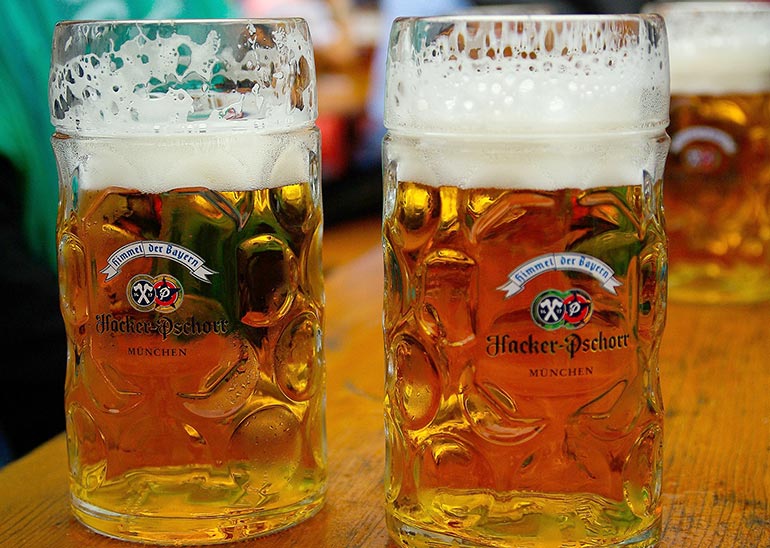
- Hacker-Pschorr Oktoberfest Märzen – This beer has a deep amber color with rich malt flavors and a slightly spicy, earthy hop presence. It’s a traditional example of the Märzen style.
- Löwenbräu Oktoberfestbier – A light, golden beer with a mild bitterness and a slightly sweet, malty flavor. Löwenbräu’s Oktoberfestbier is one of the most popular choices at the festival.
- Ayinger Oktober Fest-Märzen – Though not one of the “Big Six” Munich breweries, Ayinger produces a well-respected Märzen that’s rich in malt with a balanced bitterness and a slightly dry finish.
Best Time To Go And How To Get There
Oktoberfest typically runs from mid-September to the first weekend in October. The opening weekend is especially festive, with the grand parade and the ceremonial tapping of the first beer barrel. If you prefer a lively atmosphere, this is the time to go.
However, for those who wish to avoid the largest crowds, the weekdays during the early morning or afternoon hours are ideal. Visiting during these times allows for a more relaxed experience, with shorter lines at the beer tents and rides.
How To Get There
Oktoberfest is held at the Theresienwiese grounds in Munich, Germany. The city is well-connected by air, rail and road, making it easily accessible for international and domestic travelers. Munich’s Franz Josef Strauss International Airport is the nearest major airport, with direct flights from most major cities worldwide. From the airport, you can take the S-Bahn (suburban train) to the city center, which takes about 40 minutes.
Munich’s main train station, Hauptbahnhof, is also conveniently close to the festival grounds, just a 10–15-minute walk or a short ride on the U-Bahn (subway) to the Theresienwiese station. Public transportation is highly efficient, and the U-Bahn is the most recommended way to get to the festival, as it avoids the hassles of parking and traffic.
Tickets And Accommodation Options
One of the great aspects of Oktoberfest is that entry to the festival grounds and beer tents is free, meaning you don’t need a ticket to participate in the festivities. However, reserving a table inside one of the beer tents is highly recommended, especially if you’re visiting during peak times like weekends or evenings.
Reservations can be made directly through the official websites of the individual tents, often several months in advance. While there’s no cost to reserve, many tents require a minimum spend on food and drink, which is typically prepaid when you book.
Accommodation Options
Munich offers a wide range of accommodation options to suit different budgets, from luxury hotels to hostels and vacation rentals. For those who want to be close to the action, staying in the city center or near the Theresienwiese grounds is ideal, though these options tend to be booked up quickly and can be more expensive during the festival period.
- Luxury Hotels: High-end options like the Bayerischer Hof and Hotel Vier Jahreszeiten Kempinski offer top-tier service and amenities, perfect for those looking for a lavish experience.
- Mid-Range Hotels: There are numerous mid-range hotels, such as the Hotel Torbräu or Hotel Excelsior, that provide comfort and convenience without breaking the bank.
- Budget Options: Budget-conscious travelers can find affordable accommodation in hostels like the Euro Youth Hostel or Meininger Hotel Munich City Center.
- Vacation Rentals: Platforms like Airbnb offer a variety of private apartments and homes, which can be a great choice for families or groups.
- Camping: For a more adventurous and cost-effective option, consider staying at one of the campgrounds around Munich. Many campgrounds set up special Oktoberfest camping areas with tents, caravans and even entertainment.
Oktoberfest Festivals Around The World
Oktoberfest celebrations have become a global phenomenon, with various cities and countries hosting their own versions of the festival. Here are some notable Oktoberfest festivals around the world:
- Oktoberfest Zinzinnati (USA): Cincinnati, Ohio, hosts the largest Oktoberfest in America, which features German beer, food, music and the world’s largest chicken dance.
- Kitchener-Waterloo Oktoberfest (Canada): Held in Kitchener and Waterloo, Ontario, this is the largest Oktoberfest celebration in Canada. It features traditional German food, music and activities over nine days.
- Oktoberfest Brisbane (Australia): Held in Brisbane, Queensland, this festival brings a taste of Bavaria to Australia with German beer, food and entertainment.
- Oktoberfest in Tokyo (Japan): Tokyo hosts several Oktoberfest events, with the largest being at Yoyogi Park. This celebration features German beer and traditional Bavarian music.
- Oktoberfest in London (UK): London’s Oktoberfest takes place at various venues, including the iconic Southbank Centre. The festival includes German beverages, food and live music.
- Oktoberfest in São Paulo (Brazil): São Paulo hosts one of the largest Oktoberfest celebrations in Latin America, featuring traditional German music and beer.
Frequently Asked Questions
Q. Is Oktoberfest only for Germans?
No, Oktoberfest welcomes people from all around the world. It’s an international event where everyone can experience Bavarian culture, regardless of nationality.
Q. Is Oktoberfest just about drinking?
No, Oktoberfest is a cultural celebration featuring traditional music, dance, food and parades. While beer plays a central role, it’s also about enjoying Bavarian traditions and festivities.
Q. Do they serve non-alcoholic drinks at Oktoberfest?
Yes, Oktoberfest events typically offer a variety of non-alcoholic drinks, including soft drinks, water and often non-alcoholic beer to ensure there’s something for everyone to enjoy.
Can you go to Oktoberfest if you don’t like beer?
Yes, you can still enjoy Oktoberfest even if you don’t like beer. The festival offers a range of traditional activities, food and non-alcoholic beverages, making it a fun experience for everyone.
What is the traditional drink at Oktoberfest?
The traditional drink at Oktoberfest is beer, specifically Märzen or modern-day Festbier, a German lager. It is characterized by its amber color, rich malt flavor and moderate hop bitterness.
Does Oktoberfest have liquor?
Oktoberfest primarily features beer, especially Märzen lagers. Liquor and other alcoholic beverages are typically not the main focus of the festival, though some events might offer spirits in addition to beer.
Can you get wine at Oktoberfest?
Wine is generally not served at the festival, but some events do offer limited wine options for tourists.
Can I get cider at Oktoberfest?
The answer is the same as Wine and Liquor.
Can you bring kids to Oktoberfest?
Yes, you can bring kids to Oktoberfest. Many Oktoberfest events are family-friendly, with activities, games and food options suitable for all ages. However, it’s important to check the specific event’s guidelines for any age restrictions or policies.
How old do you have to be to get into Oktoberfest?
The minimum age to enter Oktoberfest is typically 16 years old. However, to consume alcohol in the beer tents, you must be at least 18.
What are Oktoberfest colors?
Oktoberfest colors are traditionally blue and white, which reflects the colors of the Bavarian flag.
Can you go to Oktoberfest without a reservation?
Yes, you can attend Oktoberfest without a reservation. Many areas of the festival are open to the public, though some tents and special areas may require reservations, especially during peak times.
Is there an Oktoberfest in Utah?
Yes, Utah hosts its own Oktoberfest celebrations, particularly in Salt Lake City and at the Snowbird Resort. These events feature traditional German food, beer, music and cultural activities.
How much does it cost to go to Oktoberfest in Utah?
The cost to attend Oktoberfest in Utah varies by location and event. Generally, admission fees range from $5 to $15, with some events offering free entry. Costs for food, drinks and activities are additional. Check specific event websites for detailed pricing.
What are the dates for Oktoberfest at Snowbird, Utah?
Oktoberfest at Snowbird, Utah, typically runs from early August through mid-October. Exact dates can vary each year, so it’s best to check Snowbird’s official website for the most current schedule.
Oktoberfest: what shoes to wear?
For Oktoberfest, it’s best to wear comfortable and practical shoes. Traditional footwear includes sturdy, closed-toe shoes like leather boots or comfortable flats. Since the festival often involves walking and standing for long periods, opt for shoes that provide good support.
What is Oktoberfest sausage?
Oktoberfest sausage, also known as “Wiesn-Würstl” in German, is a traditional Bavarian sausage enjoyed during the Oktoberfest festival. Typically made from pork, veal, or a mix of meats, it’s seasoned with spices like garlic and paprika. It’s often grilled or boiled and served with mustard and sauerkraut or in a bun.
When is Oktoberfest in Helen, Georgia?
Helen, Georgia’s Oktoberfest typically runs from mid-September to early November.
When is Oktoberfest in Leavenworth?
Oktoberfest in Leavenworth, Washington usually takes place on weekends throughout October. The event typically starts on the first weekend and runs through the last weekend of the month.
Which countries celebrate Oktoberfest?
Oktoberfest is celebrated in many countries, including Germany, the United States, Canada, Brazil, Australia and Argentina. These festivals often feature traditional Bavarian music, food, and, of course, beer.
Who makes Oktoberfest beer?
Oktoberfest beer is primarily brewed by the six major Munich breweries: Paulaner, Hacker-Pschorr, Spaten, Hofbräu, Löwenbräu and Augustiner. Many other breweries worldwide also produce their own versions of Oktoberfest beer.
Who owns Oktoberfest?
Oktoberfest is organized by the city of Munich, Germany, specifically under the management of the Department of Labor and Economic Development. The event is a public festival, so it isn’t “owned” by any individual or company.
Why is Oktoberfest called Wiesn?
Oktoberfest is called “Wiesn” because it takes place on the “Theresienwiese,” which means “Theresa’s Meadow” in German.
How was Oktoberfest celebrated in Nazi Germany?
During Nazi Germany, Oktoberfest was co-opted for propaganda purposes. The festival was used to promote Nazi ideals, emphasizing nationalism and Aryan culture.
Is there Oktoberfest in German cities other than Munich?
Yes, cities like Stuttgart, Düsseldorf and Hamburg host their own Oktoberfest events, often with a similar atmosphere to Munich’s festival, including traditional Bavarian food, music and beer.
Cheers to the World’s Biggest Beer Celebration
As you plan your journey to Munich, each detail—from choosing the perfect time to visit, securing your spot in the iconic beer tents, to dressing in traditional attire—adds to the richness of the experience. Oktoberfest is not just a destination; it’s a rite of passage for beer lovers and cultural enthusiasts alike. With every sip of a Märzen or Festbier, every bite of a pretzel, and every moment spent under the canvas of a bustling tent, you become part of a legacy that transcends time.

Conversations (0)
No comments yet.