



European News (Issue 24)

 Story by:
Editorial Dept.
Story by:
Editorial Dept.

by Carolyn Smagalski
A Sharp Businessman
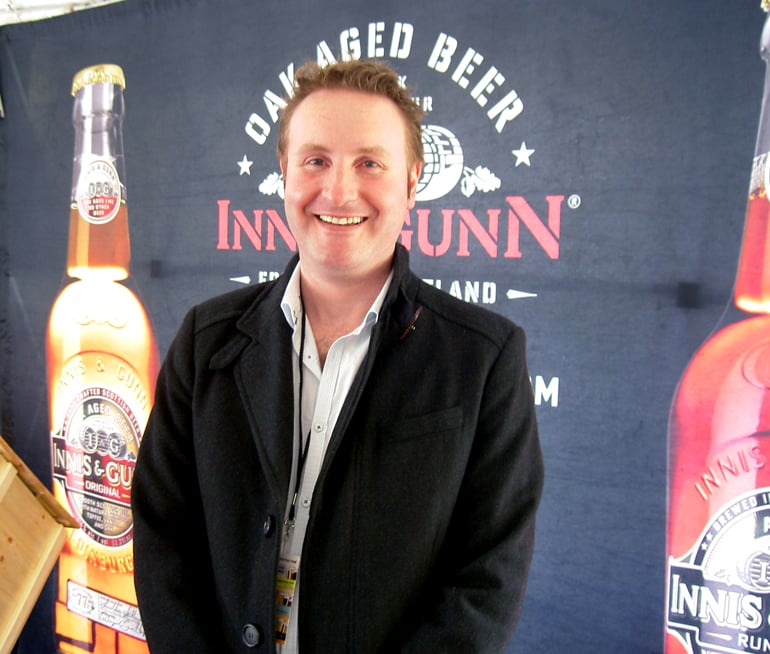 Dougal Sharp of Innis & Gunn in Scotland continues to build upon a reputation for innovation with his well-timed acquisition of Inveralmond Brewery in Perth, Scotland. Through the assistance of £3.1 million in capital raised through the Innis & Gunn BeerBondTM crowdfunding program, Sharp has designed a strategy to continue expanding sales and distribution of the innovative Perth beers, while significantly investing in the brewery for continued development of Innis & Gunn oak-aged brands. The investment will include state-of-the-art infusion equipment for intensifying woody and artisanal flavors, “Hop Gunns” for maximizing hop aromas, and an oak-barrel maturation warehouse.
Keightley & Worth Valley Railway announced the launch of the Steam & Ale Trail, an offshoot of the famed KWVR Beer & Music Festival that runs each October. The five mile-long Steam & Ale Trail event takes place the 28th through 30th of May 2016, concurrent with the Bank Holiday weekend. Each station treats rail-riders to a different half-dozen selection of beers from local breweries, as well as real cider and wine, both sparkling and still. Steam and diesel trains will run all weekend, with on-train Real Ale bars to lighten the mood between stations. Passes go for £22 for one-day, or £42 for the 3-day “rover.”

by Carl Kins
– What can be expected, Belgian brewers have also jumped on the new beer launch trend. One is from an authentic farmhouse brewery with a funny name, Silly (the river that passes there is called the Sille), and is the Silly Rouge, a brown cherry beer at 8% ABV, created by using real cherry juice and cherry pits.
– Poperings Dry Hopped Hommelbier 2016 was also launched, and De Koninck made a limited-edition beer in commemoration of Pierre Celis, called “Pierre’s Bock.”
– For the 10th anniversary of the restart of Oud Beersel, Gert Christiaens took three important initiatives. A new beer was launched, Bersalis Sourblend, a mix of Bersalis (a blond, top-fermentation beer and 30% lambiek) aiming at uninitiated lambiek drinkers. At the same time, the foeder warehouse doubled in capacity, with barrels of up to 120 hectoliters, originally used to store the Italian top wine Brunello di Montalcino. And the car of the previous owner, an Opel Blitz from 1959 has been completely restored.
– And, as usual, Duvel put themselves in the limelight. They have launched a six-bottle pack with of the various Tripel Hop varieties, launched over the years. These are HBC 291, Sorachi Ace, Equinox, Mosaic, Citra and Amarillo. The idea is for consumers to blind taste all six and vote for their favorite. The most popular will then be brewed permanently.
– A nice story comes from the Carmelite monk order of Bruges. They wanted to launch their own beer, called “Goedt Bier = good beer” around Easter. It would be brewed at Fort Lapin from Bruges and the proceeds would be used for the livelihood of the monks and the preservation of their monastery. The recipe was found in their own archives, and mentioned three grains. However, Bosteels, brewer of the three-grained beer Tripel Karmeliet heavily resisted this plan. After lengthy discussions, they came to an agreement. Details are not yet fully known, but what is certain is that “Goedt Bier” will now be launched around the end of the year.
– AB InBev is not only taking over big and small breweries, but are also investing in existing plants. For example, in Leuven, the birthplace of Stella Artois, a new brewing line is being installed, increasing capacity by a third (about 3 million hectoliter). It should be operational in 2017. Moreover, they won a Europa Nostra Prize, the highest accolade of the European Union for cultural heritage, for the restoration and re-use of the vacant brewery De Hoorn in Leuven. De Hoorn, a protected monument from 1923, is the brewery where Stella Artois was first brewed.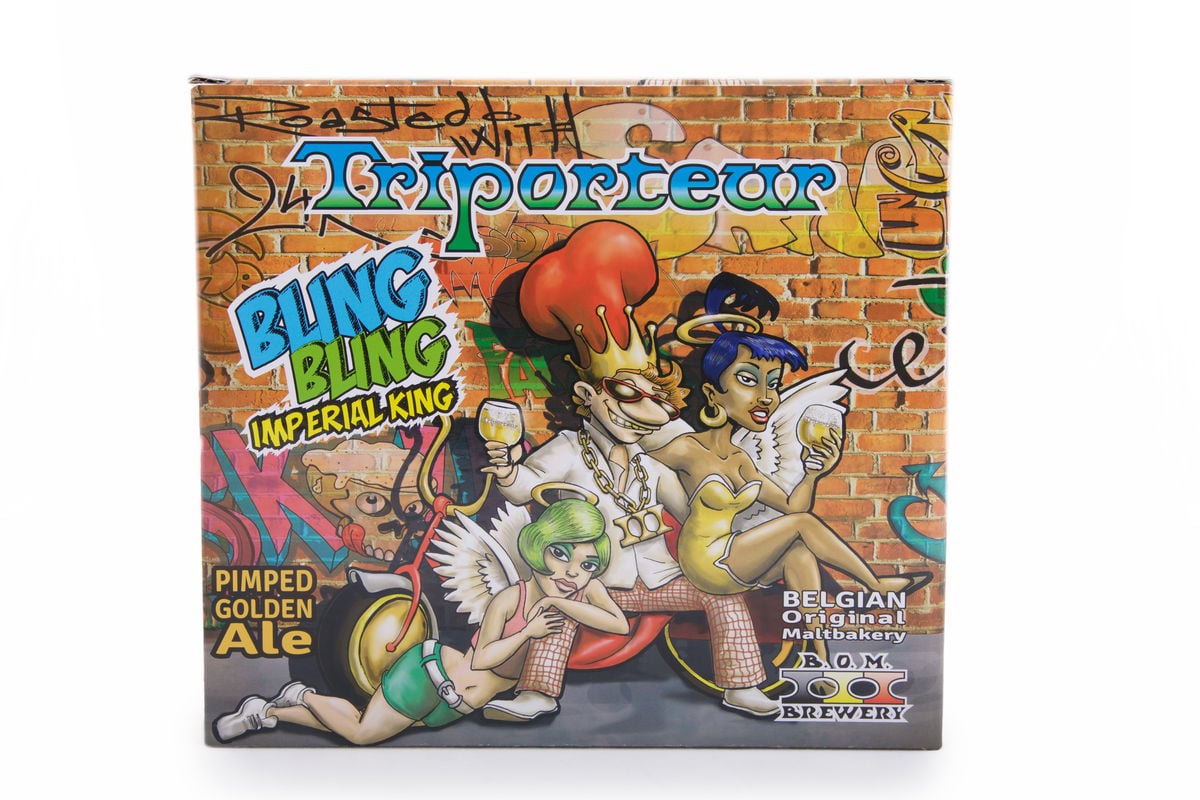
– Something very special comes from Bert Van Hecke (former brewer of St. Bernardus) and now owner of BOM Brewery. Bert is using 24-carat gold in creating one specialty malt, that is used for a new beer, called “Bling Bling Imperial King.” Calling it a “pimped” malty golden ale of 8.88 percent, the alcohol percentage refers to the Chinese lucky number 888 which stands for triple fortune.
– Great news from Brasserie de la Senne, known for Taras Boulba, Zinnebir, Jambe de Bois and Stouterik. Due to the continued success, they are outgrowing their current location, next to the Molenbeek cemetery, so they will open up a completely new brewery that’s close to Brussels harbour and the wonderful Thurn & Taxis building. The aim is to move there in two years.
– In Poperinge, an additional 20 acres of hops have been planted, reversing the negative trend of recent years.
– Finally, to round it all up, a pun at the US. During a recent beer convention in Belgium with over 400 professionals, brewers, merchants and scientists alike, one of the topics of attention was the number of beer styles. The convention came to the conclusion that there are way too many, especially referring to the BA style guidelines with over 150 sub-styles. They consider the various styles mainly marketing-based, leading to confusing everyone, especially the consumer. Guido Aerts stated the Ghent university will cooperate with other universities to come up with a more generic approach, aiming for a worldwide classification with a maximum of 20 main styles based on “lager” and “ale.”

by Max Bahnson
Stat Czech
The Czech Brewers and Malsters Association has released the official industry figures for 2015. 20.1 million hectolitres of beer were produced last year in the Czech Republic, a 2.2% growth from the previous year.Most of that growth was driven by exports, which were up by 13.3% compared to 2014. In total, 1/5th of the beer brewed in the country ended up being drunk abroad, despite the crisis in Russia, the biggest exportmarket, and thanks in no small part to the increasing demand for Pivo in Korea and China, which grew by 100% and 81% respectively.
The local market, on the other hand, has followed the trend of the last couple of years: remaining stagnant. On-trade sales have shown no signs of recovery, despite campaigns by a couple of large producers to bring punters back to pubs. The only thing of note is that Czechs are now drinking as much Ležák (soon to be renamed Piné pivo – beers between 11° and 13° Plato) as the cheaper Výčepní (beers with less than 11° Plato). To some extent, this is good news for breweries, especially for smaller ones that sell most of their beer on tap – and in some cases, nearly all. Ležáky are still seen as a “premium” alternative to Výčepní and are more lucrative.

by Jim Dykstra
Reinheits-goodbye?
April 23 marked the 500th anniversary of the Reinheitsgebot, Germany’s beer purity law mandating that all beer must only be brewed with barley, hops and water (yeast had not yet been “discovered”). The Day of German Beer is somewhat of a holiday in Germany – each year Munich replaces the water in its Oskar-von-Miller ring fountain with 1000 liters of beer, free for the taking, amongst other celebrations.
Aside from the half-millenial milestone, the law’s relevance has recently come into question in today’s freewheeling and creative craft beer climate. Beer has been a considerable pillar of Germany’s economy, but the market has stagnated in recent years, and many point the finger at the culture’s traditionalist values. With craft steadily on the rise, and the advent of American brewing culture catching on as brewers like Stone help to build interest with its Berlin location, it will be interesting to see how the cultural clash plays out.
Biere de Marhs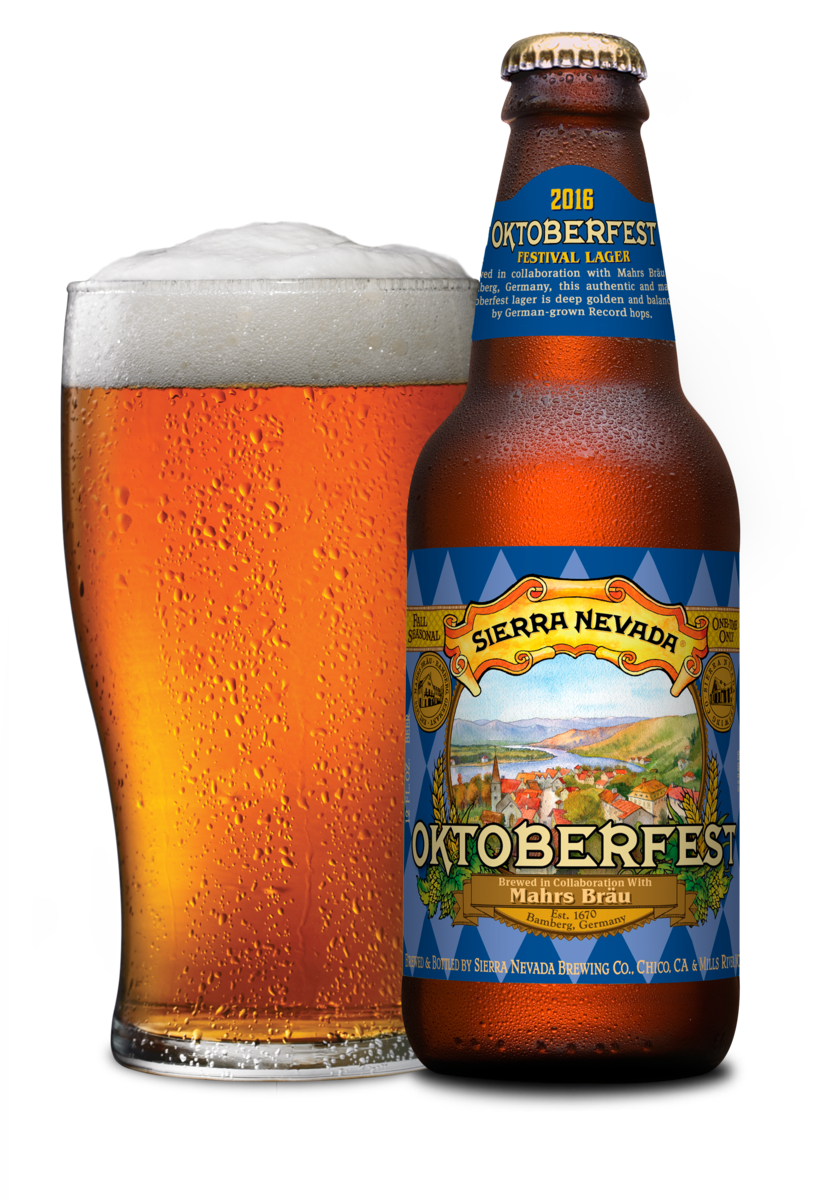
Sierra Nevada has announced that it will be partnering with Bamburg, Germany’s Mahrs Bräu for its Oktoberfest beer, which is brewed in collaboration with a different family-owned German brewery each year. Founded in 1670, Mahrs Bräu is currently owned by the Stephen Michel, a fourth-generation owner who has helped the brewery garner acclaim for both its traditional lagers and its ability to get creative.
This year’s version will feature the malt complexity the style is known for along with the seldom used “Record” hop.
“We’re excited to be working together with Mahrs Bräu,” said Ken Grossman, “We have so much in common with them in the way we approach brewing, and the way we run our businesses. We’re both independent, family-owned breweries with a respect for tradition, yet we’re not handcuffed by it. We’re not afraid to innovate and to change things up. We both care deeply about the environment, and work to make our respective beers with a mindful eye on how that impacts the world around us.
Look for the beer in six-packs this August.
Photos courtesy Carolyn Smagalski (top), Dries Beheydt, and Sierra Nevada

Conversations (0)
No comments yet.