



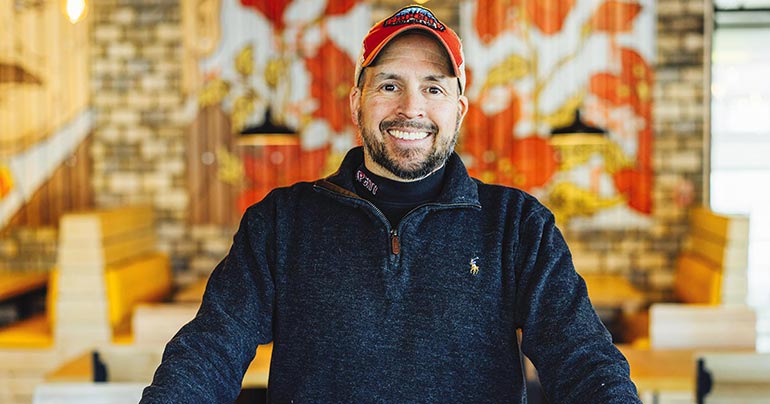
Hop City’s Kraig Torres: Atlanta Restaurant Impresario and Classic Beer Style Defender
The founder of Hop City Beer & Wine, Barleygarden Kitchen & Craft Bar and Boxcar knows how to create a successful business – as well as keep them thriving despite swift changes in the industry.
 Story by:
Owen Ogletree
Story by:
Owen Ogletree
Atlanta-based craft beer entrepreneur Kraig Torres graduated high school in 1986 and fancied himself a “beer expert” because he drank Moosehead. A stint in the Coast Guard took this New Jersey kid to England, Ireland, Germany and Australia, where he marveled at the extraordinary diversity of world beer styles and pub cultures. Long before Untappd, Torres hauled around a notebook where he recorded the name of each new beer he drank.
Torres’ travels sparked a passion for craft beer that motivated him to open four impressive craft beer-focused outlets in Georgia and one in Alabama. In his Coast Guard days, Torres never imagined that craft beer would provide him with a new career.
After moving to Atlanta in 1994 for brief stints in the insurance and stock brokerage fields, Torres longed to start his own business. A visit to a craft beer store in Asheville, North Carolina, motivated him to formulate a business plan for his own Atlanta craft beer outlet that would also sell bottled wines and homebrewing supplies. In 2009, Hop City Beer & Wine opened its doors on Marietta Street near downtown Atlanta. It took a couple of years to build recognition and make the retail shop successful, but Torres learned much from the process.
When Torres began scouting locations for a second Hop City, a friend told him about the opportunities available in Birmingham, Alabama. Skeptical at first, Torres made the two-hour drive to Birmingham to scope out the craft beer possibilities. “I quickly realized the area was hungry for a craft beer and wine retail outlet,” he recalls. “In those days, Piggly Wiggly was the retail beer leader in the area. We opened Hop City Birmingham in 2012. After a difficult and stressful opening, the new store proved an instant success.”
What caused the stressful Birmingham opening? In 2012, Alabama still classified homebrewing as an illegal hobby. When applying for his Birmingham Hop City permit, Torres explained to an Alcoholic Beverage Control (ABC) Board chief that he wanted a corner of his store stocked with some grains, hops and yeast. No homebrewing instructions or books would be sold. Reluctantly, the ABC chief agreed that this seemed legal. A few weeks later, when Torres returned to the ABC offices to pick up his license, the new chief told him, “Boy, you know homebrewing is illegal in the fine state of Alabama.”

It took a couple of years to build recognition for the Hop City brand and to make the retail shop successful, but Torres learned much from the process.
The next morning, armed ABC officers showed up at Hop City Birmingham in a van and confiscated all the grain, hops and yeast from the shelves. The chief promised to return the next day with a bigger van, so Torres loaded up the remaining homebrewing supplies from the backroom storage area and stashed them at a local brewery. When the ABC officers returned and found no more supplies, they handed Torres his permit.
Torres realized suddenly that “lobbyist” had just become part of his job description. He proceeded to call local papers, radio stations and his Alabama congressman to relate his horror story. In no time, the subsequent outpouring of public support, along with the grassroots efforts of homebrew groups, helped homebrewing finally become legal in Alabama.
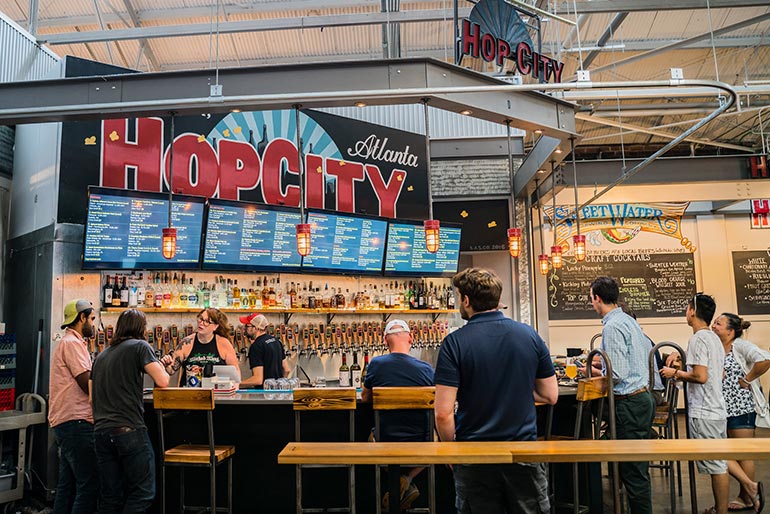
In 2011, Torres began exploring the possibility of selling growlers of draft beer at Hop City Atlanta. He and his liquor attorney examined the laws in detail and discovered a gray area that might allow for growler sales. After much discussion, the Georgia Department of Revenue and the City of Atlanta signed off on growler sales. “We converted our Marietta Street cooler into a growler wall with 16 taps that very night,” Torres recalls. “I was there until three o’clock in the morning, drilling holes in our cooler wall so we could begin selling growlers the next day. When we opened in the morning, there was a line outside the door.”
Strangely enough, Alabama allowed bars to fill plastic milk jugs with beer to take home. In 2012, when Torres asked state officials if he could sell sealed, sanitized glass containers of draft beer to-go, he was given the green light. He explains, “We equipped our Birmingham store with a wall of 66 taps as a large growler station, and the first guy to walk in the next day came up to the growler bar and asked for a glass of one of our draft beers. We thought, ‘Oh, shit, what do we do now?’ We had glasses from breweries, so I quickly figured out how much to charge per glass. We’ve been a bar ever since.”
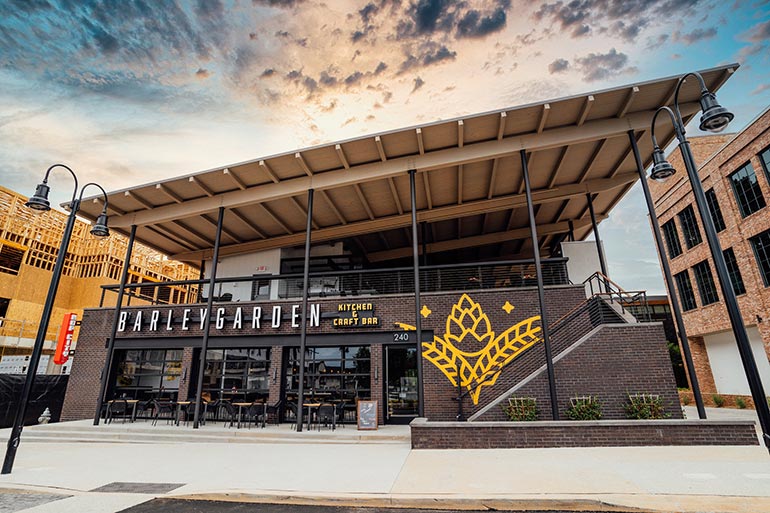
Torres’ third location, Barleygarden Kitchen & Craft Bar, opened six years ago in Alpharetta, Georgia. Torres wanted a northern suburban outpost with a bar and retail space, but the chosen location was only 2,000 square feet. Torres remarks, “Alpharetta doesn’t allow for bars. Only restaurants can serve alcohol. We had a small space, and we knew that the bar would pay our bills, so retail was out. I had never owned a restaurant, but I felt the market was right. We hired a great chef and created an awesome, locally sourced kitchen and bar in the limited space. People loved it.”
Torres’ third location, Barleygarden Kitchen & Craft Bar, opened six years ago in Alpharetta, Georgia. Torres remarks, “I had never owned a restaurant, but I felt the market was right. We hired a great chef and created an awesome, locally sourced kitchen and bar in the limited space. People loved it.”
At the same time, Torres’ lease was coming up for renewal at Hop City’s original store on Marietta Street in Atlanta. Over the years, the location saw many things change for the worse regarding rent, traffic, parking and other external factors. Torres relates, “It was a difficult decision to close the Marietta Street location, but it was the right thing to do.”
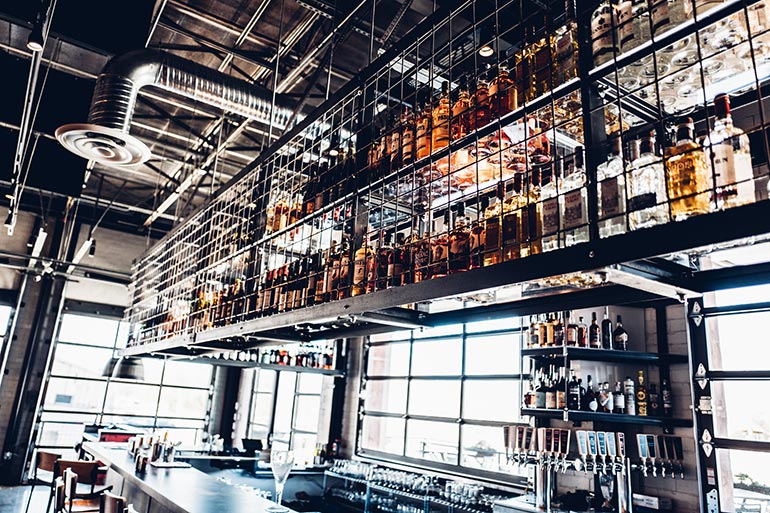
Meanwhile, Atlanta’s upcoming West End complex had captured Torres’ attention. Monday Night Brewing and Wild Heaven Beer were opening satellite breweries and taprooms in the White Street development buildings. “The rent was quite reasonable, so we carved out a large footprint with a perfect kitchen in the West End,” says Torres. “Our Boxcar restaurant was designed as a slightly more upscale version of Barleygarden, with the restaurant constructed upstairs and a retail Hop City store and bar located on the lower floor.”
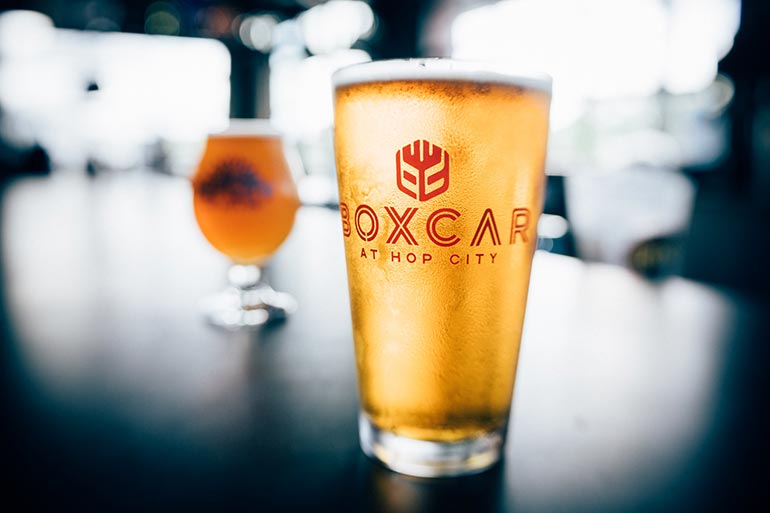
Boxcar at Hop City West End evolved into a beautiful, welcoming dining space with plenty of free parking just steps from the Atlanta BeltLine. The store offers nearly 1,000 bottled/canned beer choices, more than 800 wines, 48 rotating draft beers and a full bar with craft cocktails. Patrons visiting the West End complex can also walk the grounds with open containers, sipping while exploring. The West End buildings also provide a home for Best End Brewing and ASW Whiskey Exchange, aka “Malt Disney World.”
Somewhere along the way, Torres was talked into opening a Barleygarden restaurant/bar in the south Atlanta suburb of Fayetteville, Georgia. “There’s a big movie campus right across the street where they film many of the Marvel productions,” notes Torres. “We opened our Fayetteville spot around two years ago with 72 taps and a beer and retail wine space. We get film crew members and actors eating and drinking there almost daily.”
Boxcar at Hop City West End has evolved into a beautiful, welcoming dining space with plenty of free parking just steps from the Atlanta BeltLine.
Including the Hop City location in Atlanta’s urban Krog District, Torres now boasts five businesses. “Making all this a reality was a grind,” he recalls. “I worked 80-90 hours a week for years, but things are a bit calmer now. My favorite part of the job these days is working the floor and helping our customers. Getting people to try delicious beers is my passion.”
Torres has seen much change and growth in the craft beer business over the years and expresses some concern about the industry’s explosive growth. He explains, “There are so many fun breweries now, but the bulk of craft beer seems to have become sort of a corporate machine. It’s harder for me to get enthusiastic about a brewery after a huge corporation buys it.”
Craft beer has also changed stylistically in recent years. For example, when Hop City first opened, Torres found it challenging to get customers to try a classic style like Saison. These days, he notes that it’s difficult even to find a local Saison. “No one seems to care about classic styles anymore,” Torres laments. “I think what many people are now buying seems like the lowest common denominator in craft beer. Some of these trendy milkshake IPAs, hazy IPAs and pastry/adjunct stouts can be okay, but I’m sometimes disheartened to see what most new breweries make. I would love for my brewery partners to be their own people and make more of the classic beers they love. Hop City will always be on board to promote and support these lovely classic beer styles and the breweries that produce them.”
“Making all this a reality was a grind,” Torres recalls. “I worked 80-90 hours a week for years, but things are a bit calmer now. My favorite part of the job these days is working the floor and helping our customers. Getting people to try delicious beers is my passion.”

Conversations (0)
No comments yet.