



2021 Consumer Trends
 Story by:
Jim Dykstra
Story by:
Jim Dykstra
2020 has seen the beer industry jerked around like a starfish in the churning tides of pandemic politics and economics. Shutdowns, lockdowns and massive shifts in public opinion have consistently made it difficult to plan more than a week in advance, and nearly impossible to find balance between what the market wants and what the brewer can provide.
At this point, much of the beer industry is just holding on for dear life. But it’s never too late to look ahead. As of November, the market is showing signs of stabilization, and consumers have spoken with their wallets – demand for beer isn’t going anywhere. The question then becomes – what segments of the marketplace are the dollars flowing to and which ones have dried up? Here is The Beer Connoisseur’s 2021 Consumer Trends report.
The Numbers
As always, the data we’ve examined comes from IRI Worldwide, a market research firm that tracks category-wide sales trends of beer sold in numerous retail outlets and then produces a monthly report of its findings. These findings can be used to provide real-time insight into the ever-changing beer marketplace, both in craft and macro categories. They can also help industry participants adapt to the marketplace and help you make more informed choices as a consumer. To save you the spreadsheet trawling, we’ve pieced together the most important changes in beer sales over the year of 2020 and will compare them to the prior year.
Before we delve further into this year’s data, here are a few things to keep in mind – these numbers are on an international scale and may not represent individual brewery or regional sales accurately. The numbers also do not draw a hard line between beer styles within certain categories, which could mask sales trends of smaller brewers. They track sales of packaged beer only and from a few different sources, including convenience stores (think gas stations), a general “food” category (grocery stores, etc.), and a combined multi-outlet and convenience (MULC) store category (a combination of grocery, drug, Wal-Mart/Sam’s Club, dollar stores and military stores, among others). We will focus on the MULC category. While not all-encompassing, it’s a great, well-rounded resource.
Why Beer Sales Are Up in Retail Stores
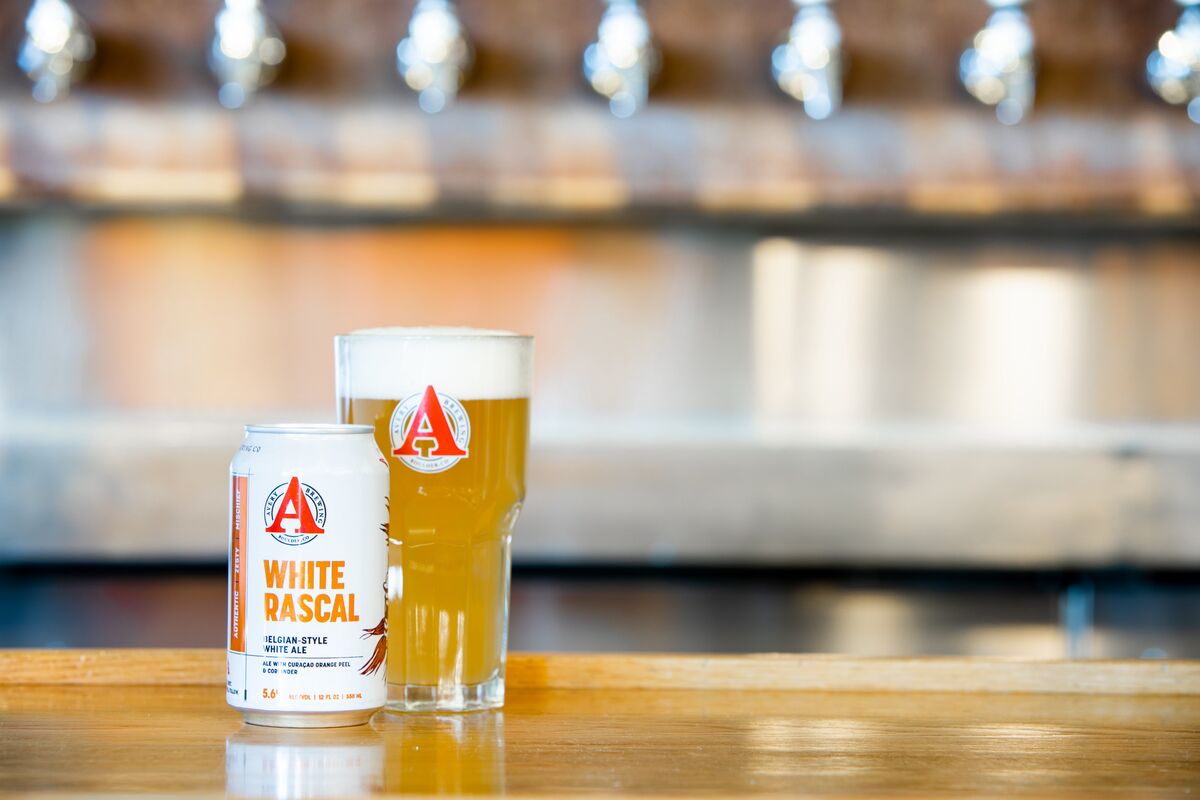
Let’s start with some good news – beer category sales are up compared to last year, at least in traditional retail channels. Year-to-date beer sales are up $4.7 billion, an increase of 15.7%. This marks the highest market share of U.S. alcohol sales that the grocery channel has seen in five years. The reasoning is simple – draft sales aren’t happening, so people are buying from the store in bulk rather than lingering at pubs – and they’re buying high-quality products – a trend that had a precedent prior to the pandemic.
“Two-thirds of the sales gains in grocery are due to increased spending per trip, which is being driven by two factors: premiumization, which is shoppers buying higher-priced beverages… and secondly, they’re buying larger packs,” Brad Golden, senior vice president of insights at IRI, said in a recent report.
Of the 300 categories IRI tracks, beer has increased year-to-date dollar sales in the grocery store more than any other. For comparison, wine saw the fifth-highest increase, and spirits saw the eighth-highest. But beer as a category includes everything from Colt 45 to White Claw. How is traditional craft beer doing?
Popular Craft Beer Styles in 2020
In the least shocking news of the year, IPA is yet again perched atop the craft beer throne, now comprising 41.3% of all craft beer sold – up from 37% in 2019. To put this in perspective, the next highest-selling category, Craft Seasonal, is a catch-all, and still only amounts to less than a quarter of total IPA sales.
It’s safe to assume that brewers played it safe this year. There simply was too much volatility to take big gambles on new craft brands, and no guarantee that raw materials would be available at a reasonable price. So, brewers stuck with what they had dialed in already from a production standpoint.
One could argue that COVID-19 aside, supermarket shelves are a bit more reserved these days, in terms of craft selection. Gone are the days where every trip to the grocery store could result in a new beer discovery. Competition from large, mature craft breweries is too tough to gamble on the limited number of SKUs afforded to the category, whose shelf space grows ever smaller due to pressure from Domestic Premium brands.
IPA aside, Belgian Witbier and Golden Ale saw notable growth, up 18 and 19%, respectively, from last year. These are changes we attribute to maturation of the palate, and an understandable counterpoint to the polarized hoppiness of IPA. Perhaps most telling, though, is the expansion of the Craft Light Beer style, up 40% from last year. American drinkers are becoming increasingly calorie- and ABV-conscious, and demand for healthier drinking is skyrocketing. This may also explain why darker, maltier beer categories – porter, ESB and barleywine – are seeing continually dropping sales.
Seltzer and Non-Alcoholic: Teammate or Competitor?
While Imports, Craft, Domestic Super Premium and Cider all saw double-digit growth between 10 and 20% over the last year, two “health-conscious” segments of the total beer category saw incredible growth – Flavored Malt Beverages (FMB) and Non-Alcoholic.
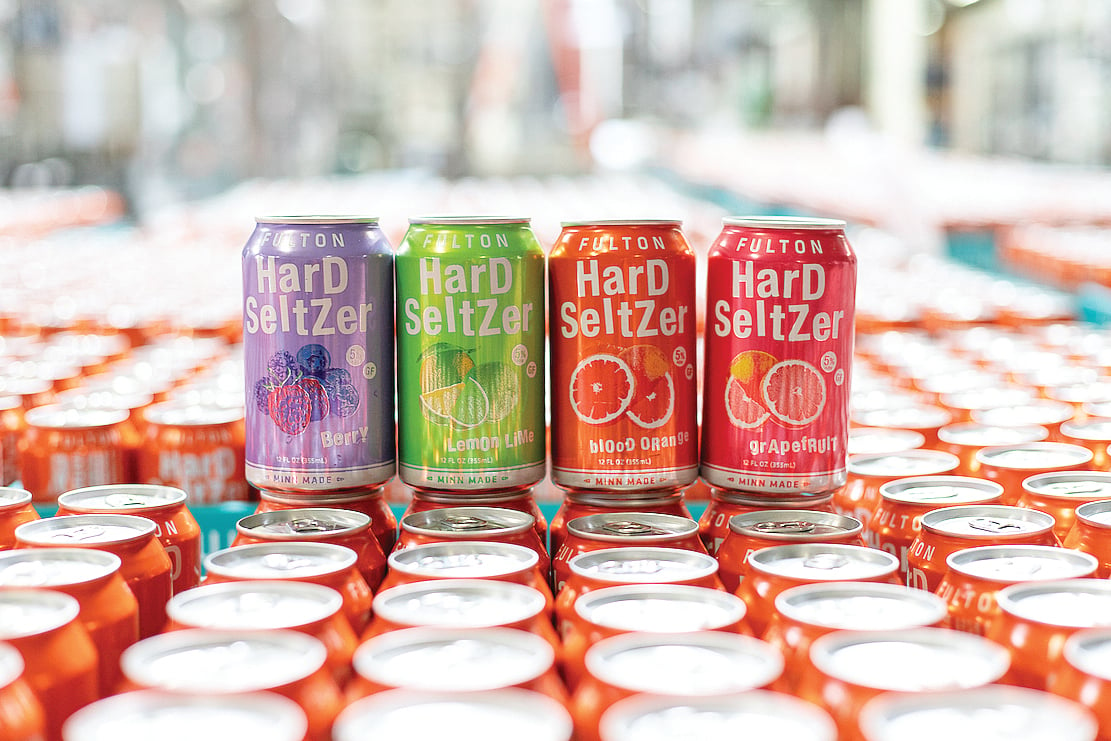
FMBs, of course, were powered by the explosive growth of Hard Seltzer, which offers low calories and exotic flavors that appeal to a large swath of drinkers. That segment saw an increase in sales of more than $2.3 billion over the last year, translating to about a 75% sales increase. This growth, which shows no sign of slowing, puts FMBs on track to overtake Imports as the second-largest segment by 2021, and has them rapidly closing in on Domestic Premium – macro brews – which remains the largest segment of beer sales.
FMBs are a versatile category, and the winning strategy so far has been to join it, rather than try to beat it. You’ll find many mid-sized craft brewers sporting their own seltzer brand, allowing them more flexibility to experiment with flavoring and CBD/THC adjuncts, which are further cementing their hold on the marketplace. Case in point – Atlanta-based SweetWater Brewing Co., the 14th-largest brewery in the U.S. in 2019 per the Brewers Association, was sold in November to Aphria Inc. for $300 million. SweetWater, which has found success with cannabis-themed brews like 420 Extra Pale Ale and its G13 Strain Series, was seen by Aphria – a cannabis firm with no prior experience in the beverage alcohol industry – as much as a “lifestyle brand” as it was a brewery.
Non-alcoholic beer has also made a splash in 2020, with sales up 39% from 2019 – a trend that is forecasted to continue throughout the next decade. The growth of the segment can largely be attributed to a few brands. Heineken 0.0, introduced in 2017, accounted for about 29% of total NA sales. O’Douls followed at around 25%, and Busch NA at 17%. However, in order to truly break through like seltzer, NA beer will have to become a drink that people drink for enjoyment, and not just out of necessity.
To that end, an honorable mention goes out to Athletic Brewing, which brews only craft NA beer, and has seen its sales grow exponentially – 1000% in 2019, and another 500% in 2020. A major factor for the company’s success is its ability to see the category as a standalone – marketing outside of typical beer-drinking circles and producing limited-edition offerings, which can sometimes sell out in seconds online.
“Non-alcoholic beer has a great place in today’s world. Our goal is definitely not to cannibalize alcoholic beer in those sessions,” Athletic founder Bill Shufelt said. “We’re definitely trying to reimagine the category, like an athletic beer category. We’re adding beer to a lot of different days of the week, but we’re also attracting a lot of soda drinkers or functional beverage drinkers into the category.”
So far, signs are positive. The company outgrew its original Connecticut brewery, slated to last for five years, in 10 months, and recently purchased an 80,000-square-foot San Diego brewery formerly owned by Ballast Point Brewing Co. For brewers looking to build their consumer base, FMBs offer a relatively safe option, and NA beers show promise as well.
Homebrewing Resurgence
Obviously, people are going out less, but they’re also becoming more self-sufficient and picking up hobbies around the house, including homebrewing. The Associated Press reported in April that major homebrew supplier Northern Brewer’s sales had “shot up by 40% to 50%,” in response to lockdown. Homebrew starter kits were a popular choice, but interestingly, so too were “classic hops,” according to Mike Brennan, sales manager for the homebrew division of BSG Handcraft, a brewing supply wholesaler.
“Hazy IPAs are trendy these days, but many customers are asking for ‘classic hops’ like Cascade, Centennial and Chinook that were popular years ago,” Brennan said. “They’re dusting off their old equipment, the fermenters, and they’re going back and brewing some of those classic-style IPAs, those more bitter IPAs, like we used to do.”
Regardless of whether homebrewers were just pining for simpler times, or legitimately craving a currently underrepresented IPA style, it’s a trend worth noting – especially given the fact that Sierra Nevada Pale Ale and Lagunitas IPA, both in the West Coast vein, are the country’s most popular Pale Ale and IPA brands, respectively. We’ve officially come full circle on hop profiles.
The Corona Factor
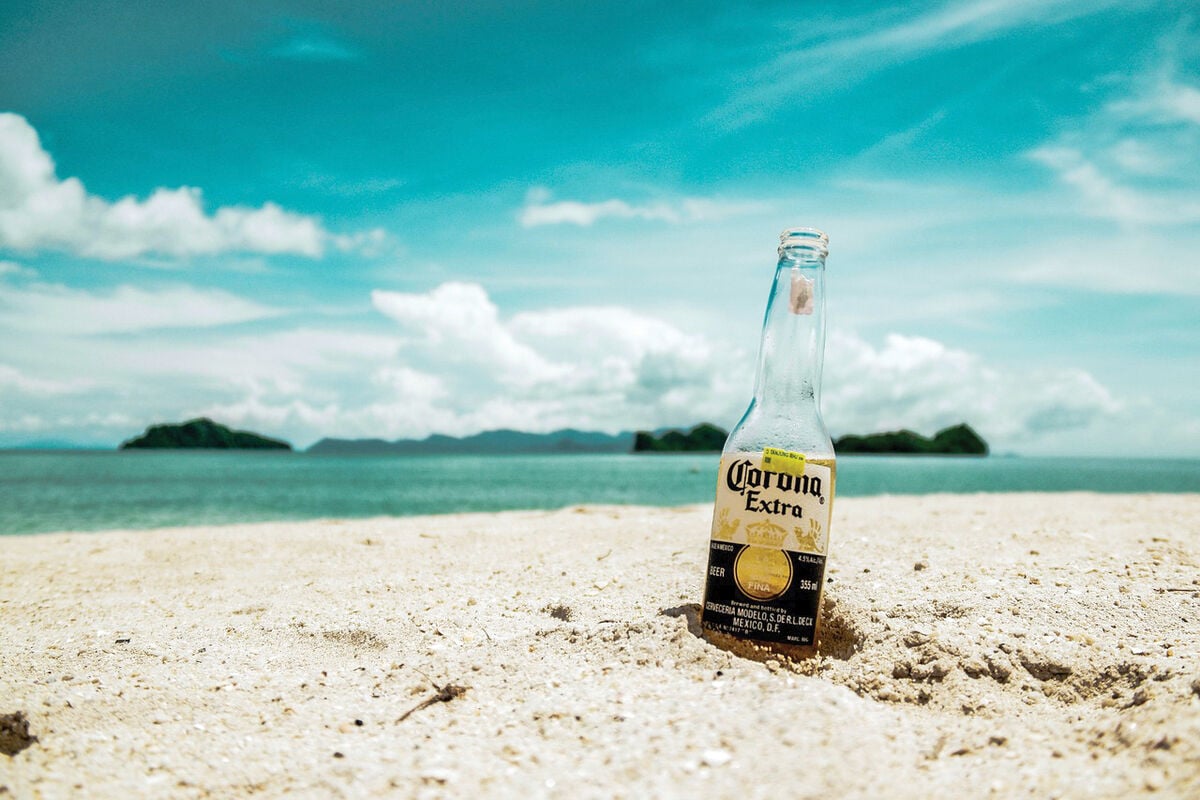
It’s a thought many will have had at some point in 2020 – “This can’t be good for Corona beer.” During March 2020, a PR firm found that 38% of American beer drinkers surveyed stated they wouldn’t buy Corona “under any circumstances,” and that 14% who said they would buy it refused to order it in public. Given all the negative press, it’s a bit surprising to find that no Corona beer brand saw a decrease in sales in 2020, and each grew in line with previous years.
Drinking Trends to Watch In 2021
We know to expect more consumers to buy in bulk, and that they’re willing to buy premium products when possible. But stylistically, what can we expect for 2021? The extremes of today provide clues for the norms of tomorrow. The growth of craft light lagers, non-alcoholic beer and hard seltzers are a clear indication of where future market growth will be concentrated.
To put it succinctly, we are moving towards more health-conscious drinking. The field is still wide open, and there is plenty of room for experimentation, whether through CBD/THC infusions, or crossover drinks like hard kombucha and hoppy sodas. Each of these sub-categories will continue to gain traction, and the competition will force increasingly creative products. Most will be busts, but for every 1000 busts, there will be one product that carves out a following and begins making way for the next evolution in drinking.
Eventually, it’ll come to a fever pitch, and drinkers will long for simplicity again. It’s a cycle as predictable as the bell bottom jean. We can expect continued innovation in the land of milkshake IPAs, sours and lager crossovers. Exotic yeasts like kveik, which were forecasted to make a big splash in 2020, may find purchase among tired palates, but more likely, 2021 will be a year of incremental change in beer, as brewers hold on to their hats and hope for steadier economic footing to spur their growth and creativity.

Conversations (0)
No comments yet.