





The Blossoming Of Japanese Beer
There’s far more to Japanese beer than Sapporo, Asahi, Suntory and Kirin. The ji-biru scene has bloomed into a full-fledged movement in the Land of the Rising Sun with local ingredients and fascinating brews making headway in a land where macro lagers reign supreme.
 Story by:
Martin Thibault
Story by:
Martin Thibault
In Ushiku, an hour outside Tokyo via crowded trains where people are stacked up like slices of fresh fish on a sushi counter, a Japanese beer microbrewer is isolating the yeast found on cherry blossom flowers to ferment his yearly Sakura Kobo, or cherry blossom yeast wild ale, part of the country’s thriving ji-biru movement.
Ji-biru translates to “local beer,” and for Japanese beer, that means allowing the local terroir to influence a beer’s flavor, aroma, branding and more. In Shibu Onsen, a couple miles into the mountains east of Nagano where snow macaques bathe in natural thermal pools, another brewer is walking through his rice, hop and fruit fields, planning the brewing season ahead, inspired by his crop yield.
In Kofu, where the southern point of view is dominated by the elegant giant that is Mount Fuji, yet another brewer is throwing ume plums into his 14% ABV barleywine in order to give his wine yeast some extra fodder.
On a large scale, the Japanese beer scene may not have found its own identity yet, but a deeper look reveals that microbrewers in the Land of the Rising Sun have been finding fascinating ways to stand out.
A Burgeoning Identity
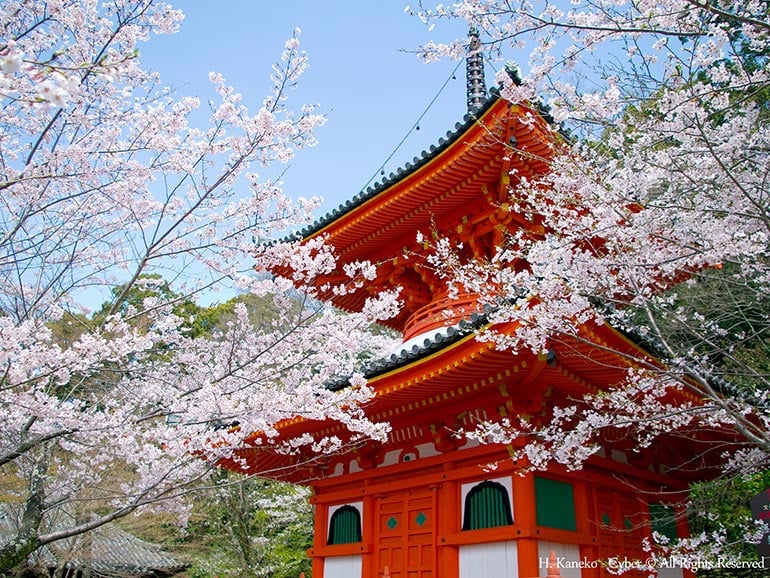
The surreal white tree canvases during cherry blossom season have been the site of many a hanami, a ritual party for viewing the new flowers. It’s not much of a surprise that Tomoyuki Kakui, a brewer and microbiologist once thought, inspired by his own hanami, of taking one of the flowers under a microscope in order to see what it could hold. Chateau Kamiya, also Japan’s oldest winery, is the brewery in Ushiku where one can taste find this experimental cherry blossom yeast brew every spring. Its delicate floral bouquet leans toward banana esters, herbal hops and light wilderness for a refreshingly different quencher, one far less intense than the Brettanomyces-laden brews popping up around America in the last decade.
A handful of Japanese breweries have also embarked on this wild cherry blossom yeast adventure, which is not surprising considering the high number of cherry blossom-based food products available around springtime in Japan. If they choose to develop this yeast, Japanese breweries hold the perfect ingredient to forge a distinct identity.
In recent years, Japanese yeast has continued its march towards unique flavor variety, and Japan’s impressive range of flora makes for interesting beer ingredients. A quick glance at local beers will allow drinkers to see brews featuring yuzu, kumquats, mangos and more.

Looking for non-alcoholic Japanese beer?
Order now on The Beer Connoisseur® Store!
Up on the cool mountain slopes of the Nagano prefecture, crops of all kinds are being put to use in another brewer’s creations. From rice to buckwheat, from fruit and vegetables to a newly named endemic hop variety called Shinshuwase (actually a blend of Saaz and a wild Japanese cultivar), everything that grows here is subject to being used in one of Eigo Sato’s refined ales.
This eighth-generation entrepreneur, who operates the Shiga Kogen brewery with his brew crew after his forefathers had concentrated on the family sake brewery, is indeed crafting some of the most characterful beers Japan has ever tasted. Super-aromatic IPAs of all colors and strengths are joined by saisons imbued with modern flair by a fair sprinkling of Miyama sake rice. Impeccable execution, openness to different brewing cultures and intelligent use of local ingredients makes Shiga Kogen a champion of the country’s brewing scene. An image of the torii, the traditional gate at the entrance of Shinto shrines, should be stuck to every glass of Shiga Kogen Oak-Aged Saison One to show that it contains a passage to higher realms.
This use of high-quality rice seems to be another way for the Japanese brewers to set themselves apart. Swan Lake Beer, from the scarcely visited Niigata prefecture, brews Koshi Hikari Lager with the namesake’s sake rice. Its well-developed barley malt and rice character sets the stage for a meticulous Noble hop display reminiscent of some Czech brewed Svetly 10˚. Rice adds delicate subtleties to the beer’s flavor environment much like the tinkling of bells does to an onsen, or hot spring spa, and there is no need to strip down to your skivvies to bask in its soothing currents. Sadly though, rice is still known as a cheap source of sugar for brewing; mostly because of the country’s macrobreweries and their characterless use of what some Japanese call “an alternative to oxygen.” Detractors obviously haven’t laid lips on Hitachino Nest’s captivating Red Rice Ale and some of the other delicacies from the brewer known by its owl symbol.
Indeed, the use of rice has become almost synonymous with Japanese ji-biru as U.S. craft breweries have begun to appreciate the subtle elements that using rice in lagers can produce, with many breweries producing “Japanese-style lagers” brewed with rice to highlight this ji-biru-style ingredient in their own creations.
Japanese Beer Available in the U.S.
Some famed Japanese producers’ offerings are now available to purchase stateside, so curious U.S. patrons can sample some of the famed flavors of Japanese beer from the comfort of their own home.
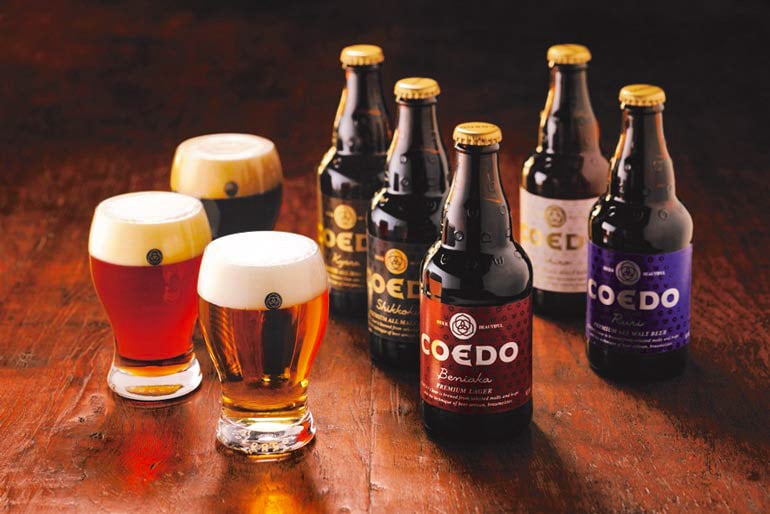
COEDO Brewery
COEDO Brewery began as a venture by Kyodoshoji Corp., a distributor for organic vegetables. Japan’s supermarkets boast some of the world’s strictest quality and appearance standards, meaning around 40 percent of all produce is deemed unfit for sale. Naturally, the company began looking for ways to utilize all those discarded fruits and veggies.
COEDO began experimenting with various kinds of local produce to brew with, before settling on sweet potato as an alternative to malted barley. Despite this scientific breakthrough, and the distinction of brewing the world’s first sweet potato beer, the fledgling company lacked brewing expertise, so they brought in veteran German brewer Christian Mitterbauer in 1997. He would remain with the company for the next five years, helping to brew and to train others to brew.
Right when COEDO began to get its sea legs, the initial craft beer boom in Japan slowed, thanks largely in part to a flood of low-quality offerings from mom-and-pop brewers, leaving the fate of the company in question. Enter longtime employee Shigeharu Asagiri, who became CEO in 2006 and helped steer COEDO away from danger. By focusing on higher-quality brews, new packaging and premium shelf space, he began laying the groundwork for the eventual expansion and export of COEDO’s products. Today, COEDO exports about 30 percent of its beer to over a dozen countries in Asia, Europe and North America, making it one of the country’s most successful craft brewers.
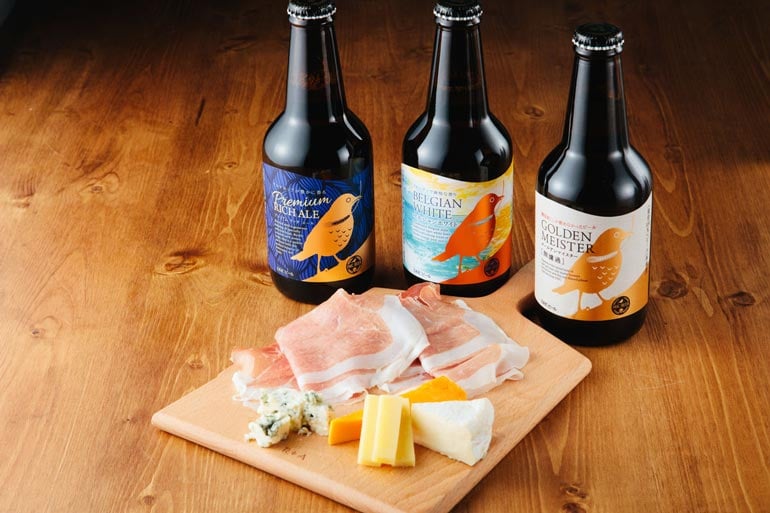
DHC Beer Co.
Founded in 2015, DHC Beer Co. is a relative newcomer to the Japanese beer industry. Though it’s only just come in atop a recent wave of new brewers, DHC is already making waves of its own through its commitment to purity – and that starts with its water supply, as good as any you’ll find in the world.
The brewery is located in the city of Gotemba, which lies at the base of Mount Fuji. As a result, the water it receives has filtered through the mountain over the course of fifty years to create a singularly soft, pure base for beer. What starts as snow decorating the symbolic Mt. Fuji’s peak ends up in your glass half a century later.
DHC then uses specially selected ingredients to complement the mildly alkaline water, enabling it to produce extremely refined beers with exacting accuracy.
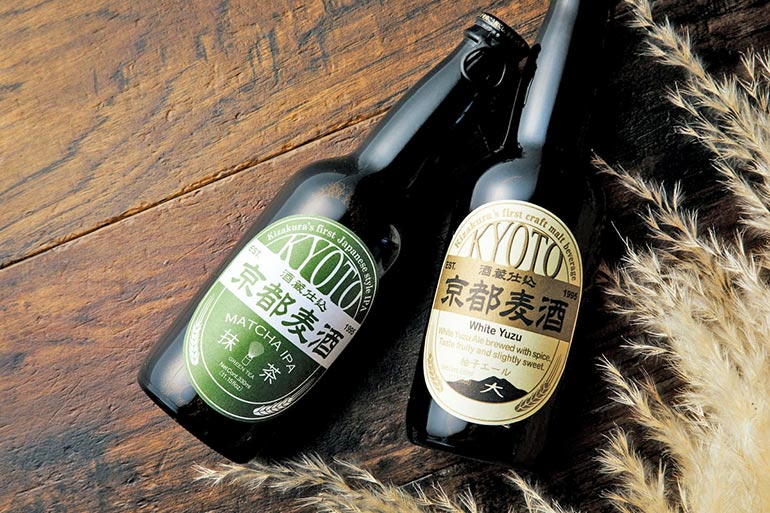
Kizakura
Kizakura is a true legacy name in Japan. Not only is it one of the country’s oldest craft beer brewers, operating since 1995, but it’s also one of the largest sake breweries in Japan and has been in operation since 1925. If you happen to find yourself in the region, you can tour their museum, which walks you through both the beer and sake-making process and allows for tastings and purchases.
As you may have noticed, attention to water quality is of prime importance to the Japanese brewer, and Kizakura’s supply is also quite special, as it originates from the Fushimi area of Kyoto, which is famed for the purity of its spring water. The brewery also calls on its sake yeast to impart unique attributes to its beer, highlighting an element of brewing unique to Japan.
Kyoto Beer Matcha IPA brings more unique elements to the table, utilizing Uji green tea to create a green-tinted beer that brings to mind the famed Japanese matcha. Matcha combined with copious amounts of hops result in a potent 8.5% ABV IPA unlike any other you may have had.
The unique offerings continue with Kyoto Beer White Yuzu Ale, which masterfully combines yuzu with coriander for a summery profile similar to a Belgian White that’s somehow more… Japanese!
Overprotection Hinders Maturity
These special brews striving to forge a local beer identity are still far from the norm in Japan. The four megabreweries (Sapporo, Suntory, Asahi and Kirin) continue to dominate the scene with their German-style lagers. And while there is nothing inherently wrong with what they are brewing, the system put in place by the Japanese government at the beginning of the 20th century, as well as the cheaper prices at which these breweries can sell, nearly obliterated any attempts at brewing something different – something truly Japanese.
Major efforts were made as early as 1906 to stop the proliferation of smaller breweries. Initially, these measures were meant to protect the growing beer businesses already in place by making sure smaller local producers did not compete with the bigger brewers. In 1908, a change in the taxing laws introduced a yearly minimum quantity of beer to be produced, set at 1,500 barrels. That number rose to 150,000 barrels in 1940 and 156,000 barrels in 1959, making it virtually impossible for a new brewery to open.
Thankfully, that law was adjusted in 1994 and brewers have since been asked to only brew “at least” five barrels in a year. As a result, Japan boasted 559 craft breweries operating at the end of 2021. Still though, the vast majority of these breweries, understandably, try to emulate the beers produced by the aforementioned big four. That’s what they have been exposed to and what beer is about for them.
As an indirect result of these teachings from bigger breweries, some of the best craft breweries in Japan, still today, offer excellent, authentic renditions of German styles. Fujizakura Kogen, for example, has one of the most impressive weizens going outside of Bavaria. Set near the base of Mount Fuji, this brewery sits right next door to a dog theme park. The brewery owns the Sylvans restaurant, a huge building where brewer Miyashita Hiromichi’s wares wow beer travelers and hikers alike, who are brought in in throngs on free buses from the nearby lake town of Kawaguchiko. The Rauchbier also could sit right next to a krug of Spezial in Bamberg and experienced tasters might think it comes from a Franconian brewer unknown to them.
The same could be said of the Bavarian-inspired brews of Otaru Beer. Based in a canal town on Hokkaido, the country’s northernmost island, this talented brewer has now reached Tokyo through its Beer Horn bar. Even if the gimmicky horn-shaped glasses detract from the bubbly show of prowess master brewer Johannes Braun can deliver, the place remains a vibrant reminder of the Japanese’s ability to imitate. The Pilsner, for example, possesses an intricate hop signature which displays spicy, citrusy herbs that freshen up the crunchy, straw-like base malts.
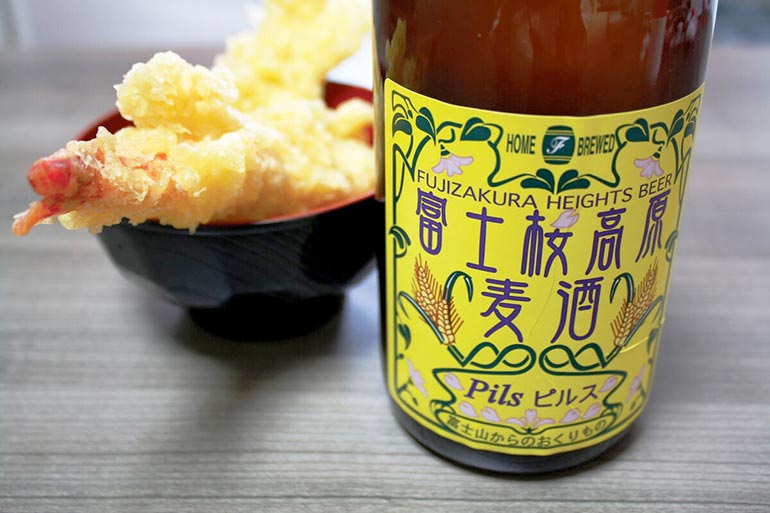
Fujizakura Kogen’s Pils is a perfect match to gigantic shrimp tempura.
The colorful izakayas everywhere around the country though, where the tie-wearing salarymen join after work for a few pints and snacks in traditional Japanese decor, are exclusively serving beers from the aforementioned “Big Four.” One would expect the microbreweries to want to integrate this market because these often tiny, atmospheric bars are not run by large companies and are rarely chains. They are often locally owned by small entrepreneurs, a market not unlike craft breweries in a way. These izakayas often peddle the terrific combination of beer and ramen, which cannot be denied as a tremendous pairing.
Craft beer bars, on the other hand, are trying to reach a crowd seeking modernity, openness to the world, which sometimes results in bland I-could-be-anywhere-in-the-world on the visual front. Some excellent establishments like Tokyo’s Watering Hole or Osaka’s Craft Beer Kamikaze or Q-Brick, for example, look like they could anywhere in the Occident, from San Francisco to contemporary London.
Devil Craft, a recent addition to Tokyo’s rapidly expanding bar scene, sometimes ignores the local ji-biru, or craft selection, to make room for American micros on tap. It also specializes in Chicago-style deep dish pizza. Similar story for Shibuya’s Craft Heads, where you can find a larger selection of bourbon than most quality bars in America. These places are godsends for hardcore craft beer lovers looking for the most varied and elaborate beer lists. But don’t look for a typically Japanese experience beyond the ji-biru that flows from the tap handles.
A New Spring in Sight
Many of the thousands of people crossing the street every minute in front of Tokyo’s Shibuya station might never know of the pleasures derived from Japan’s own gardens and creativity when it comes to beer. But the rest of the world may well latch on to such tasty idiosyncrasies like they already have with some of Hitachino Nest’s liquid wonders: Japanese Classic Ale, matured in cedar casks commonly used in the sake world, and XH, matured in shochu, or distilled sake, barrels rank highly among them. Of course, Ramune craft sodas are already extremely popular the world over, foreshadowing the growth that might occur for Japanese beer in the future.
Along with growth of demand in the local market, this in turn can help the identity of ji-biru blossom to maturity just like the cherry trees every awe-inspiring spring, born of the fruits of the Earth.
Header Photo Courtesy H. Kaneko – Cyber / Wikimedia Commons

Great article Martin. Very vivid descriptions. Makes me want to travel far and away.