



Trout, Water, and Taprooms: Exploring Eastern Idaho Beer Country
Fly Fishing in Eastern Idaho, One Cold Local Beer at a Time
 Story by:
Heide Brandes
Story by:
Heide Brandes
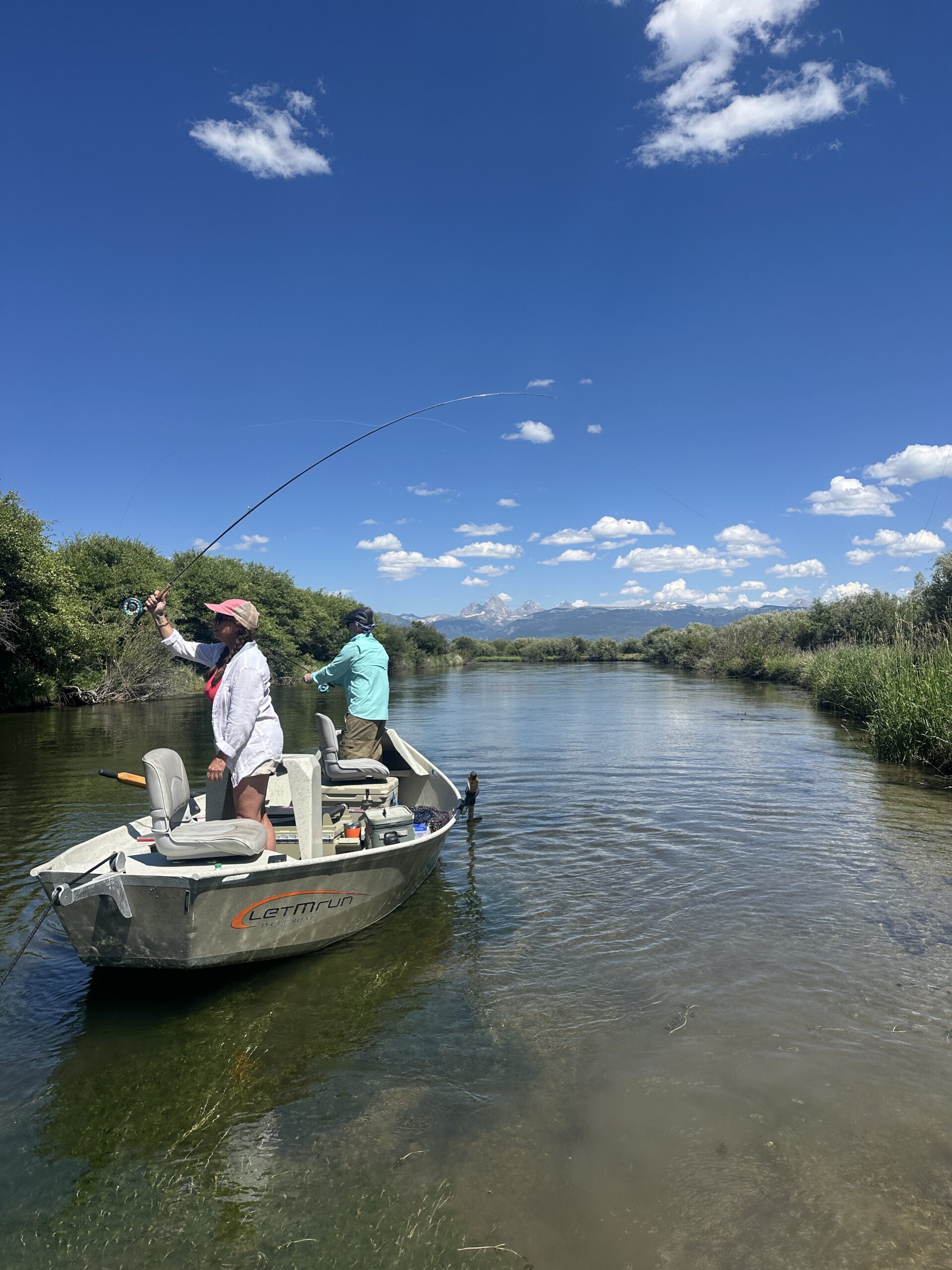
The Teton River moved slow and clear beneath our drift boat, and the two small brown trout I had already netted had settled my nerves enough to believe the day belonged to me.
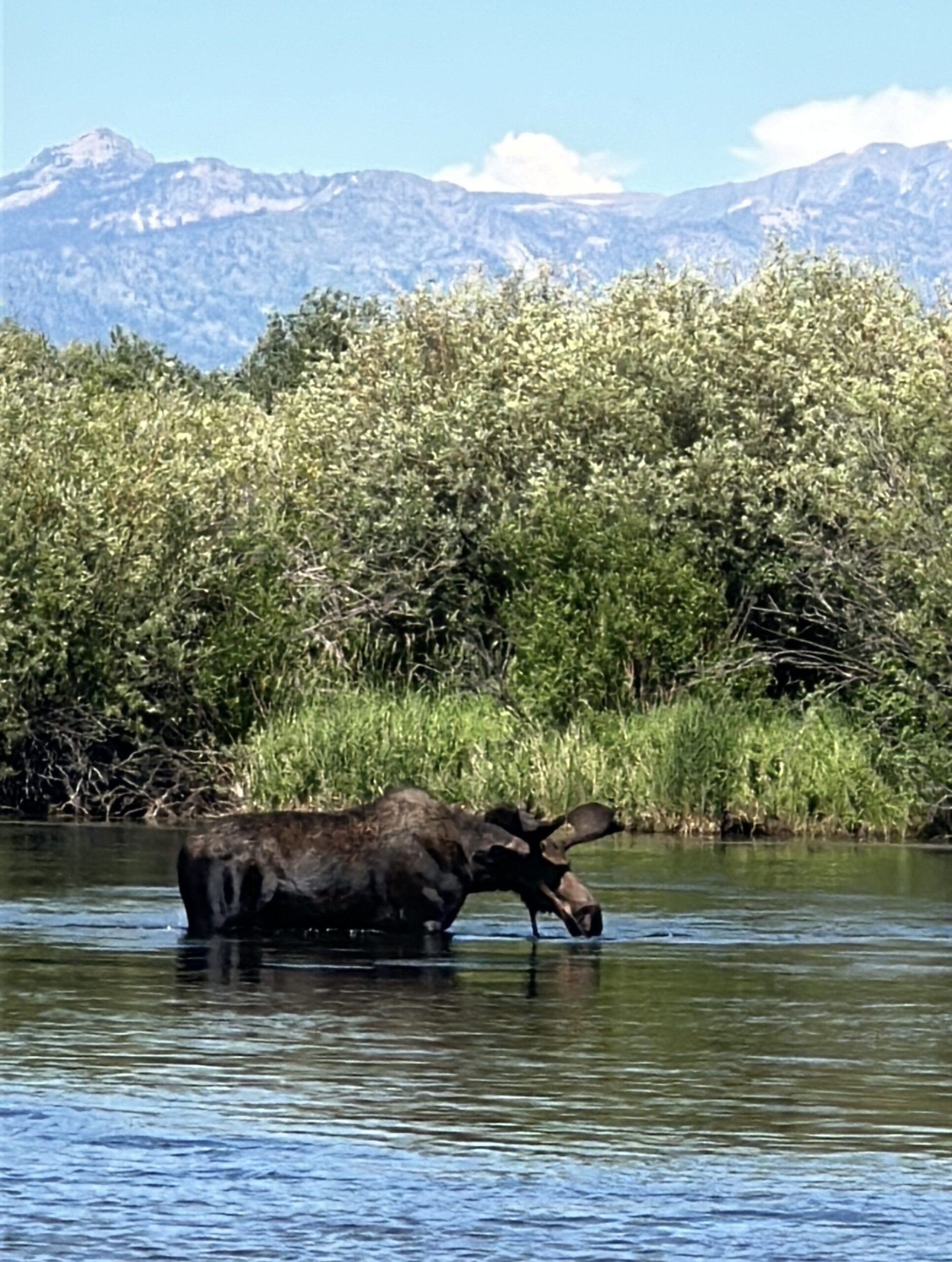
Then the willows parted. A bull moose stepped out of the tangle, all shoulders and velvet antlers, and waded into the current in front of our bow. He lowered his great head and began to feast on the grasses growing up from the riverbed, water streaming from his muzzle in silver ropes.
Luke Campadonico, my guide with Three Rivers Ranch, eased off the oars. We stopped, and my fishing buddy Lyle and I stared in wonder. Somewhere upstream, a trout rose, and nobody cast to it. I reached into the cooler, pulled out a cold can of 208 Golden Ale from Grand Teton Brewing, one of the most notable Eastern Idaho breweries, located maybe 20 miles from where we were floating, and took a long, slow sip while the biggest animal I had ever shared a river with went on eating his breakfast.
That, in one morning, is Eastern Idaho. The trout are wild, the wildlife is wilder and the beer is never far from the water.
“I love the Teton. It’s small, which I love,” Campadonico said as the Grand Tetons burned white against the sky beyond the willows. “You usually see moose.”
Campadonico came to guiding the honest way. He grew up in a big Italian family in San Francisco, mocked his best friend for taking up fly fishing, calling him “a ribbon dancer,” then tried it himself and got, in a word, hooked. He came to Idaho to work summers in a fly shop and, in his words, got stuck.
Five years with Three Rivers Ranch later, the Teton is his home river, and his philosophy suits a beer-drinking angler just fine.
“I’ll take fun people over good fishing any day of the week,” he said.
An Honor Roll of Rivers
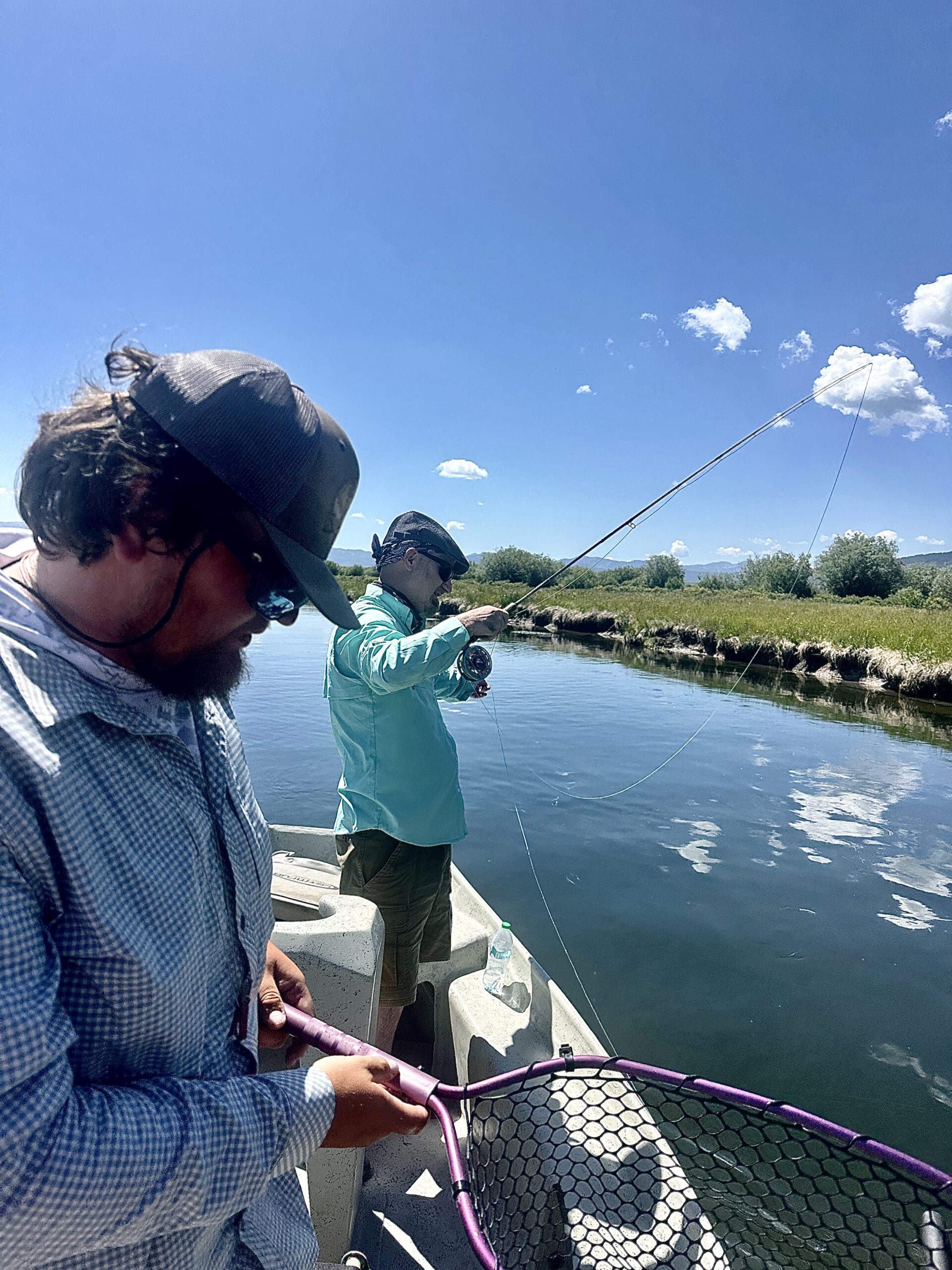
Three Rivers Ranch sits in its own private canyon at Warm River near Ashton, where Robinson Creek and Warm River braid together within a short walk of the guest cabins. The ranch has been in owner Lonnie Allen’s family since the early 1920s, when her great-grandparents homesteaded the site and ran the Warm River Inn as a stop for tourists bound for Yellowstone.
In 1974, her parents approached the Orvis Co., and Three Rivers became one of the first Orvis-endorsed fly-fishing lodges in the country, later earning Orvis Lodge of the Year honors.
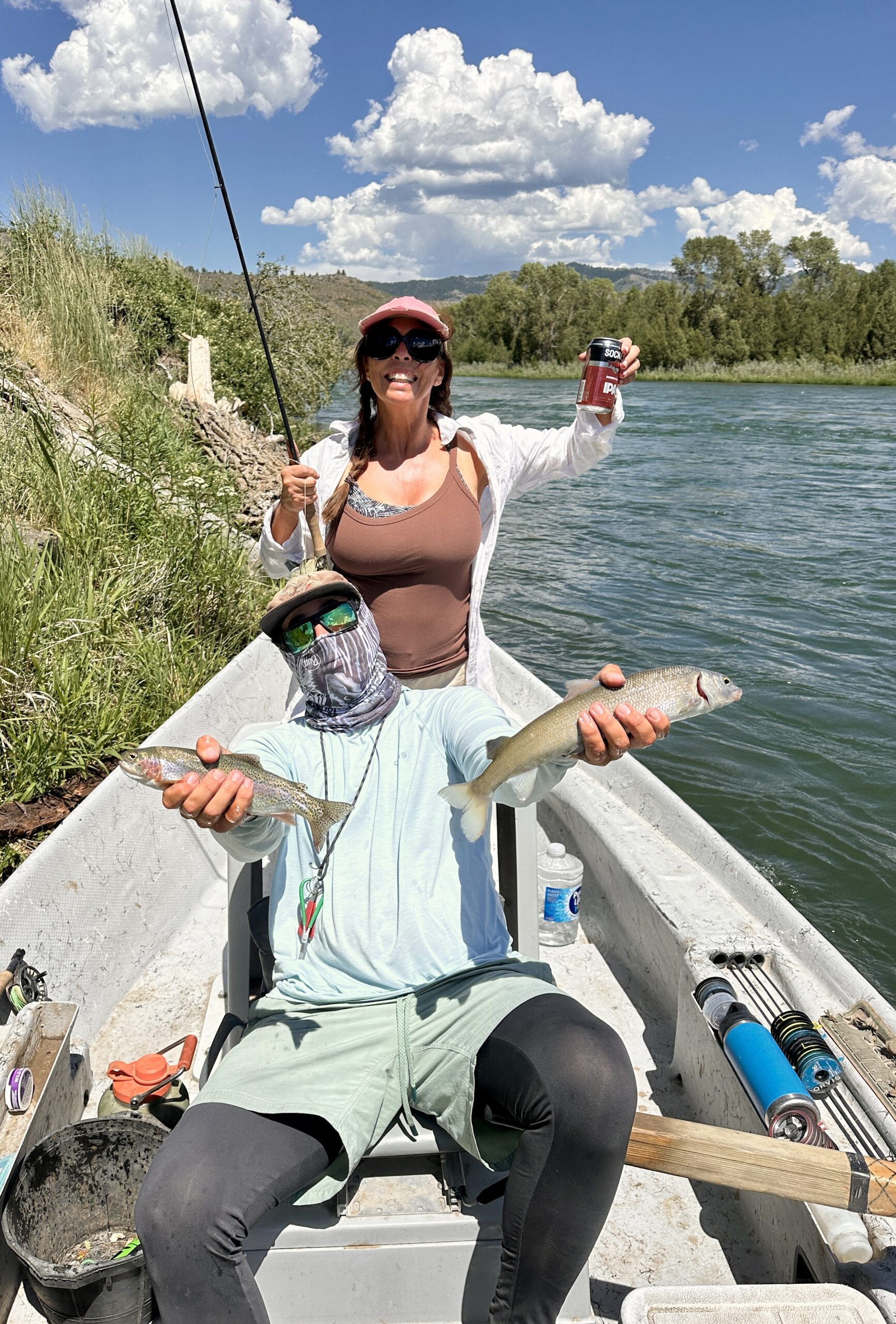
The outfit is licensed on more than 16 trout streams across Idaho, Montana and Yellowstone National Park, and guests draw a new guide each day. My dance card held the Teton, the South Fork of the Snake, and the storied Henry’s Fork – three rivers and three young guides in three days, with Jackson Solis rowing the cottonwood canyons of the South Fork and Zach Burgoyne taking the Henry’s Fork day.
A punishing low-water year had scrambled the usual calendar, Campadonico said, pushing the guides toward whichever water fished best. “Normally, it’s way too early to fish the Teton,” he said. This year, the small river was the hot hand.
He is frank about the Henry’s Fork mystique, too. “It’s a difficult, technical fishery,” he said. “You’ve got to be good. The fly’s got to be right.”
The river draws serious (and sometimes overly self-serious) anglers, he said, while Three Rivers takes a looser view. The end result is a place where beginners and hard-core anglers can both feel comfortable.
“We’re still a very high-class lodge. We have really good fishing guides,” he said. “We’re just kind of not so full of ourselves about it.”
The Lunatic’s Lodge
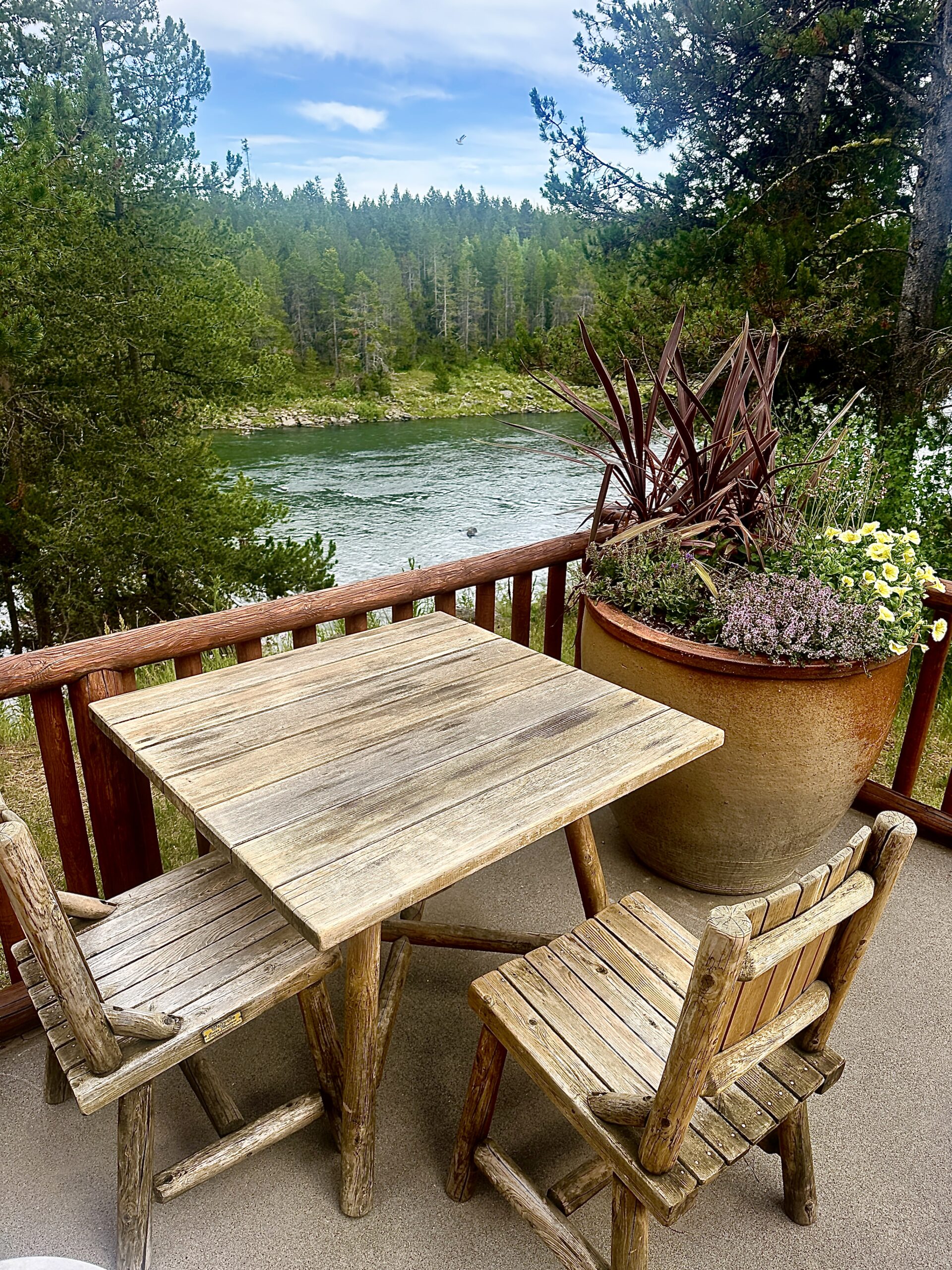
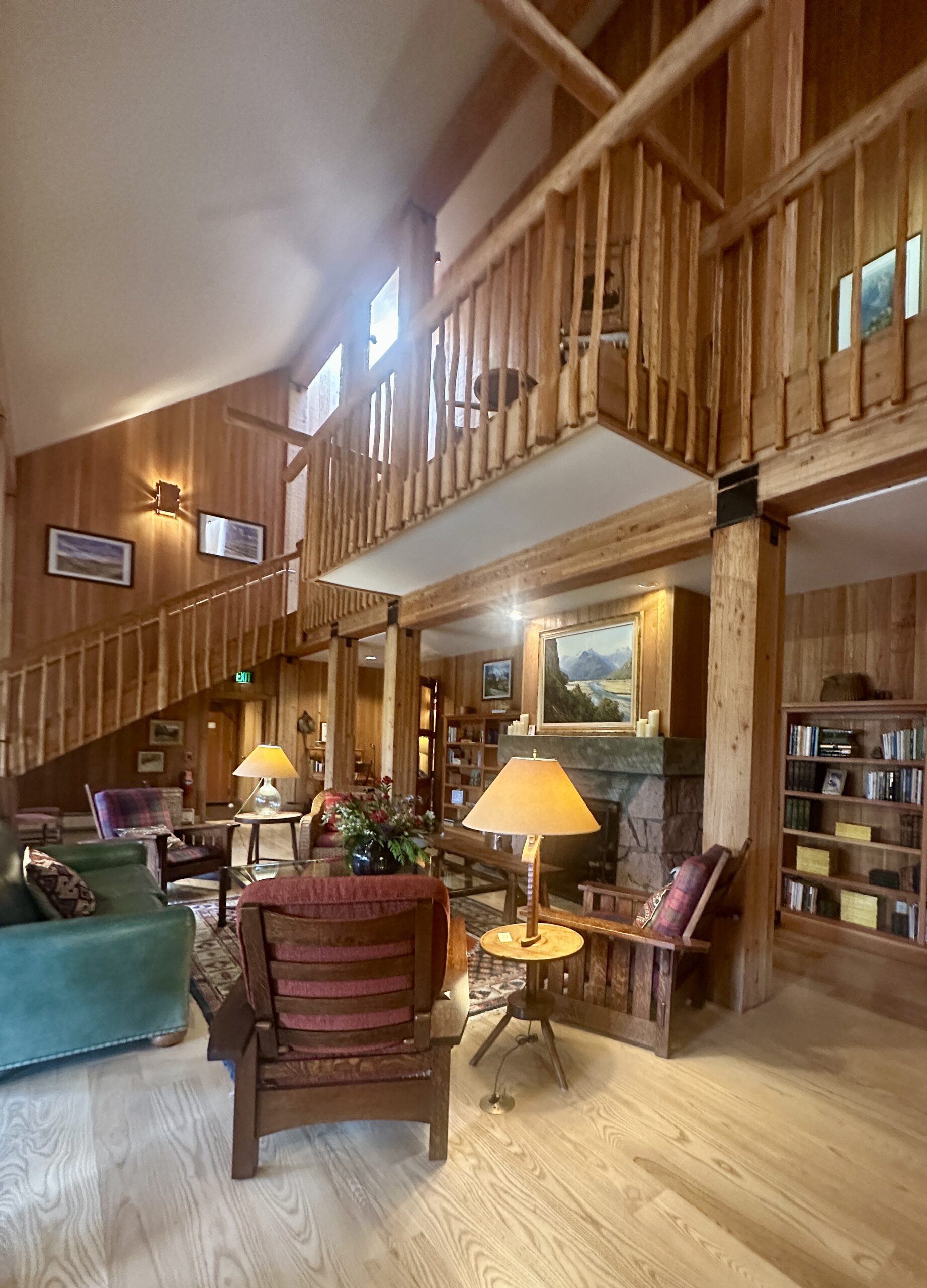
The other pole of Henry’s Fork culture sits upstream near Island Park, on a bend where the far bank runs 25 miles of roadless national forest. Henry’s Fork Lodge is the creation of Nelson Ishiyama, a California attorney and self-described “lunatic fly fisherman” who discovered the sport at 15 through hand-me-down copies of Field & Stream, borrowed his parents’ station wagon as a high school senior and drove north to fish. He has been coming back for 50 years.
“This river, for fishing, is like Wimbledon is to tennis,” Ishiyama said.
When a friend’s wife tipped him off to a lot for sale on the river, he had no plans to build anything. Then he stood on the bank. He hired Joseph Esherick, a fellow fly-fishing club member who headed the architecture school at UC Berkeley, and told him he wanted a village, not a hotel. The lodge opened in 1990 with 40-foot ceilings, a mud room for wet waders, and a staff Ishiyama built around a simple conviction that fishing lodges deserved better food and better service.
“We’ve got three chefs and a breakfast cook, so we’ve got a lot of horsepower here,” he said.
General manager Jamie Short estimated that 99% of guests come to fish the Henry’s Fork, all with guides, chasing the prime dry fly window from May through mid-July. For beer lovers, the ritual matters as much as the hatch chart.
Every evening around 5 p.m., the river room opens for beer and wine hour, and guests’ own bottles wear their names at the bar.
Air, Dust, and a Grotto
Not every thrill in this country requires a fly rod. During our stay at Henry’s Fork Lodge, we spent a day with High Mountain Adventures in Island Park, piloting a self-guided RZR through the lodgepole country below Sawtelle Peak, trading river silence for engine growl and a fine coating of mountain dust.
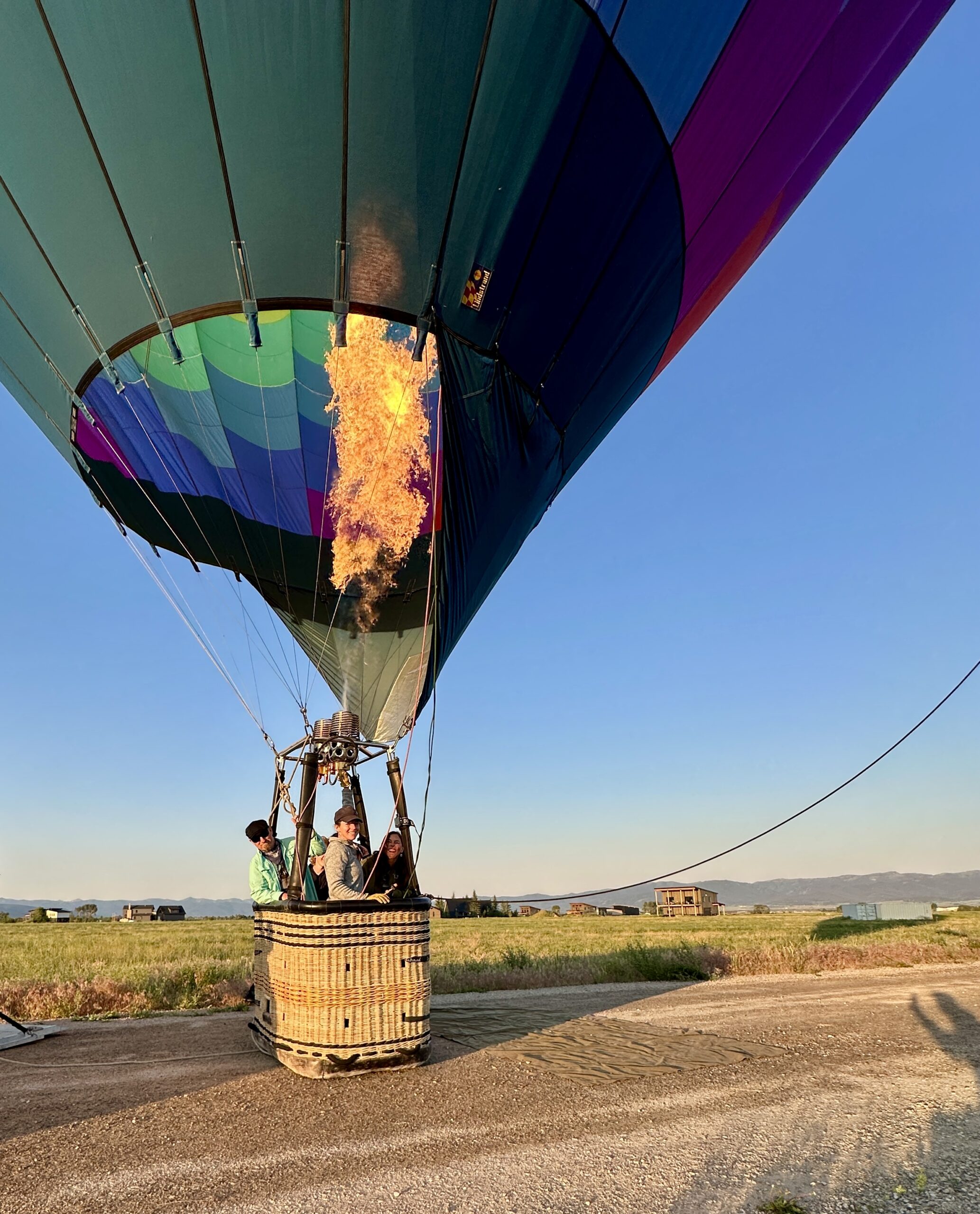
In Driggs, the alarm rang before 5 a.m. so we could meet Margaret Rose Breffeilh, owner of Elevated Ballooning and the organizer behind the Teton Valley Balloon Rally, in a hardware store parking lot while the stars still held. By sunrise we were drifting silently over Teton Valley, the patchwork of barley and potato fields unrolling below and the Tetons catching first light off our shoulders.
Seeing this valley from a drift boat is one kind of intimacy; seeing it from a wicker basket at dawn is another entirely.
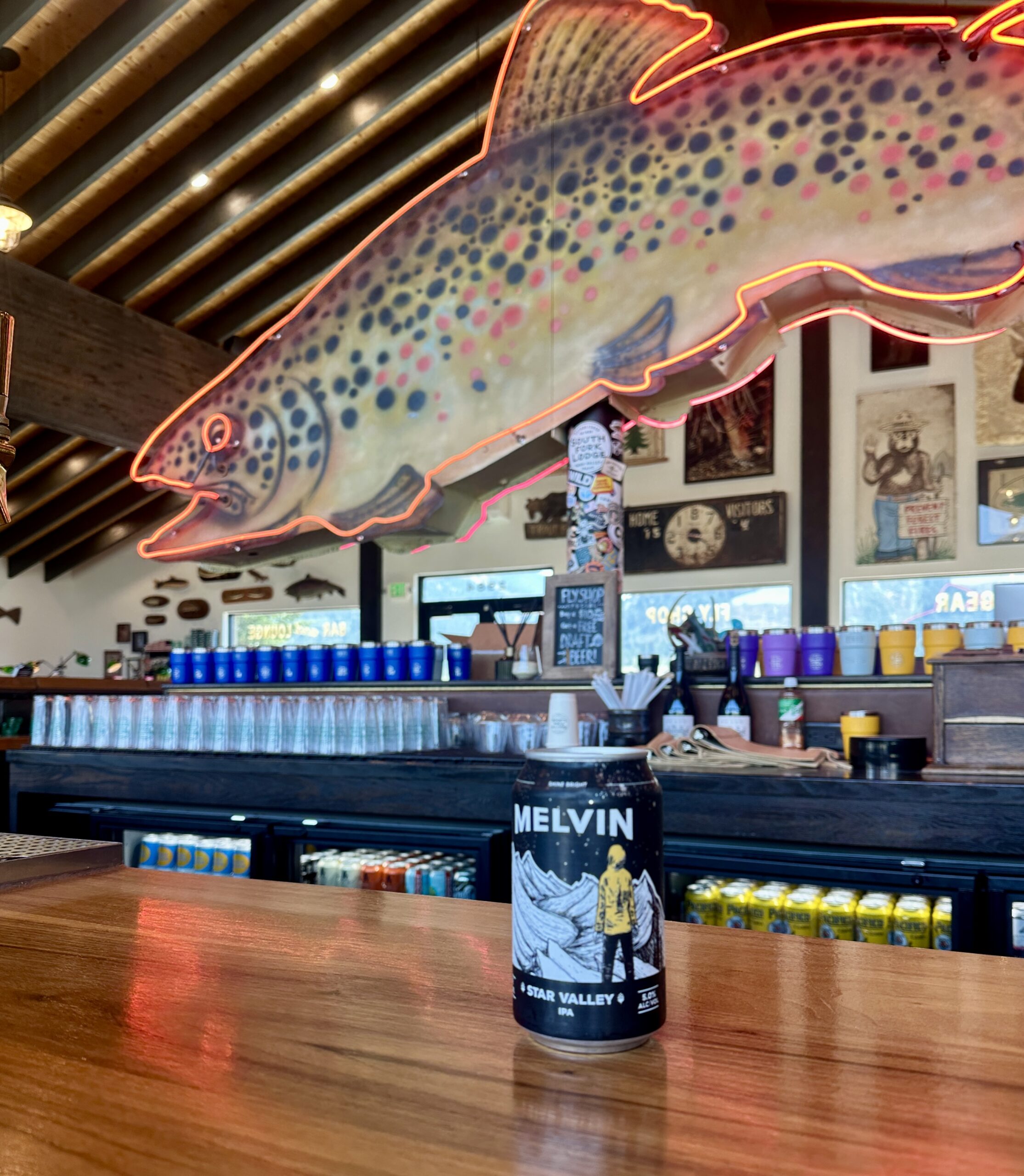
The Swan Valley loop closed the circle. SFLY, the mammoth roadside fly shop that late-night host Jimmy Kimmel and renowned guide Oliver White added to their South Fork Lodge in 2023, is open to anyone, even though the lodge itself is reserved for guests. A full bar anchors the center of the shop, which means you can sip a cold local draft while debating hopper patterns or browsing rods you dream of owning.
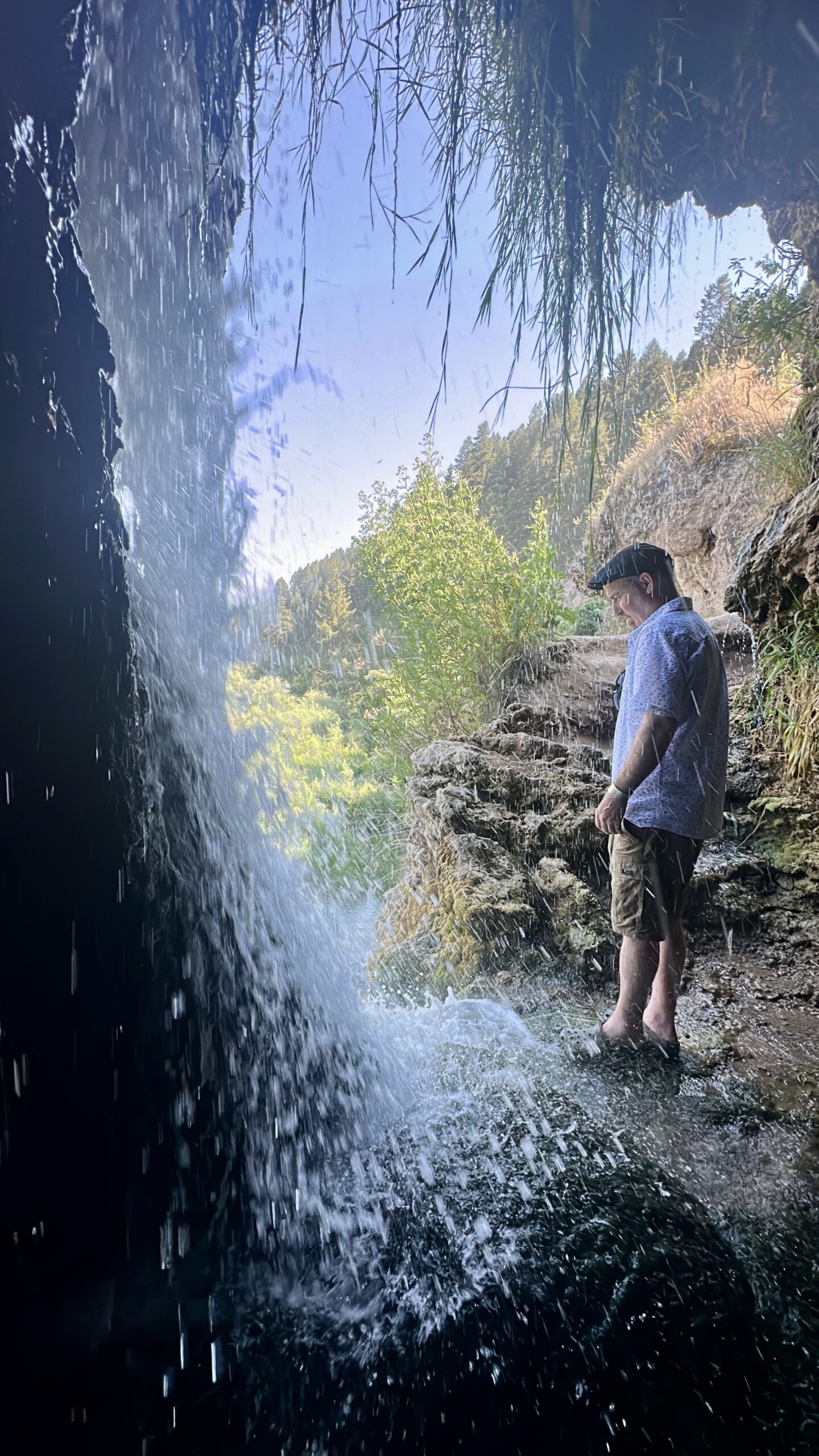
Down the road, Fall Creek Falls pours off a broad ledge straight into the Snake River. We took our lives in our hands while scrambling down the slick bank to a small grotto tucked behind one of the massive curtains of water, and we stood there soaked and laughing while the river thundered a few feet from our faces.
The 208 Beer Trail
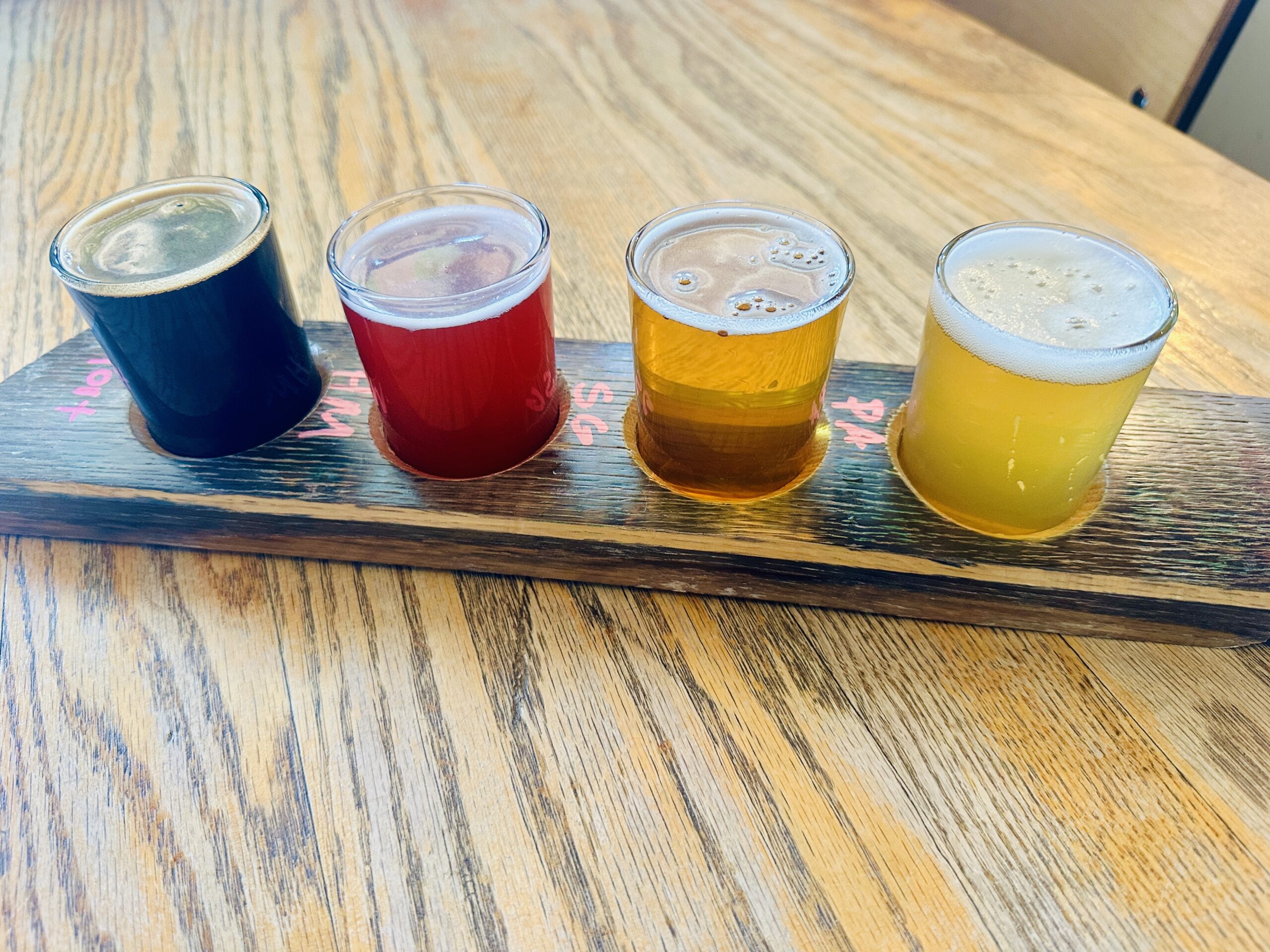
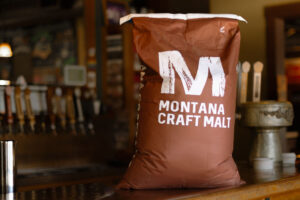
Here is the secret handshake of Eastern Idaho breweries. The barley in your glass probably grew nearby, because Idaho leads the nation in barley production, and the water fell as snow on the same peaks of the Tetons that feed the trout streams.
Start in Victor, at the base of Teton Pass. Grand Teton Brewing brews its 208 Golden Ale, named for the state’s lone area code, entirely from Idaho barley, Idaho hops and Idaho spring water, and its Bitch Creek ESB, named for a creek off the west slope of the Tetons, has collected 15 national gold medals since 2004.
Down the street, Guidepost Brewing pairs house-brewed beer with scratch Italian cooking, and the little brewery just won two medals at the North American Brewers Association awards (NABA), taking silver for its WoodID and bronze for its Lagerithm.
Highpoint Cider, born in Jackson Hole and crafted in Victor, took bronze for its MotherTrucker at the same competition.
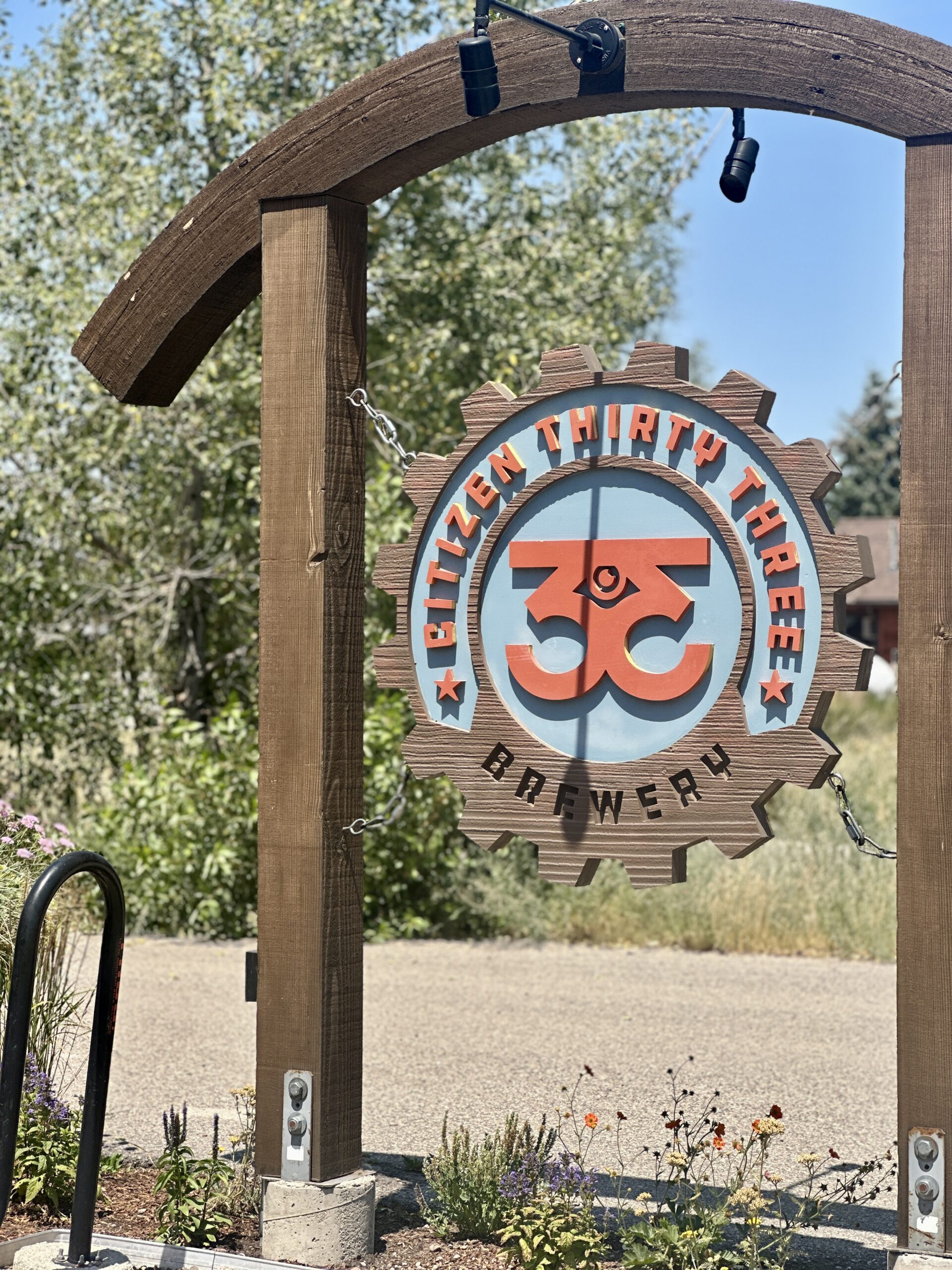
Eight miles north in Driggs, Citizen 33 Brewery sources every base malt and hop from Idaho, much of the barley malted on the Snake River Plain, for a tap list running from an all-Idaho rice lager to a prickly pear gose. The Teton River, my moose river, flows through the valley just west of Main Street.
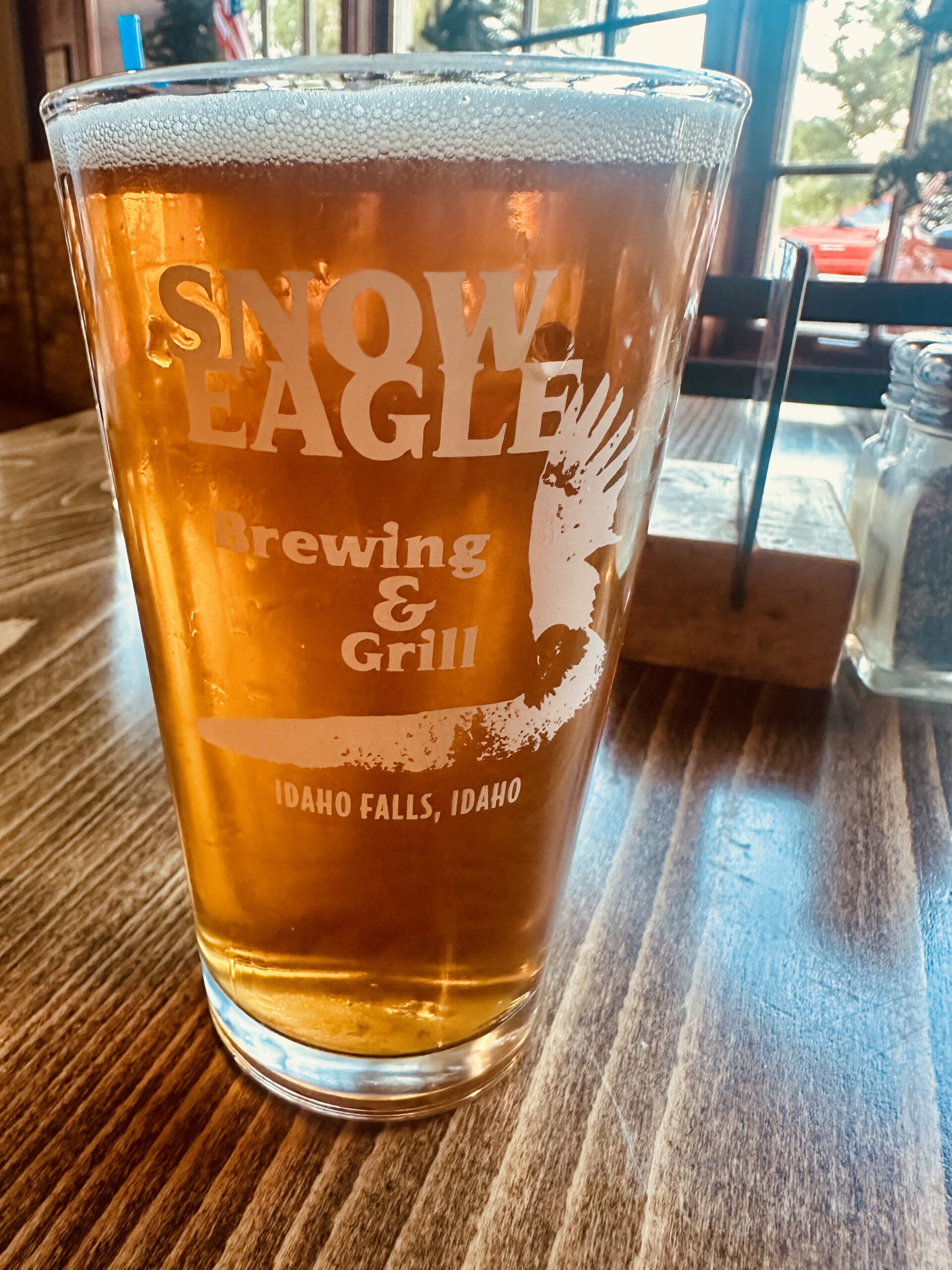
Idaho Falls ends the tour. Snow Eagle Brewing & Grill pours across the street from the falls on the Snake River, where an open brewhouse improbably shares a roof with a Japanese sushi bar. Timeless Taphouse, a female-owned watering hole on Park Avenue, rotates Idaho craft beer and cider.
And Idaho Brewing Company, run by Leon “Wolf” Wolfram, just struck gold three times at the NABA awards for its Baltic Porter, its What a Pear light beer and its Bad Badger ESB, while also organizing the annual Mountain Brewers Beer Fest that draws more than 100 breweries to town.
Giggle Water and Ghosts
The spirits side of Idaho Falls starts at The Celt, the first brick building in town and the lone survivor when a bakery fire took out the rest of the block. Liza McGeachin, who owns the Irish pub and co-founded Heads & Tails Distillery with her brother James, trained at the Springbank Whiskey School in Campbeltown, Scotland, before installing a gleaming German-made Möller copper still and opening the city’s first modern distillery, complete with a rooftop bar.
Her three gins are, in her words, Idaho terroir in a glass. The flagship Red Fern honors Where the Red Fern Grows, which Wilson Rawls wrote in Idaho Falls. The Forest gin recreates a hike, with Douglas fir needles harvested near Pocatello, herbs from Idaho’s Purple Sage Farms and smoked black peppercorns, because, McGeachin said, the woods always carry a little campfire. The new Red Fern Bramble folds real huckleberries into the process three separate times.
Her Hotcha Vodka, distilled from organic Idaho wheat, takes its name from Hotcha Hinton, the beloved mid-century trans performer born in a circus trunk who headlined downtown’s Bon Villa.
“This is not your parents’ gin you stole out of the basement,” McGeachin said.
Hotcha appears again a few blocks away, in a lightbox photograph inside the Soiled Dove, a speakeasy hidden in an alley off B Street and named for a tax once levied on the red-light district of Eagle Rock, the town that became Idaho Falls. General manager Rebekka Sampson pointed out a floor section called the bridge, built from timbers salvaged from the span that once led to Soiled Dove Island, now the site of the Japanese Friendship Garden.
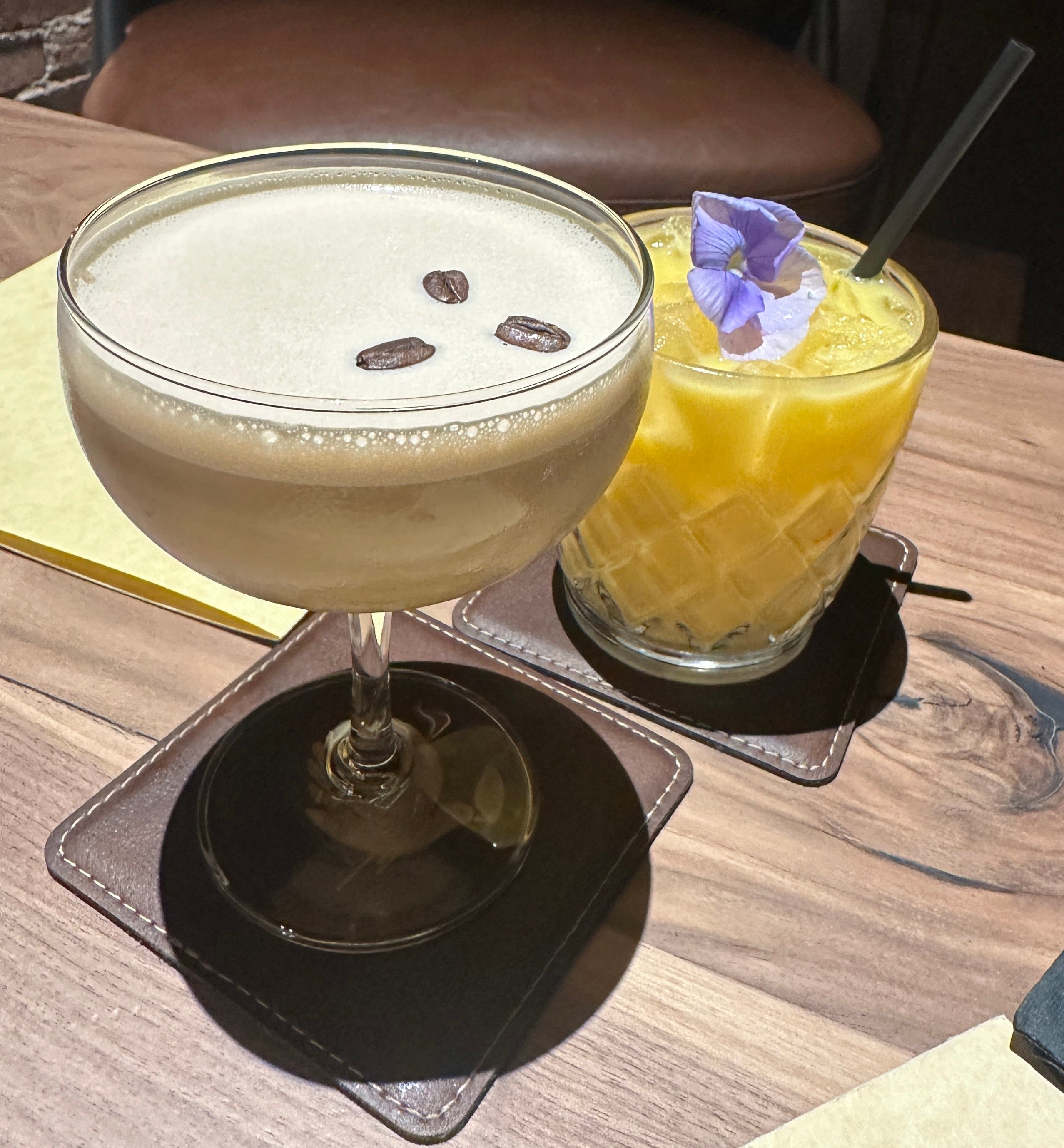
Every cocktail tells a story here, and some of them are murder ballads. The Larkins Lynch commemorates Sid Larkin, who shot the woman he loved in an Eagle Rock brothel and ended his days at the end of a downtown rope. The Black Parade is a savory truffle cocktail inspired by beef Wellington. The Rock Bottom blends goat yogurt from the farmers market into something that tastes like a creamsicle. My nightcap folded vodka, tequila and bourbon cream into velvet.
“You’re getting that extra little punch, but it doesn’t feel like you’re getting that extra little punch,” Sampson said. “That’s why it’s so dangerous.”
Last Cast
Plenty of places in the American West offer great fishing. A few offer great beers. Eastern Idaho is that rare country where both rise from the same water, where a bull moose can interrupt your morning and an all-Idaho ale can finish your night, and where the barley fields you drive past at dusk are next season’s tap list.
All body photos courtesy Heide Brandes
Conversations (0)
No comments yet.