







Have We Reached Peak Beer? Why Japanese Lagers Brought Me Back to “Less”
 Story by:
Seth Levy
Story by:
Seth Levy
Craft beer, in general, has always been about “more.” Hazier. Hoppier. Higher ABV. Darker. Sweeter. From IPA to DIPA to Triple IPA, from Stout to Imperial Stout, styles have evolved into ever-more intense expressions of themselves. I am an enthusiastic rider on the craft beer rollercoaster of ever-intensifying styles, but somewhere around my second serving of a 15% coffee pastry stout, I wonder: Have we reached “peak beer?”
As craft beer gets stronger, my ability to consume high-ABV styles wanes, my palate desirous of a more gentle experience, craving simplicity and refreshment. But where next, if not more? What if the answer is less? But where to go, if not a blasé macro brew or a bland seltzer?
From “More” to “Less:” Are We at Peak Beer?
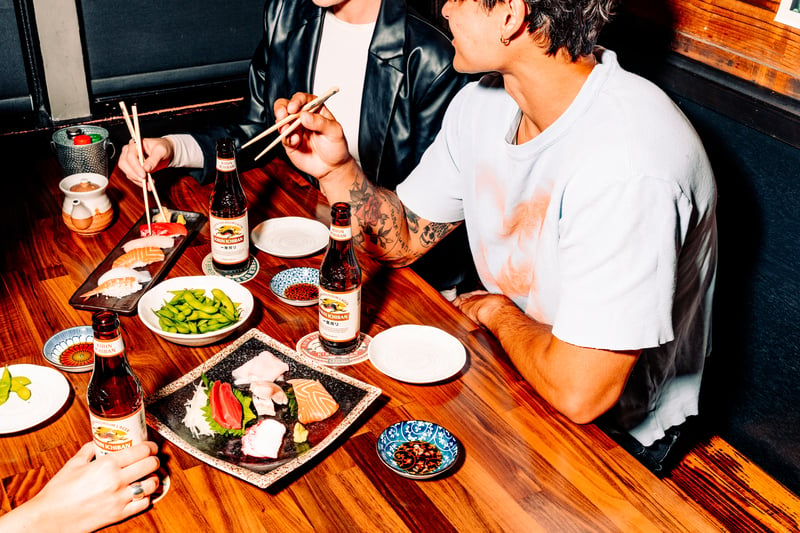
I sought the answer to my hedonistic treadmill in Japan. Sitting in a smoky yakitori bar under a highway overpass, I was presented with a cold glass of Asahi Super Dry, a Japanese lager brewed with rice. I’ve held lagers in general, certainly adjunct lagers, in an unfairly low regard, but this beer showed my palate the error of our ways. The crisp, lightly hopped lager cut through the cigarette smoke and hibachi fumes like a katana. The clean, uncomplicated flavor scrubbed my palate clean. After two glasses, I began to contemplate a koan: “If a craft beer enthusiast loves a lager in a foreign land, does anyone care?”
The Japanese Lager Wake-Up Call
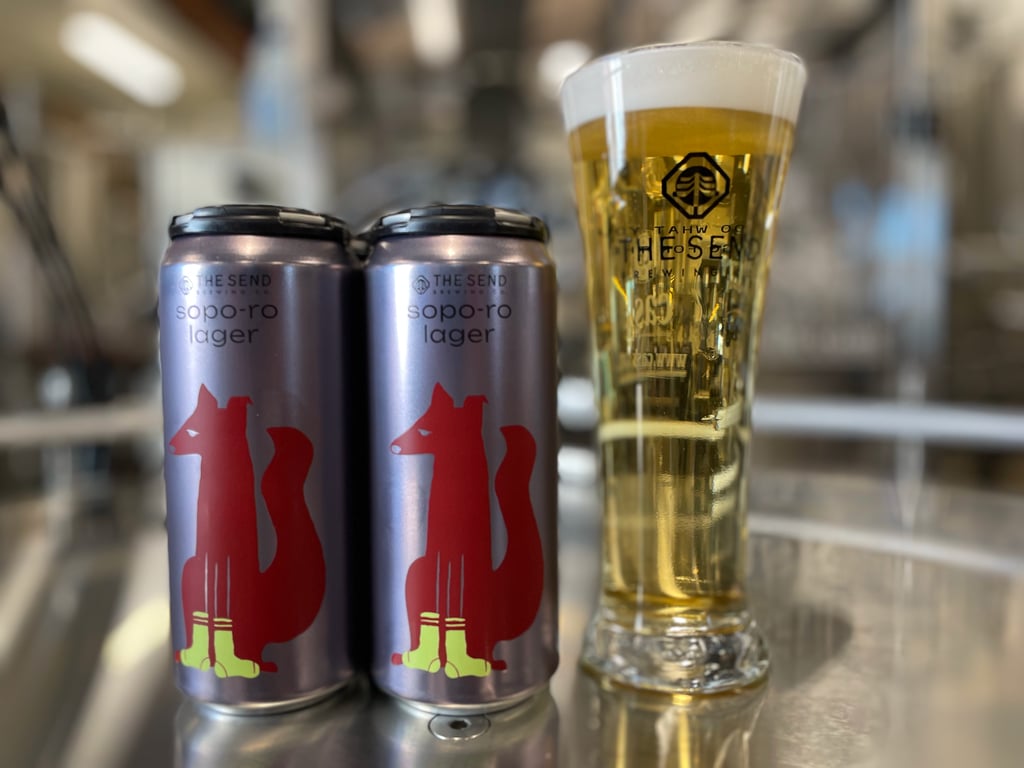
Thankfully, my research continued close to home in Portland, Maine, where Cole Kohei Corbin founded “The Send Brewing Co.,” a Japanese-inspired brewpub featuring his Sopo-Ro lager. Raised in Sapporo, Japan, Corbin explored a variety of beer styles during his tenure as a brewer at Maine Beer Co., and did his research in Portland’s thriving beer scene. Tiring of double sour, milkshake, fruited IPAs, Corbin settled down and started to formulate what he wanted to do, which was owning his own place to combine his Japanese heritage with his love of brewing culture.
My first order of business was asking Corbin why some Japanese lagers incorporate rice, and what impact that has on the drinking experience: “Well, rice is a food staple in Japan. I mean… I am literally built of rice! When I first moved to the States, I was concerned that they didn’t have rice in America, so I brought my own on the flight in my backpack! When Japan started brewing beer in the late 1800’s, they started brewing in the lager style with help from German brewers. Malt would have been expensive, of course, we had been brewing sake from rice for centuries. It must have been a natural addition.”
Corbin quickly disabused me of the notion that rice is unique in Japanese beers, or that a beer is only “Japanese” by virtue of including rice. “Many ‘American’ beers use rice, such as Budweiser. When I was in college, I drank Yuengling, and that is a rice lager! Of course, they’re not called rice lagers in Japan. It’s just a lager. I don’t go out of my way to describe my beers this way. I just want it to be known as a good lager.”
What Makes a Japanese Lager “Japanese?”
If not rice, according to Corbin, Japanese beers are all about “…highlighting the drinkability. Some beers you have to sit and think about the flavors, but my lager emphasizes drinkability. There’s a balance between the amount of flavor and the ease of drinking. It has just enough flavor to invite the next sip, but not too much.” Ingredients, too, matter a lot. “We use the Sorachi Ace hop, which was developed in Japan, and it adds a floral character with just a hint of bitterness.”
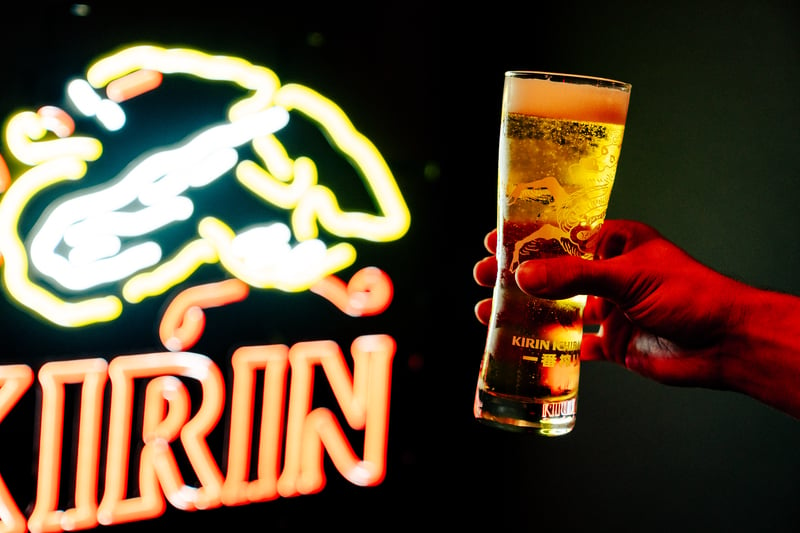
Kirin Ichiban, a quintessentially Japanese lager, actually makes a point of using no rice at all. According to Jimmy Nakajima, Kirin’s Sales Strategy Director, he describes their unique lautering process as an alternative to using adjuncts like rice, “Why does Kirin Ichiban use only water, malt, and hops—without rice? What makes this possible is our globally unique brewing technique: the ‘First Press’ method. Most beers are made from a blend of ‘first wort’ and ‘second wort’ collected during the lautering process, but our approach allows us to extract only the purest, most delicate flavors of the barley.”
Of course, you don’t have to be Japanese to brew a Japanese lager. Tom Bath, Brewer and Co-Owner of Loaded Question Brewing in Portsmouth, New Hampshire, absorbed some Japanese culture “growing up in Hawaii, where Japanese values are a significant part of the culture. When I was older, I visited Japan and spent just long enough there to appreciate Japanese culture, particularly the tendency to refine things to perfection. To do one thing really, really well. A simple beer can be enough to justify putting the time into making it perfect.”
The notion that Japanese lagers exemplify aspects of the culture came up time and time again. I asked Corbin if the concept of kaizen, the perpetual advance towards a perfection that is never reached, resonated, and he expanded on the concept, saying, “Japanese culture is all about mastering a craft. It’s all about refinement, about taking the time to reflect before the next iteration. A lot of restaurants only make one thing. Some places only make ramen, some places only make okonomiyaki. It’s just part of the culture to do one thing, to refine, improve, and perfect. Kaizen is sort of like that. Perhaps more important is the concept of shokunin, which means ‘craftsman.’ It doesn’t matter if you’re making sushi, ramen, or beer; it’s the word for someone who is completely embedded in their craft.”
The concept of craftsmanship, and of mastery, is familiar to all brewers, but it’s most relevant to lagers in general, and perhaps delicate Japanese lagers in particular. According to Bath, “As a brewer, there is a unique challenge in making something you can’t hide behind. You get to showcase your ability. If you look at an IPA, there is a ton of hoppy character. If there are flaws, there is so much flavor that the off-flavors are harder to detect. The same thing happens with darker beers, as the roasted notes are so pronounced that they hide mistakes. Rice lagers are so delicate, the mistakes jump right out.”
The unique flavor profile of Japanese lagers seems to be enjoying a moment. Corbin says, “ It’s good to go back to basics. It’s good to make clean, drinkable, flavorful beers. Beers you can have a full serving of. No palate fatigue.”
These beers seem to occupy an important middle ground between increasingly complex craft beers and relatively flavorless macrobrews. “They highlight the drinkability,” Corbin continued. “Some beers you have to sit and think about the flavors you’re tasting, but this one emphasizes drinkability. There’s a balance between flavor and ease of drinking. Just enough flavor to invite the next sip, but not too much.”
Bath’s perspective focuses on his colleagues in food and beverage: “Industry people (like front-of-house folks) enjoy something light, refreshing, and low-ABV. Even more, the public is looking for this too. They still like the bigger beers, but want something they can have more of.”
Rice, technique, discipline, and culture all play a role in defining Japanese lagers as a style, along with their expression of unique and quintessential Japanese values like kaizen and shokunin. Regardless of what makes a Japanese lager “Japanese,” these beers now occupy an important part of my craft beer diet. I’d encourage my fellow beer connoisseurs to look towards the East and imbibe a Japanese lager today.
Tasting Notes
Sapporo
Format Sampled: 22-oz. can
ABV: 4.9%
Tasting Notes: Pours a light straw, with a thin white head. Aroma is faintly sweet, with hints of apricot and banana. The first taste features a restrained malt sweetness up front, which is swept away by a modest, dry bitterness. The aftertaste is dry and clipped, with a lingering neutral bitterness, perhaps joined by a grain-derived bitter flavor. Quite refreshing!
Asahi Super Dry
Format Sampled: 11.2-oz. brown glass bottle
ABV: 5.0%
Tasting Notes: Pours a pale, pale yellow with a scant white head. Aroma is notably light-struck and skunky (note – bottle “best by” is 2026), but not unpleasant to me. Low bitterness, very thin, clean mouthfeel. Fine, cereal, malt, and rice character. Exceptionally quenching. Low perceived sweetness, but not as “dry” as their draft version. My personal standard for this style of beer, but unfortunately hard to find in ideal conditions in my market.
Kirin Ichiban
Format Sampled: 12-oz. glass bottle
ABV: 5.0%
Tasting Notes: Initial aroma is sweet and floral. Floral sweetness carries into the first sips. Texture is slightly more substantial than others, and the aftertaste is less dry. Brisk carbonation carries a modest hop bitterness to the palate, counteracting the faint sweetness. The aftertaste is pleasantly dry, with a bready, malty character.
SoPo-Ro
Format Sampled: 16-oz. can
ABV: 4.2%
Tasting Notes: Pours a very faint yellow (almost water-clear) with a fine lace of white foam. Aroma is springlike, with lemon, dill, and lilac. Delicate. Beguiling. The first sip has a gentle, fleeting bitterness and some herbal character that dissipates rapidly, revealing dry malt. Finish is dry, herbal, and fleeting.




Conversations (0)
No comments yet.